Suzanne Hall – författare
590 kr
Skickas inom 10-15 vardagar
2 297 kr
Skickas inom 10-15 vardagar
708 kr
Läs direkt efter köp
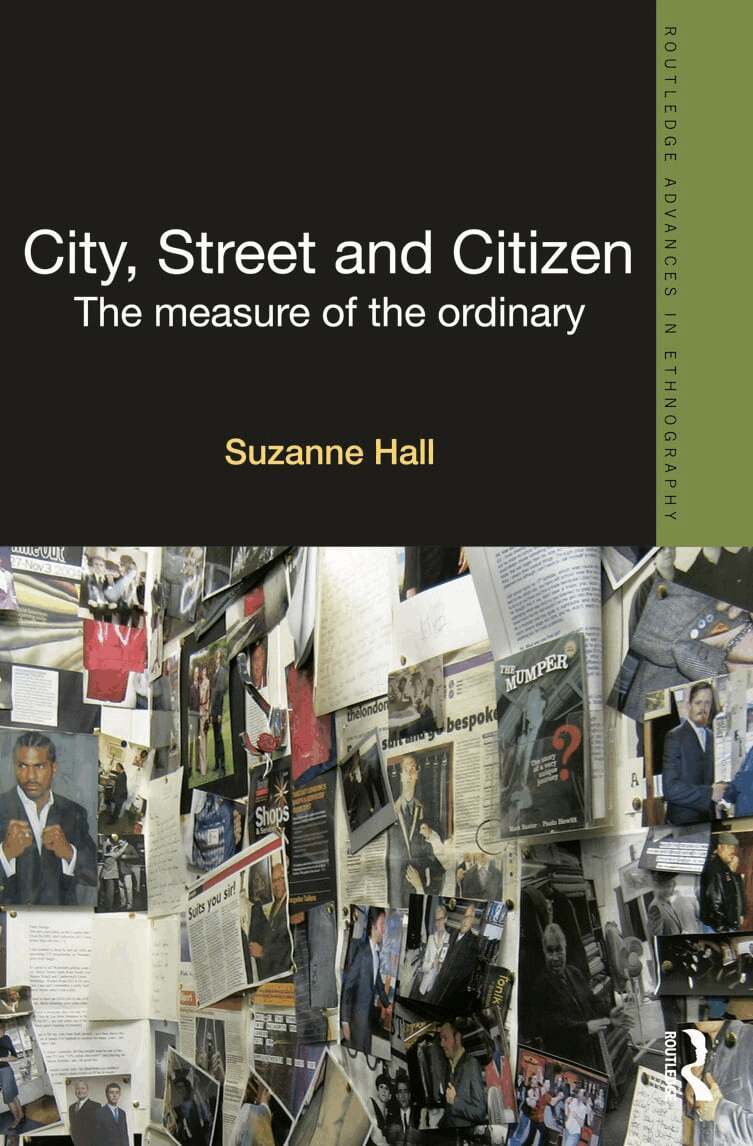
How can we learn from a multicultural society if we don’t know how to recognise it? The contemporary city is more than ever a space for the intense convergence of diverse individuals who shift in and out of its urban terrains. The city street is perhaps the most prosaic of the city’s public parts, allowing us a view of the very ordinary practices of life and livelihoods. By attending to the expressions of conviviality and contestation, ‘City, Street and Citizen’ offers an alternative notion of ‘multiculturalism’ away from the ideological frame of nation, and away from the moral imperative of community. This book offers to the reader an account of the lived realities of allegiance, participation and belonging from the base of a multi-ethnic street in south London.
‘City, Street and Citizen’ focuses on the question of whether local life is significant for how individuals develop skills to live with urban change and cultural and ethnic diversity. To animate this question, Hall has turned to a city street and its dimensions of regularity and propinquity to explore interactions in the small shop spaces along the Walworth Road. The city street constitutes exchange, and as such it provides us with a useful space to consider the broader social and political significance of contact in the day-to-day life of multicultural cities.
Grounded in an ethnographic approach, this book will be of interest to academics and students in the fields of sociology, global urbanisation, migration and ethnicity as well as being relevant to politicians, policy makers, urban designers and architects involved in cultural diversity, public space and street based economies.
702 kr
Läs direkt efter köp
How can we learn from a multicultural society if we don’t know how to recognise it? The contemporary city is more than ever a space for the intense convergence of diverse individuals who shift in and out of its urban terrains. The city street is perhaps the most prosaic of the city’s public parts, allowing us a view of the very ordinary practices of life and livelihoods. By attending to the expressions of conviviality and contestation, ‘City, Street and Citizen’ offers an alternative notion of ‘multiculturalism’ away from the ideological frame of nation, and away from the moral imperative of community. This book offers to the reader an account of the lived realities of allegiance, participation and belonging from the base of a multi-ethnic street in south London.
‘City, Street and Citizen’ focuses on the question of whether local life is significant for how individuals develop skills to live with urban change and cultural and ethnic diversity. To animate this question, Hall has turned to a city street and its dimensions of regularity and propinquity to explore interactions in the small shop spaces along the Walworth Road. The city street constitutes exchange, and as such it provides us with a useful space to consider the broader social and political significance of contact in the day-to-day life of multicultural cities.
Grounded in an ethnographic approach, this book will be of interest to academics and students in the fields of sociology, global urbanisation, migration and ethnicity as well as being relevant to politicians, policy makers, urban designers and architects involved in cultural diversity, public space and street based economies.
2 454 kr
Skickas
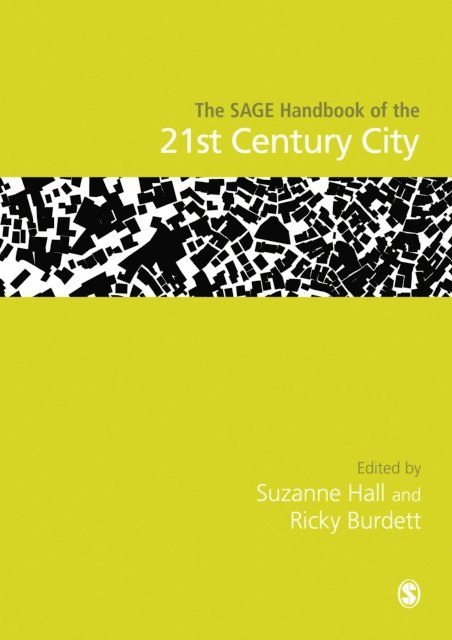
The SAGE Handbook of the 21st Century City focuses on the dynamics and disruptions of the contemporary city in relation to capricious processes of global urbanisation, mutation and resistance. An international range of scholars engage with emerging urban conditions and inequalities in experimental ways, speaking to new ideas of what constitutes the urban, highlighting empirical explorations and expanding on contributions to policy and design. The handbook is organised around nine key themes, through which familiar analytic categories of race, gender and class, as well as binaries such as the urban/rural, are readdressed. These thematic sections together capture the volatile processes and intricacies of urbanisation that reveal the turbulent nature of our early twenty-first century:
Hierarchy: Elites and Evictions Productivity: Over-investment and Abandonment Authority: Governance and Mobilisations Volatility: Disruption and Adaptation Conflict: Vulnerability and Insurgency Provisionality: Infrastructure and Incrementalism Mobility: Re-bordering and De-bordering Civility: Contestation and Encounter Design: Speculation and ImaginationThis is a provocative, inter-disciplinary handbook for all academics and researchers interested in contemporary urban studies.
1 621 kr
Skickas
The SAGE Handbook of the 21st Century City focuses on the dynamics and disruptions of the contemporary city in relation to capricious processes of global urbanisation, mutation and resistance. An international range of scholars engage with emerging urban conditions and inequalities in experimental ways, speaking to new ideas of what constitutes the urban, highlighting empirical explorations and expanding on contributions to policy and design. The handbook is organised around nine key themes, through which familiar analytic categories of race, gender and class, as well as binaries such as the urban/rural, are readdressed. These thematic sections together capture the volatile processes and intricacies of urbanisation that reveal the turbulent nature of our early twenty-first century:
Hierarchy: Elites and Evictions Productivity: Over-investment and Abandonment Authority: Governance and Mobilisations Volatility: Disruption and Adaptation Conflict: Vulnerability and Insurgency Provisionality: Infrastructure and Incrementalism Mobility: Re-bordering and De-bordering Civility: Contestation and Encounter Design: Speculation and ImaginationThis is a provocative, inter-disciplinary handbook for all academics and researchers interested in contemporary urban studies.
1 374 kr
Läs direkt efter köp
The SAGE Handbook of the 21st Century City focuses on the dynamics and disruptions of the contemporary city in relation to capricious processes of global urbanisation, mutation and resistance. An international range of scholars engage with emerging urban conditions and inequalities in experimental ways, speaking to new ideas of what constitutes the urban, highlighting empirical explorations and expanding on contributions to policy and design. The handbook is organised around nine key themes, through which familiar analytic categories of race, gender and class, as well as binaries such as the urban/rural, are readdressed. These thematic sections together capture the volatile processes and intricacies of urbanisation that reveal the turbulent nature of our early twenty-first century:
Hierarchy: Elites and Evictions Productivity: Over-investment and Abandonment Authority: Governance and Mobilisations Volatility: Disruption and Adaptation Conflict: Vulnerability and Insurgency Provisionality: Infrastructure and Incrementalism Mobility: Re-bordering and De-bordering Civility: Contestation and Encounter Design: Speculation and ImaginationThis is a provocative, inter-disciplinary handbook for all academics and researchers interested in contemporary urban studies.