Suzanne L. Marchand – författare
Visar alla böcker från författaren Suzanne L. Marchand. Handla med fri frakt och snabb leverans.
5 produkter
5 produkter
526 kr
Skickas inom 7-10 vardagar
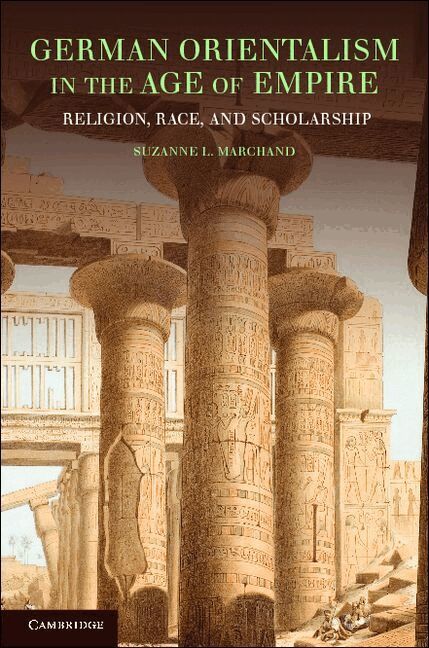
Nineteenth-century studies of the Orient changed European ideas and cultural institutions in more ways than we usually recognize. 'Orientalism' certainly contributed to European empire-building, but it also helped to destroy a narrow Christian-classical canon. This carefully researched book provides the first synthetic and contextualized study of German Orientalistik, a subject of special interest because German scholars were the pacesetters in oriental studies between about 1830 and 1930, despite entering the colonial race late and exiting it early. The book suggests that we must take seriously German orientalism's origins in Renaissance philology and early modern biblical exegesis and appreciate its modern development in the context of nineteenth- and early twentieth-century debates about religion and the Bible, classical schooling, and Germanic origins. In ranging across the subdisciplines of Orientalistik, German Orientalism in the Age of Empire introduces readers to a host of iconoclastic characters and forgotten debates, seeking to demonstrate both the richness of this intriguing field and its indebtedness to the cultural world in which it evolved.
821 kr
Skickas inom 7-10 vardagar
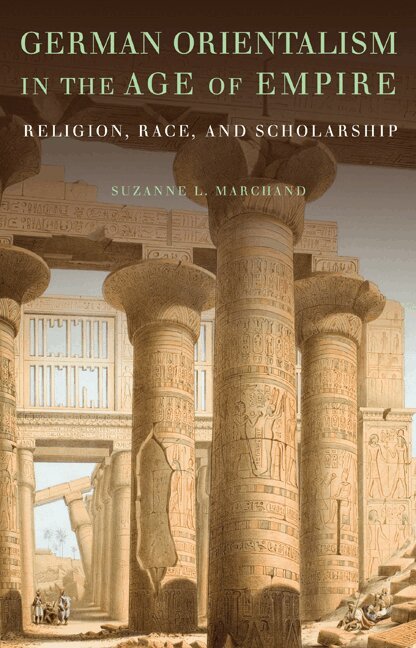
Nineteenth-century studies of the Orient changed European ideas and cultural institutions in more ways than we usually recognize. 'Orientalism' certainly contributed to European empire-building, but it also helped to destroy a narrow Christian-classical canon. This carefully researched book provides the first synthetic and contextualized study of German Orientalistik, a subject of special interest because German scholars were the pacesetters in oriental studies between about 1830 and 1930, despite entering the colonial race late and exiting it early. The book suggests that we must take seriously German orientalism's origins in Renaissance philology and early modern biblical exegesis and appreciate its modern development in the context of nineteenth- and early twentieth-century debates about religion and the Bible, classical schooling, and Germanic origins. In ranging across the subdisciplines of Orientalistik, German Orientalism in the Age of Empire introduces readers to a host of iconoclastic characters and forgotten debates, seeking to demonstrate both the richness of this intriguing field and its indebtedness to the cultural world in which it evolved.
553 kr
Skickas inom 7-10 vardagar
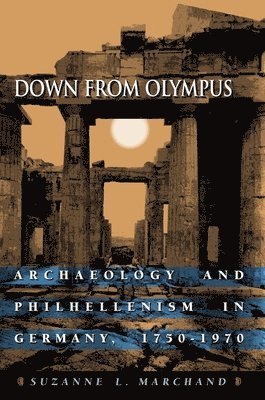
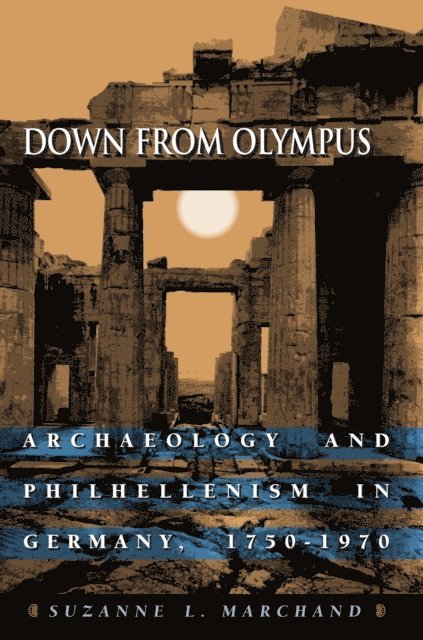
Since the publication of Eliza May Butler's Tyranny of Greece over Germany in 1935, the obsession of the German educated elite with the ancient Greeks has become an accepted, if severely underanalyzed, cliche. In Down from Olympus, Suzanne Marchand attempts to come to grips with German Graecophilia, not as a private passion but as an institutionally generated and preserved cultural trope. The book argues that nineteenth-century philhellenes inherited both an elitist, normative aesthetics and an ascetic, scholarly ethos from their Romantic predecessors; German "neohumanists" promised to reconcile these intellectual commitments, and by so doing, to revitalize education and the arts. Focusing on the history of classical archaeology, Marchand shows how the injunction to imitate Greek art was made the basis for new, state-funded cultural institutions. Tracing interactions between scholars and policymakers that made possible grand-scale cultural feats like the acquisition of the Pergamum Altar, she underscores both the gains in specialized knowledge and the failures in social responsibility that were the distinctive products of German neohumanism.This book discusses intellectual and institutional aspects of archaeology and philhellenism, giving extensive treatment to the history of prehistorical archaeology and German "orientalism." Marchand traces the history of the study, excavation, and exhibition of Greek art as a means to confront the social, cultural, and political consequences of the specialization of scholarship in the last two centuries.
292 kr
Skickas inom 7-10 vardagar
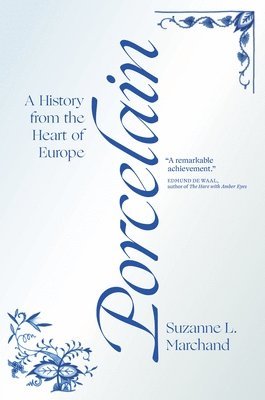
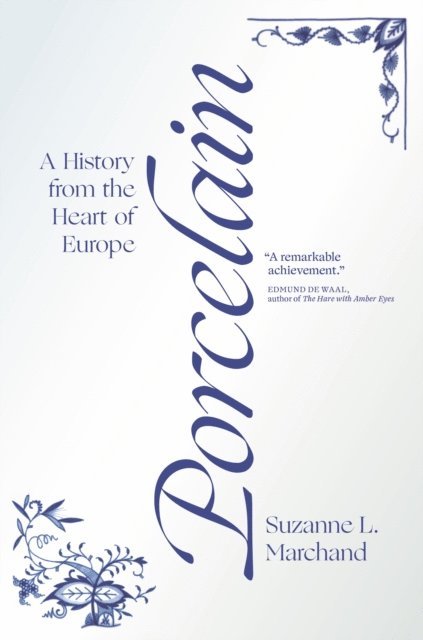
"This is the book on porcelain we have been waiting for. . . . A remarkable achievement."—Edmund de Waal, author of The Hare with Amber EyesA sweeping cultural and economic history of porcelain, from the eighteenth century to the presentPorcelain was invented in medieval China—but its secret recipe was first reproduced in Europe by an alchemist in the employ of the Saxon king Augustus the Strong. Saxony’s revered Meissen factory could not keep porcelain’s ingredients secret for long, however, and scores of Holy Roman princes quickly founded their own mercantile manufactories, soon to be rivaled by private entrepreneurs, eager to make not art but profits. As porcelain’s uses multiplied and its price plummeted, it lost much of its identity as aristocratic ornament, instead taking on a vast number of banal, yet even more culturally significant, roles. By the nineteenth and twentieth centuries, it became essential to bourgeois dining, and also acquired new functions in insulator tubes, shell casings, and teeth.Weaving together the experiences of entrepreneurs and artisans, state bureaucrats and female consumers, chemists and peddlers, Porcelain traces the remarkable story of “white gold” from its origins as a princely luxury item to its fate in Germany’s cataclysmic twentieth century. For three hundred years, porcelain firms have come and gone, but the industry itself, at least until very recently, has endured. After Augustus, porcelain became a quintessentially German commodity, integral to provincial pride, artisanal industrial production, and a familial sense of home.Telling the story of porcelain’s transformation from coveted luxury to household necessity and flea market staple, Porcelain offers a fascinating alternative history of art, business, taste, and consumption in Central Europe.
210 kr
Skickas inom 7-10 vardagar
"This is the book on porcelain we have been waiting for. . . . A remarkable achievement."—Edmund de Waal, author of The Hare with Amber EyesA sweeping cultural and economic history of porcelain, from the eighteenth century to the presentPorcelain was invented in medieval China—but its secret recipe was first reproduced in Europe by an alchemist in the employ of the Saxon king Augustus the Strong. Saxony’s revered Meissen factory could not keep porcelain’s ingredients secret for long, however, and scores of Holy Roman princes quickly founded their own mercantile manufactories, soon to be rivaled by private entrepreneurs, eager to make not art but profits. As porcelain’s uses multiplied and its price plummeted, it lost much of its identity as aristocratic ornament, instead taking on a vast number of banal, yet even more culturally significant, roles. By the nineteenth and twentieth centuries, it became essential to bourgeois dining, and also acquired new functions in insulator tubes, shell casings, and teeth.Weaving together the experiences of entrepreneurs and artisans, state bureaucrats and female consumers, chemists and peddlers, Porcelain traces the remarkable story of “white gold” from its origins as a princely luxury item to its fate in Germany’s cataclysmic twentieth century. For three hundred years, porcelain firms have come and gone, but the industry itself, at least until very recently, has endured. After Augustus, porcelain became a quintessentially German commodity, integral to provincial pride, artisanal industrial production, and a familial sense of home.Telling the story of porcelain’s transformation from coveted luxury to household necessity and flea market staple, Porcelain offers a fascinating alternative history of art, business, taste, and consumption in Central Europe.