Sylvie Lorente - Böcker
Visar alla böcker från författaren Sylvie Lorente. Handla med fri frakt och snabb leverans.
7 produkter
7 produkter
1 578 kr
Skickas inom 10-15 vardagar
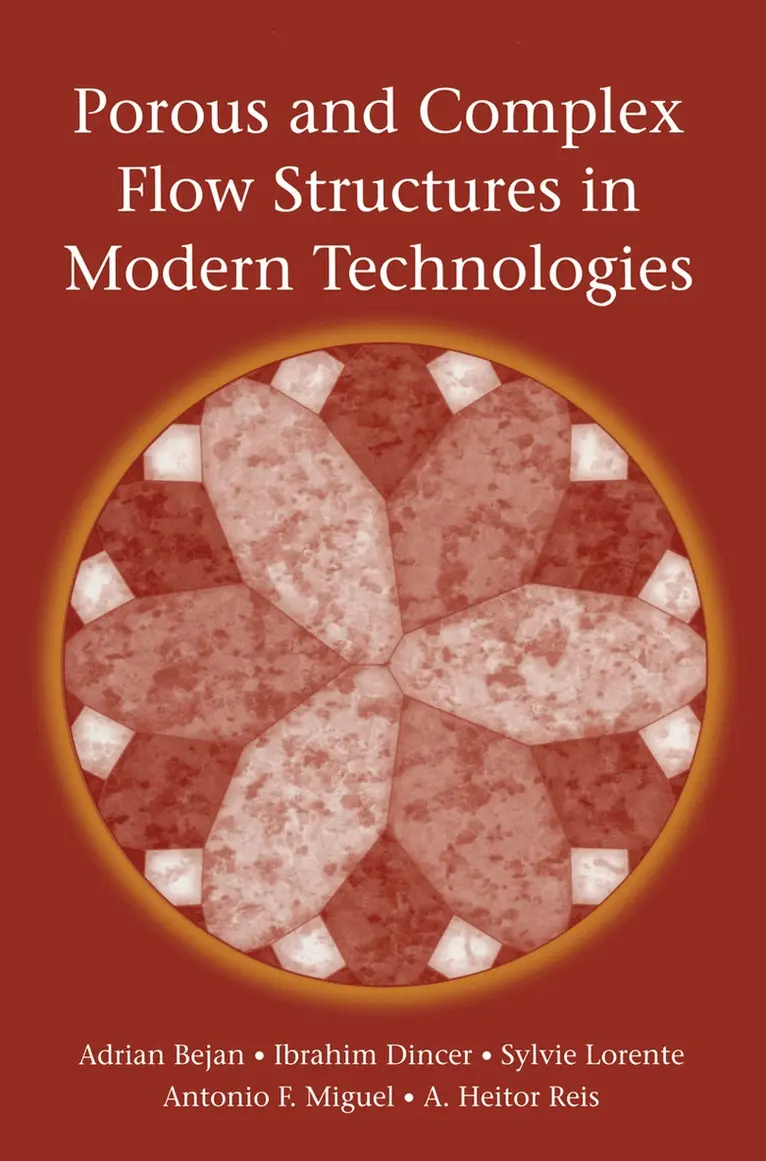
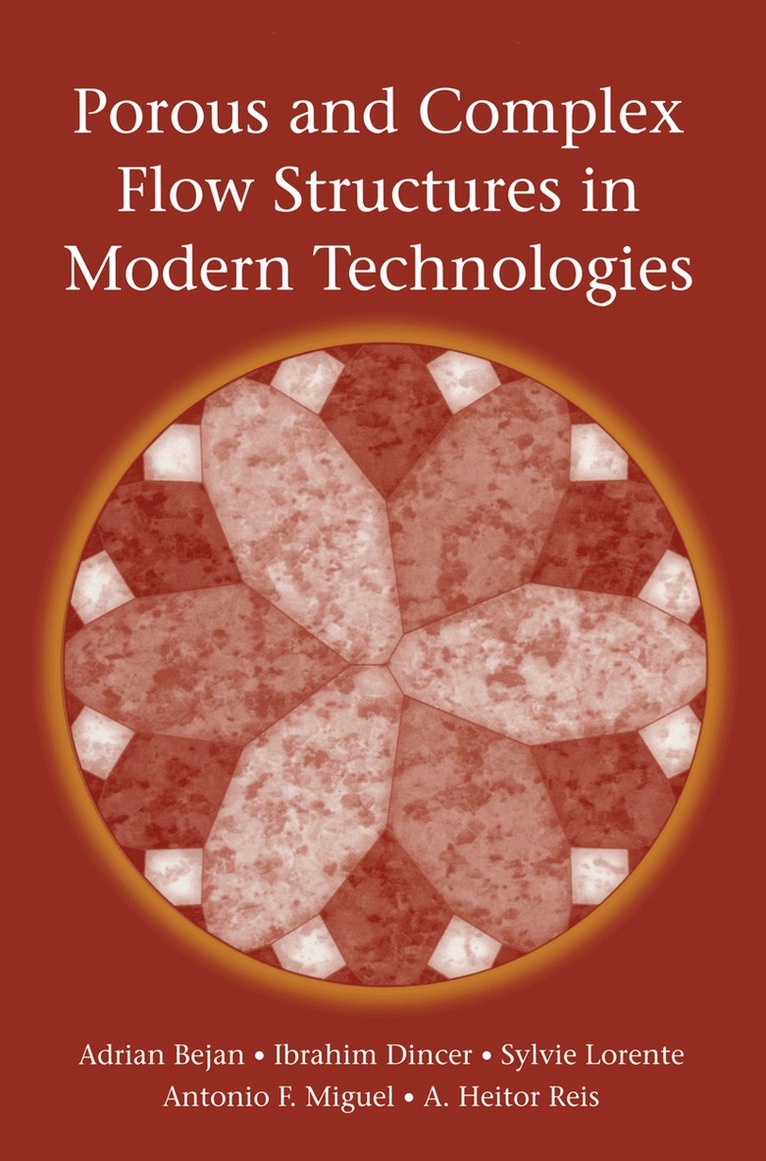
Porous and Complex Flow Structures in Modern Technologies represents a new approach to the field, considering the fundamentals of porous media in terms of the key roles played by these materials in modern technology. Intended as a text for advanced undergraduates and as a reference for practicing engineers, the book uses the physics of flows in porous materials to tie together a wide variety of important issues from such fields as biomedical engineering, energy conversion, civil engineering, electronics, chemical engineering, and environmental engineering. Thus, for example, flows of water and oil through porous ground play a central role in energy exploration and recovery (oil wells, geothermal fluids), energy conversion (effluents from refineries and power plants), and environmental engineering (leachates from waste repositories). Similarly, the demands of miniaturization in electronics and in biomedical applications are driving research into the flow of heat and fluids through small-scale porous media (heat exchangers, filters, gas exchangers). Filters, catalytic converters, the drying of stored grains, and a myriad of other applications involve flows through porous media.By providing a unified theoretical framework that includes not only the traditional homogeneous and isotropic media but also models in which the assumptions of representative elemental volumes or global thermal equilibrium fail, the book provides practicing engineers the tools they need to analyze complex situations that arise in practice. This volume includes examples, solved problems and an extensive glossary of symbols.
1 765 kr
Skickas inom 7-10 vardagar
Design course on the universal principle of configurations in nature and engineering-the constructal law Design with Constructal Theory offers a revolutionary new approach based on physics for understanding and predicting the designs that arise in nature and engineering, from the tree and the forest to the cooling of electronics, urban design, decontamination, and vascular smart materials. This book shows how you can use the method of constructal theory to design human-made systems in order to reduce trial and error and increase the system performance.First developed in the late 1990s, constructal theory holds that flow architecture arises from the natural evolutionary tendency to generate greater flow access in time and in flow configurations that are free to morph. It unites flow systems with solid mechanical structures, which are viewed as systems for the flow of stresses. Constructal theory unites nature with engineering, and helps us generate novel designs across the board, from high-density packages to vascular materials with new functionalities (self-healing, self-cooling), and from tree-shaped heat exchangers to svelte fluid-flow and solid structures.Design with Constructal Theory starts with basic principles and then shows how these principles are applied to understanding and designing increasingly complex systems. Problems and exercises at the end of each chapter give you an opportunity to use constructal theory to solve actual design problems.This book is based on a design course developed by the two authors for upper-level undergraduates and graduate students at Duke University and other universities all over the world. With the authors' expert guidance, students and professionals in mechanical, civil, environmental, chemical, aerospace, and biomedical engineering will understand natural systems, and then practice design as science, by relying on constructal strategies to pursue and discover novel and effective designs.
1 170 kr
Skickas inom 10-15 vardagar
Porous and Complex Flow Structures in Modern Technologies represents a new approach to the field, considering the fundamentals of porous media in terms of the key roles played by these materials in modern technology. Intended as a text for advanced undergraduates and as a reference for practicing engineers, the book uses the physics of flows in porous materials to tie together a wide variety of important issues from such fields as biomedical engineering, energy conversion, civil engineering, electronics, chemical engineering, and environmental engineering. Thus, for example, flows of water and oil through porous ground play a central role in energy exploration and recovery (oil wells, geothermal fluids), energy conversion (effluents from refineries and power plants), and environmental engineering (leachates from waste repositories). Similarly, the demands of miniaturization in electronics and in biomedical applications are driving research into the flow of heat and fluids through small-scale porous media (heat exchangers, filters, gas exchangers). Filters, catalytic converters, the drying of stored grains, and a myriad of other applications involve flows through porous media. By providing a unified theoretical framework that includes not only the traditional homogeneous and isotropic media but also models in which the assumptions of representative elemental volumes or global thermal equilibrium fail, the book provides practicing engineers the tools they need to analyze complex situations that arise in practice. This volume includes examples, solved problems and an extensive glossary of symbols.
1 578 kr
Skickas inom 10-15 vardagar
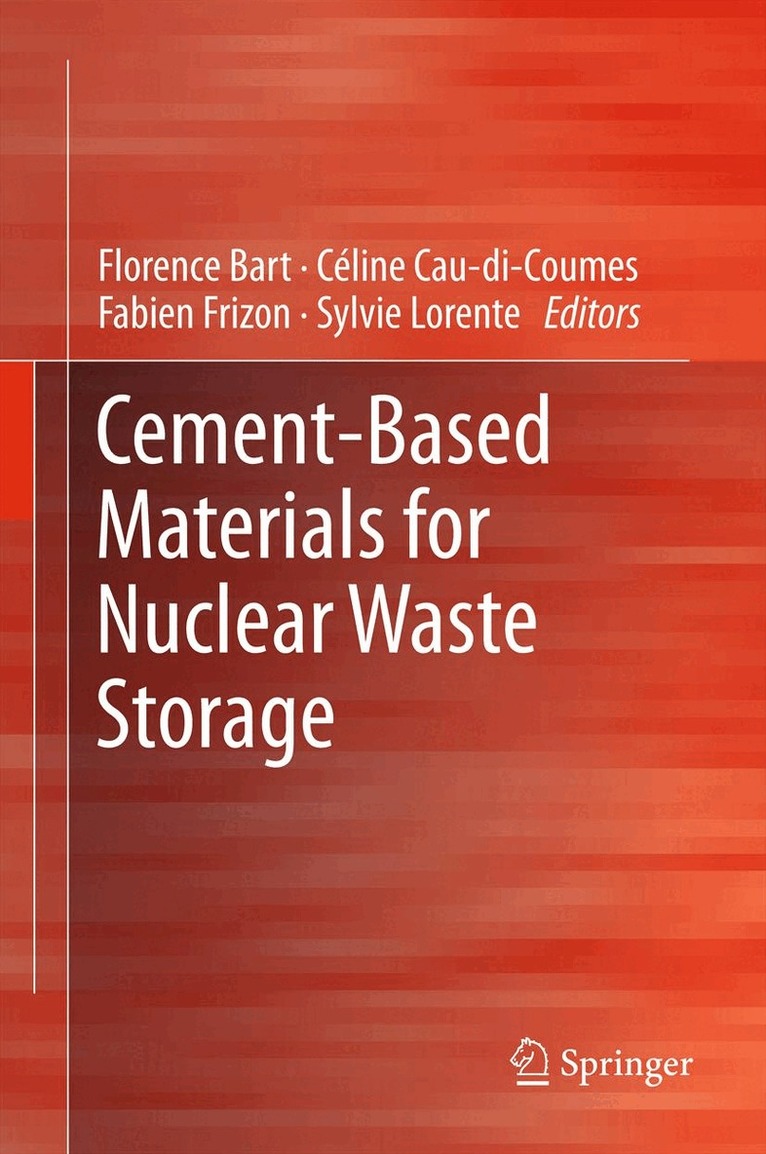
As the re-emergence of nuclear power as an acceptable energy source on an international basis continues, the need for safe and reliable ways to dispose of radioactive waste becomes ever more critical. The ultimate goal for designing a predisposal waste-management system depends on producing waste containers suitable for storage, transportation and permanent disposal. Cement-Based Materials for Nuclear-Waste Storage provides a roadmap for the use of cementation as an applied technique for the treatment of low- and intermediate-level radioactive wastes. Coverage includes, but is not limited to, a comparison of cementation with other solidification techniques, advantages of calcium-silicate cements over other materials and a discussion of the long-term suitability and safety of waste packages as well as cement barriers.
1 578 kr
Skickas inom 10-15 vardagar
In this book, experts from biology, physics and the social sciences examine the unification of all design phenomena in nature and apply this knowledge to designs in engineering, such as vascularization for self-healing and self-cooling materials for aircraft.
1 578 kr
Skickas inom 10-15 vardagar
As the re-emergence of nuclear power as an acceptable energy source on an international basis continues, the need for safe and reliable ways to dispose of radioactive waste becomes ever more critical. The ultimate goal for designing a predisposal waste-management system depends on producing waste containers suitable for storage, transportation and permanent disposal. Cement-Based Materials for Nuclear-Waste Storage provides a roadmap for the use of cementation as an applied technique for the treatment of low- and intermediate-level radioactive wastes. Coverage includes, but is not limited to, a comparison of cementation with other solidification techniques, advantages of calcium-silicate cements over other materials and a discussion of the long-term suitability and safety of waste packages as well as cement barriers.
1 578 kr
Skickas inom 10-15 vardagar
Design happens everywhere, whether in animate objects (e.g., dendritic lung structures, bacterial colonies, and corals), inanimate patterns (river basins, beach slope, and dendritic crystals), social dynamics (pedestrian traffic flows), or engineered systems (heat dissipation in electronic circuitry). This “design in nature” often takes on remarkably similar patterns, which can be explained under one unifying Constructal Law. This book explores the unifying power of the Constructal Law and its applications in all domains of design generation and evolution, ranging from biology and geophysics to globalization, energy, sustainability, and security. The Constructal Law accounts for the universal tendency of flow systems to morph into evolving configurations that provide greater and easier access over time. The Constructal Law resolves the many and contradictory ad hoc statements of “optimality”, end design, and destiny in nature, such as minimum and maximum entropy production and minimum and maximum flow resistance, and also explains the designs that are observed and copied in biomimetics.Constructal Law and the Unifying Principle of Design covers the fundamentals of Constructal Theory and Design, as well as presenting a variety of state-of-the-art applications. Experts from the biological, physical and social sciences demonstrate the unification of all design phenomena in nature, and apply this knowledge to novel designs in modern engineering, such as vascularization for self-healing and self-cooling materials for aircraft, and tree fins and cavities for heat transfer enhancement.