This book presents a guide for the analysis of biomedically important compounds using modern liquid chromatographic techniques. After a brief summary of basic liquid chromatographic methods and optimization strategies, the main part of the book focuses on the various classes of biomedically important compounds: amino acids, catecholamines, carbohydrates, fatty acids, nucleotides, porphyrins, prostaglandins and steroid hormones. The different chapters discuss specialized techniques pertaining to each class of compounds, such as sample pretreatment, pre- and post-column derivatization, detection and quantification.
There are many competitive works on the market concerning evolutionary biology, but this volume is quite distinctive in its idiographic aspect focusing on Ostracoda viewed from a wide range of disciplines, ages and environments. The book deals with various lines of idiographic biology and palaeontology of Ostracoda and nomothetic trials focusing strongly on evolutionary biology. Particular themes are morphology, biology, evolution, speciation, ecology, palaeoecology, deep sea fauna, biogeography, palaeobiogeography, biostratigraphy and exploration, all concerning Ostracoda.The last decade has witnessed a spectacular renewal of interest in the study of Otracoda, particularly in the evolutionary biology of Ostracoda, including speciation. Ostracoda are unique, ranging in age from the Cambrian period to modern times with carapaces ready to be preserved as fossils, providing various lines of invaluable evidence regarding evolutionary processes.More than 120 participants from 20 countries assembled at the Ninth International Symposium on Ostracoda and this book is a collection of all the papers presented at the Symposium, plus selected papers submitted by non-attending members. It presents an outstanding record of much pioneering research and will be of interest to specalists in Ostracoda as well as all earth and life scientists concerned with evolution. Its value is further enhanced by easy-to-use indexes of authors, localities and taxa.
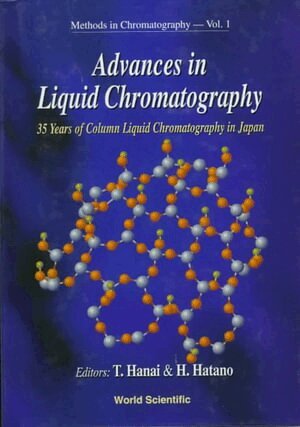
This book is a contemporary review of selected subjects in liquid chromatography, especially of the technical development, rather than the applications. The subjects are focused in the biomedical and environmental fields. This is also a troubleshooting record. Complex analytical problems such as sensitivity (sensitive detection by chemiluminescence, coulometric detection, laser based detection, necessity of degassing the system for sensitive detection), difficulty (free radical detection by Electron Spin Resonance, Polarimeter for chiral recognition) and reproducibility (packings for chiral separation and stable bonded silica gels) are solved. Theoretically and environmentally important miniaturizations are described. Individual chapters written by specialists provide information beyond what can be found in general textbooks of liquid chromatography.
The Symposium ranges from the development of the separation technique to the future of analytical chemistry. The presentations in this proceedings volume are grouped into one lecture session and ten discussion sessions: Chemometrics&Computational Chemistry in Separation Science; Diagnosis by Clinical Trace Analysis (Biomedical Analysis, Drug Metabolism); Development of Packing Materials and Capillary Columns; Analytical Methods in Biotechnology, Carbohydrate Chemistry, Protein and Peptide Chemistry, Nucleic Acid Chemistry and Lipid Chemistry; Electromigration Methods and Applications; Answering Questions of Pharmaceutical Analysis, Environmental Analysis, Food Analysis and Industrial Analysis; Chemistry of Stationery Phase; Development of Analytical Methods Based on Molecular Recognition; Optimization of Separation; and Advances in Instruments.
This book presents a guide for the analysis of biomedically important compounds using modern liquid chromatographic techniques. After a brief summary of basic liquid chromatographic methods and optimization strategies, the main part of the book focuses on the various classes of biomedically important compounds: amino acids, catecholamines, carbohydrates, fatty acids, nucleotides, porphyrins, prostaglandins and steroid hormones. The different chapters discuss specialized techniques pertaining to each class of compounds, such as sample pretreatment, pre- and post-column derivatization, detection and quantification.
There are many competitive works on the market concerning evolutionary biology, but this volume is quite distinctive in its idiographic aspect focusing on Ostracoda viewed from a wide range of disciplines, ages and environments. The book deals with various lines of idiographic biology and palaeontology of Ostracoda and nomothetic trials focusing strongly on evolutionary biology. Particular themes are morphology, biology, evolution, speciation, ecology, palaeoecology, deep sea fauna, biogeography, palaeobiogeography, biostratigraphy and exploration, all concerning Ostracoda.The last decade has witnessed a spectacular renewal of interest in the study of Otracoda, particularly in the evolutionary biology of Ostracoda, including speciation. Ostracoda are unique, ranging in age from the Cambrian period to modern times with carapaces ready to be preserved as fossils, providing various lines of invaluable evidence regarding evolutionary processes.More than 120 participants from 20 countries assembled at the Ninth International Symposium on Ostracoda and this book is a collection of all the papers presented at the Symposium, plus selected papers submitted by non-attending members. It presents an outstanding record of much pioneering research and will be of interest to specalists in Ostracoda as well as all earth and life scientists concerned with evolution. Its value is further enhanced by easy-to-use indexes of authors, localities and taxa.
This book is a contemporary review of selected subjects in liquid chromatography, especially of the technical development, rather than the applications. The subjects are focused in the biomedical and environmental fields. This is also a troubleshooting record. Complex analytical problems such as sensitivity (sensitive detection by chemiluminescence, coulometric detection, laser based detection, necessity of degassing the system for sensitive detection), difficulty (free radical detection by Electron Spin Resonance, Polarimeter for chiral recognition) and reproducibility (packings for chiral separation and stable bonded silica gels) are solved. Theoretically and environmentally important miniaturizations are described. Individual chapters written by specialists provide information beyond what can be found in general textbooks of liquid chromatography.
The Symposium ranges from the development of the separation technique to the future of analytical chemistry. The presentations in this proceedings volume are grouped into one lecture session and ten discussion sessions: Chemometrics&Computational Chemistry in Separation Science; Diagnosis by Clinical Trace Analysis (Biomedical Analysis, Drug Metabolism); Development of Packing Materials and Capillary Columns; Analytical Methods in Biotechnology, Carbohydrate Chemistry, Protein and Peptide Chemistry, Nucleic Acid Chemistry and Lipid Chemistry; Electromigration Methods and Applications; Answering Questions of Pharmaceutical Analysis, Environmental Analysis, Food Analysis and Industrial Analysis; Chemistry of Stationery Phase; Development of Analytical Methods Based on Molecular Recognition; Optimization of Separation; and Advances in Instruments.