
T. M. Ostrom – författare
Visar alla böcker från författaren . Handla med fri frakt och snabb leverans.
3 produkter
3 produkter
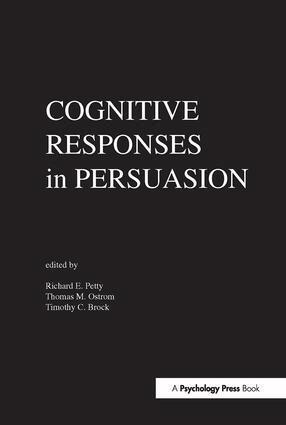
Inbunden, Engelska, 1982
2 349 kr
Skickas inom 10-15 vardagar
First published in 1982. This collaborative product of leading contributors seeks to update information on the psychology of attitudes, attitude change, and persuasion. Social psychologists have invested almost exclusively in the strategies of theory-testing in the laboratory in contrast with qualitative or clinical observation, and the present book both exemplifies and reaps the products of this mainstream tradition of experimental social psychology. It represents experimental social psychology at its best. It does not try to establish contact with the content-oriented strategies of survey research, which have developed in regrettable independence of the laboratory study of persuasion processes.
E-bok
Engelska, 2014915 kr
Läs direkt efter köp
First published in 1982. This collaborative product of leading contributors seeks to update information on the psychology of attitudes, attitude change, and persuasion. Social psychologists have invested almost exclusively in the strategies of theory-testing in the laboratory in contrast with qualitative or clinical observation, and the present book both exemplifies and reaps the products of this mainstream tradition of experimental social psychology. It represents experimental social psychology at its best. It does not try to establish contact with the content-oriented strategies of survey research, which have developed in regrettable independence of the laboratory study of persuasion processes.
E-bok
PDF, Engelska, 2014915 kr
Läs direkt efter köp
First published in 1982. This collaborative product of leading contributors seeks to update information on the psychology of attitudes, attitude change, and persuasion. Social psychologists have invested almost exclusively in the strategies of theory-testing in the laboratory in contrast with qualitative or clinical observation, and the present book both exemplifies and reaps the products of this mainstream tradition of experimental social psychology. It represents experimental social psychology at its best. It does not try to establish contact with the content-oriented strategies of survey research, which have developed in regrettable independence of the laboratory study of persuasion processes.