
T Oweis – författare
Visar alla böcker från författaren T Oweis. Handla med fri frakt och snabb leverans.
2 produkter
2 produkter
Del 45 - Burleigh Dodds Series in Agricultural Science
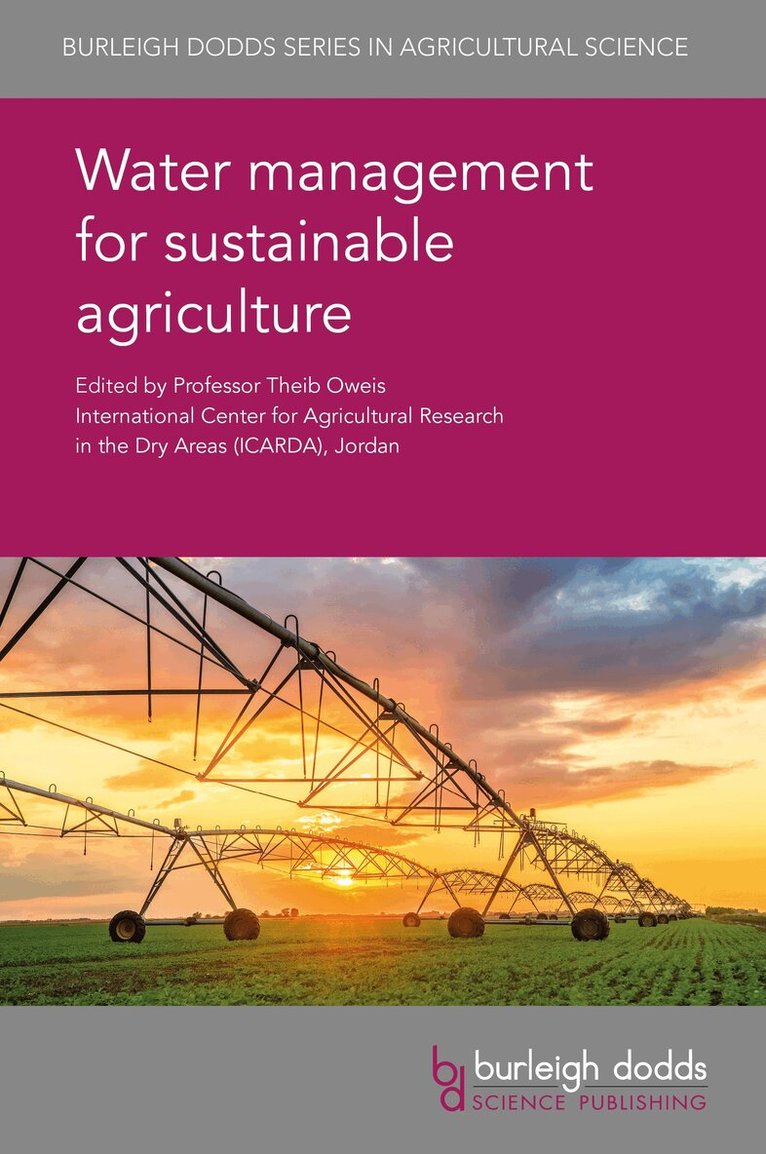
Water Management for Sustainable Agriculture
Inbunden, Engelska, 2018
3 125 kr
Skickas inom 3-6 vardagar
There is increasing competition for water resources in the face of declining aquifer reserves and increasing risk in many areas of drought related to climate change. At the same time poor water management is damaging agriculture with problems such as salinization, waterlogging, erosion and run-off. This volume summarises the wealth of research on understanding and better management of water resources for agriculture.Part 1 reviews fundamental issues such as plant water use and soil water retention. Part 2 discusses ways of mapping and monitoring groundwater and surface water resources whilst Part 3 covers other sources such as rain and floodwater, waste and brackish water. Part 4 surveys developments in irrigation techniques such as drip irrigation and fertigation. The final sections in the book discuss ways of using water resources more efficiently such as site-specific and deficit irrigation techniques.With its distinguished editor and international team of expert authors, this wlll be a standard reference for agronomists, scientists involved in water and irrigation science as well as government and non-governmental organisations responsible for agriculture and water resource management.
1 728 kr
Skickas inom 11-20 vardagar
Rainfed agriculture is generally overlooked by development investors, researchers and policy makers due to limited confidence in its ability to increase agricultural production and development. However, research undertaken by a team of leading scientists from global organizations demonstrates its potential in achieving food security, improving livelihoods and most importantly addressing issues of equity and poverty reduction in dryland areas - the hot spots of poverty. On the basis of case studies from varied agricultural and ecological regions in Asia and Africa, chapters discuss the need for adopting new paradigms between rainfed and irrigated agriculture, catchment/micro-watershed management approaches, upgrades in science-based development and more investments in rainfed areas. Yield gaps for major rainfed crops are analysed globally and possible ways and means including technological, social, and institutional options to bridge the yield gaps are discussed in detail. Covering areas such as rainwater harvesting and its efficient use, the rehabilitation of degraded land and assessment methods for social, environmental and economic impacts, this book will be necessary for both academics and policy makers working in water management, agriculture and sustainable development.