T. W. Hartquist – författare
Visar alla böcker från författaren T. W. Hartquist. Handla med fri frakt och snabb leverans.
5 produkter
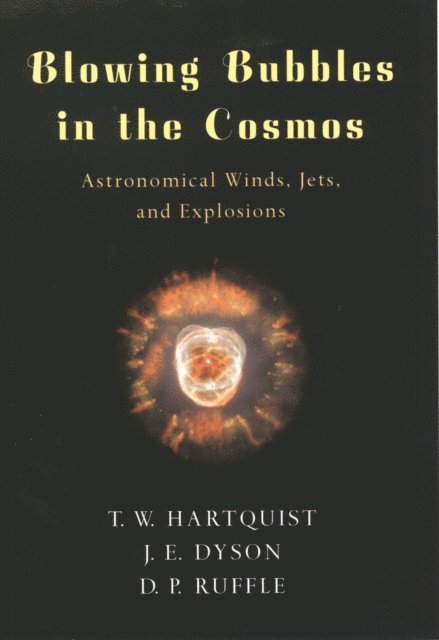
Blowing Bubbles in the Cosmos
Astronomical Winds, Jets, and Explosions
Av D. P. Ruffle, J. E. Dyson m. fl.
E-bok, 2004
717 kr
Lägg i varukorg
Many astrophysical bodies produce winds, jets or explosions, which blow spectacular bubbles. From a nonmathematical, unifying perspective, based on the understanding of bubbles, the authors address many of the most exciting topics in modern astrophysics including supernovae, the production of …
Blowing Bubbles in the Cosmos
Astronomical Winds, Jets, and Explosions
Av D. P. Ruffle, J. E. Dyson m. fl.
E-bok, 2004
717 kr
Lägg i varukorg
Many astrophysical bodies produce winds, jets or explosions, which blow spectacular bubbles. From a nonmathematical, unifying perspective, based on the understanding of bubbles, the authors address many of the most exciting topics in modern astrophysics including supernovae, the production of …
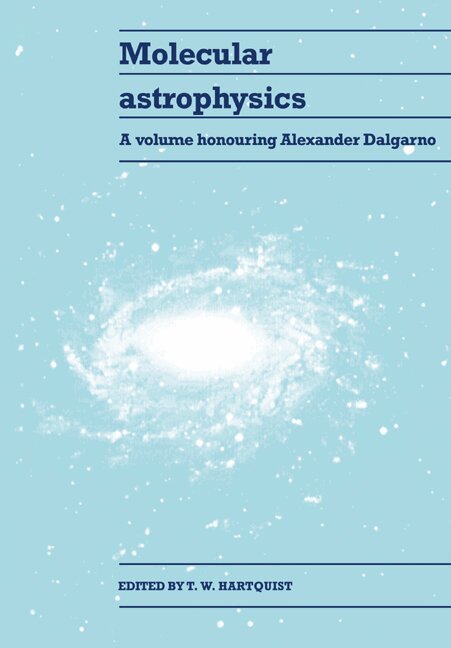
Molecular Astrophysics
A Volume Honouring Alexander Dalgarno
Häftad, 2005
878 kr
Lägg i varukorg
This self-contained introduction to molecular astrophysics is suitable as a text for advanced postgraduate courses on interstellar matter. It is an excellent summary of present knowledge and outstanding questions and will be valued by research astrophysicists, physical chemists, atomic and …
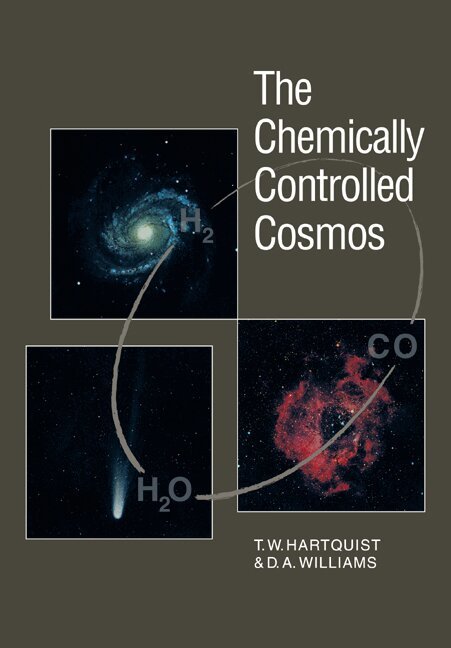
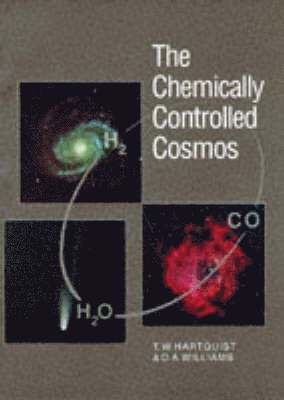
The Chemically Controlled Cosmos
Astronomical Molecules from the Big Bang to Exploding Stars
Av T. W. Hartquist, D. A. Williams
Häftad, 2008
732 kr
Lägg i varukorg
Molecules in the early Universe acted as natural temperature regulators, keeping the primordial gas cool and, in turn, allowing galaxies and stars to be born. Even now, such similarly simple chemistry continues to control a wide variety of the exotic objects that populate our cosmos. What are the …
The Chemically Controlled Cosmos
Astronomical Molecules from the Big Bang to Exploding Stars
Av T. W. Hartquist, D. A. Williams
Inbunden, 1995
2149 kr
Lägg i varukorg
Molecules in the early Universe acted as natural temperature regulators, keeping the primordial gas cool and, in turn, allowing galaxies and stars to be born. Even now, such similarly simple chemistry continues to control a wide variety of the exotic objects that populate our cosmos. What are the …