Presents basic theory of prestressed concrete along with the load balancing, working-load and ultimate-load methods for prestressed concrete design. Material revised in light of substantial advances in the field includes: materials, prestressing systems, loss of prestress, shear and bond, camber and deflection. Design examples based on the 1977 ACI Code with its latest revisions. Appendix contains selected problems.
Data-mining has become a popular research topic in recent years for the treatment of the "data rich and information poor" syndrome. Currently, application oriented engineers are only concerned with their immediate problems, which results in an ad hoc method of problem solving. Researchers, on the other hand, lack an understanding of the practical issues of data-mining for real-world problems and often concentrate on issues that are of no significance to the practitioners. In this volume, we hope to remedy problems by (1) presenting a theoretical foundation of data-mining, and (2) providing important new directions for data-mining research. A set of well respected data mining theoreticians were invited to present their views on the fundamental science of data mining. We have also called on researchers with practical data mining experiences to present new important data-mining topics.
Del 58 - SERIES IN MACHINE PERCEPTION AND ARTIFICIAL INTELLIGENCE
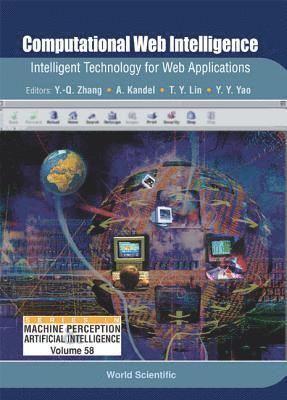
This review volume introduces the novel intelligent Web theory called computational Web intelligence (CWI) based on computational intelligence (CI) and Web technology (WT). It takes an in-depth look at hybrid Web intelligence (HWI), which is based on artificial biological and computational intelligence with Web technology and is used to build hybrid intelligent Web systems that serve wired and wireless users more efficiently. The basic principles of CWI and various e-applications of CWI and HWI are discussed. For completeness, six major CWI techniques — fuzzy Web intelligence, neural Web intelligence, evolutionary Web intelligence, granular Web intelligence, rough Web Intelligence and probabilistic Web intelligence — are described. With the huge potential for intelligent e-business applications of CWI and HWI, these techniques represent the future of intelligent Web applications.
Presents basic theory of prestressed concrete along with the load balancing, working-load and ultimate-load methods for prestressed concrete design. Material revised in light of substantial advances in the field includes: materials, prestressing systems, loss of prestress, shear and bond, camber and deflection. Design examples based on the 1977 ACI Code with its latest revisions. Appendix contains selected problems.
Data-mining has become a popular research topic in recent years for the treatment of the "data rich and information poor" syndrome. Currently, application oriented engineers are only concerned with their immediate problems, which results in an ad hoc method of problem solving. Researchers, on the other hand, lack an understanding of the practical issues of data-mining for real-world problems and often concentrate on issues that are of no significance to the practitioners. In this volume, we hope to remedy problems by (1) presenting a theoretical foundation of data-mining, and (2) providing important new directions for data-mining research. A set of well respected data mining theoreticians were invited to present their views on the fundamental science of data mining. We have also called on researchers with practical data mining experiences to present new important data-mining topics.
Del 58 - SERIES IN MACHINE PERCEPTION AND ARTIFICIAL INTELLIGENCE
This review volume introduces the novel intelligent Web theory called computational Web intelligence (CWI) based on computational intelligence (CI) and Web technology (WT). It takes an in-depth look at hybrid Web intelligence (HWI), which is based on artificial biological and computational intelligence with Web technology and is used to build hybrid intelligent Web systems that serve wired and wireless users more efficiently. The basic principles of CWI and various e-applications of CWI and HWI are discussed. For completeness, six major CWI techniques — fuzzy Web intelligence, neural Web intelligence, evolutionary Web intelligence, granular Web intelligence, rough Web Intelligence and probabilistic Web intelligence — are described. With the huge potential for intelligent e-business applications of CWI and HWI, these techniques represent the future of intelligent Web applications.