Tae-Jin Yi – författare
Visar alla böcker från författaren Tae-Jin Yi. Handla med fri frakt och snabb leverans.
4 produkter
4 produkter
Inbunden, Engelska, 2010
1 614 kr
Skickas inom 10-15 vardagar
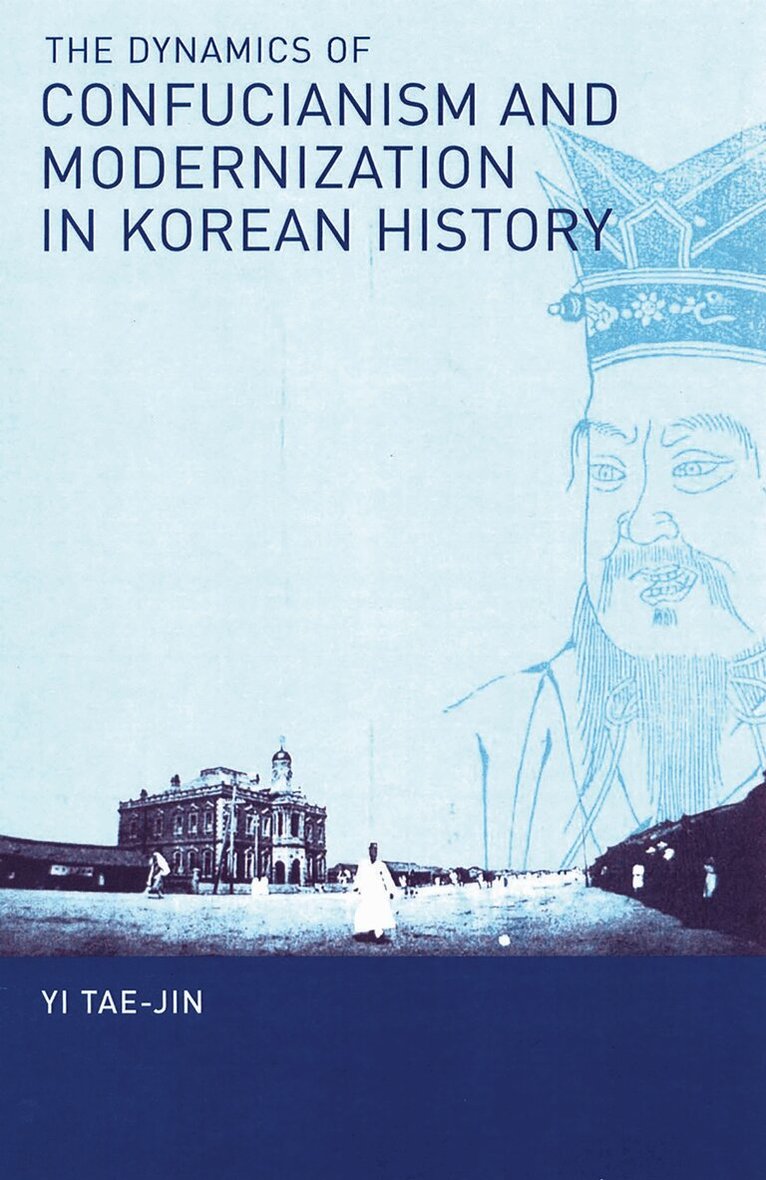
This volume makes available for the first time in English a collection of the work of historian Yi Tae-Jin. Over the course of his career, he has done path-breaking research that covers virtually the entire Chosōn period (1392–1910) from the Koryō-Chosōn transition to the Kojong period and Korea's takeover by Japan in 1910. One of the focal points of his scholarship has been to reinterpret Neo-Confucianism as a dynamic force in Korean history. The first half of this volume is devoted to his seminal work on the historical factors behind the founding of the Chosōn dynasty. He has shown how the rise of Neo-Confucianism during the Koryō-Chosōn transition was tied to unprecedented advances in agriculture and medicine that led to a fundamental socio-economic transformation of Korea. A new social class emerged that became a leading force behind the new dynasty and adopted Neo-Confucianism as its ideology. One of the underlying concerns of his scholarship has been to overcome the legacy of Japanese colonial scholarship on Korean historiography. His work refutes the notion of Korea as a "Hermit Kingdom" that was stagnant for centuries before its opening to the West. The second half of the volume includes some of his work on modernization efforts in the late Chosōn period, as well as some of his more direct critiques of the continuing influence of Japanese historiography in Korea.
Häftad, Engelska, 2010
395 kr
Skickas inom 10-15 vardagar
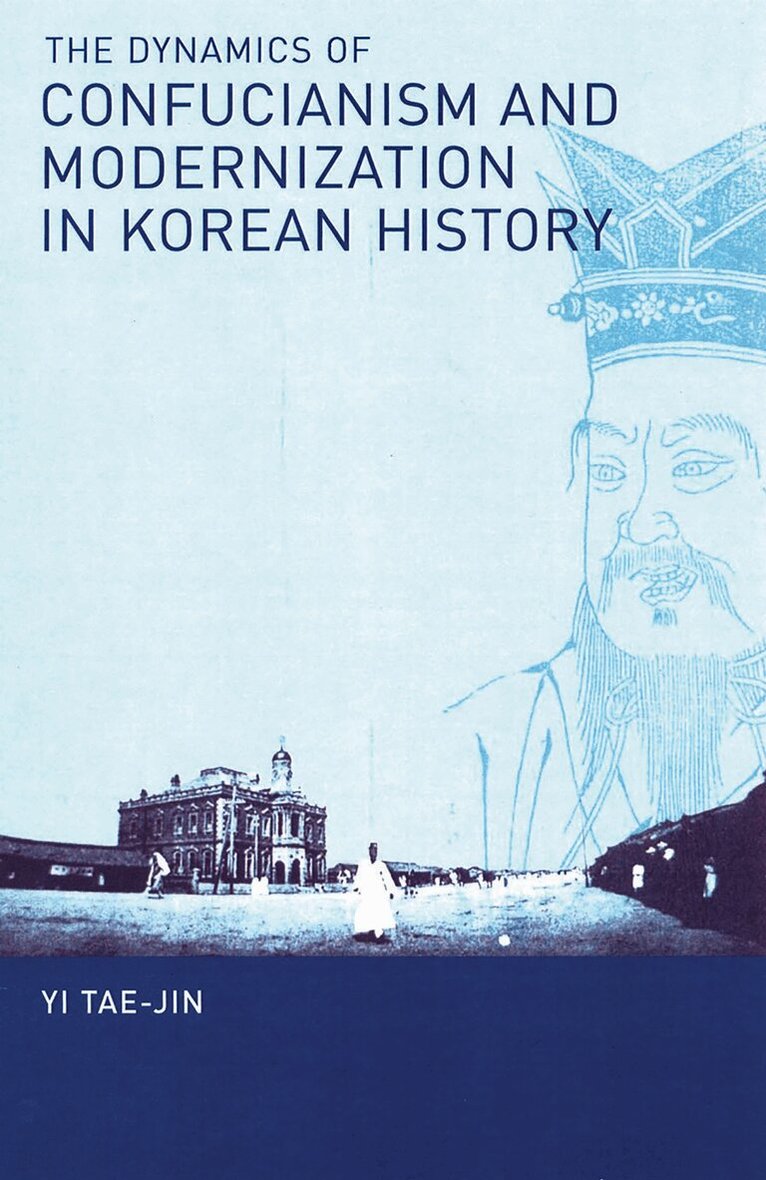
This volume makes available for the first time in English a collection of the work of historian Yi Tae-Jin. Over the course of his career, he has done path-breaking research that covers virtually the entire Chosōn period (1392–1910) from the Koryō-Chosōn transition to the Kojong period and Korea's takeover by Japan in 1910. One of the focal points of his scholarship has been to reinterpret Neo-Confucianism as a dynamic force in Korean history. The first half of this volume is devoted to his seminal work on the historical factors behind the founding of the Chosōn dynasty. He has shown how the rise of Neo-Confucianism during the Koryō-Chosōn transition was tied to unprecedented advances in agriculture and medicine that led to a fundamental socio-economic transformation of Korea. A new social class emerged that became a leading force behind the new dynasty and adopted Neo-Confucianism as its ideology. One of the underlying concerns of his scholarship has been to overcome the legacy of Japanese colonial scholarship on Korean historiography. His work refutes the notion of Korea as a "Hermit Kingdom" that was stagnant for centuries before its opening to the West. The second half of the volume includes some of his work on modernization efforts in the late Chosōn period, as well as some of his more direct critiques of the continuing influence of Japanese historiography in Korea.
Inbunden, Engelska, 2026
1 604 kr
Skickas inom 10-15 vardagar
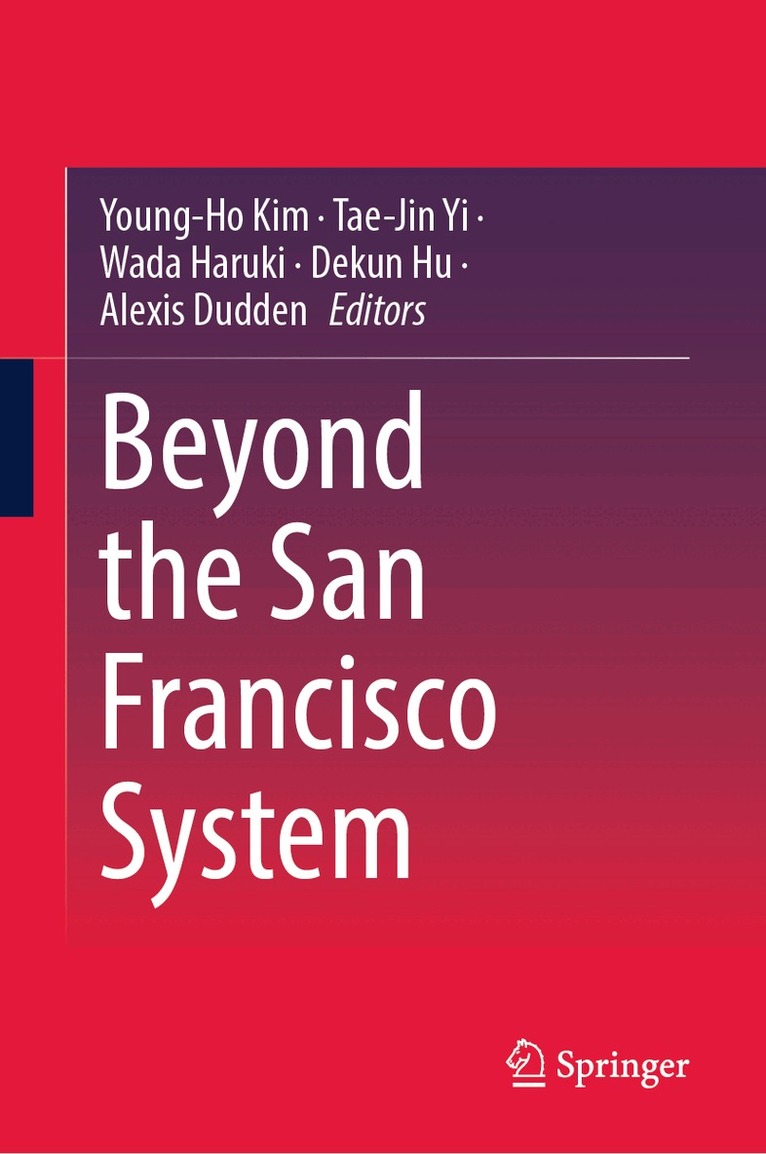
This book, a eight-year interdisciplinary collaboration involving experts in international politics, law, economics, and history from six countries, meticulously analyzes the San Francisco Peace Treaty System and its profound implications. It critically examines how this system reflected the victim-centric approach of the United Nations while offering a crucial counter perspective from colonial and semi-colonial nations such as Korea and China, notably excluded from its initial formulation. The study specifically re-evaluates the treaty's impact through the crucial lens of human rights, addressing issues such as Japanese military sexual slavery and the Okinawa problem. In addition, the book meticulously tracks the subsequent 72-year evolution of this system in direct relation to the significant economic development and dynamic growth of civil society across East Asian regions. It compellingly argues that the ongoing Indo-Pacific collective security regime, strategically encircling China, represents a contemporary iteration, referred to as San Francisco System 2.0, drawing a clear distinction from its predecessor, San Francisco System 1.0. Ultimately, the focus is on an extensive exploration of the essential conditions required for establishing a truly genuine and lasting system of peace in the region.
E-bok
Engelska, 20261 960 kr
Läs direkt efter köp
This book, a eight-year interdisciplinary collaboration involving experts in international politics, law, economics, and history from six countries, meticulously analyzes the San Francisco Peace Treaty System and its profound implications. It critically examines how this system reflected the victim-centric approach of the United Nations while offering a crucial counter perspective from colonial and semi-colonial nations such as Korea and China, notably excluded from its initial formulation. The study specifically re-evaluates the treaty's impact through the crucial lens of human rights, addressing issues such as Japanese military sexual slavery and the Okinawa problem. In addition, the book meticulously tracks the subsequent 72-year evolution of this system in direct relation to the significant economic development and dynamic growth of civil society across East Asian regions. It compellingly argues that the ongoing Indo-Pacific collective security regime, strategically encircling China, represents a contemporary iteration, referred to as San Francisco System 2.0, drawing a clear distinction from its predecessor, San Francisco System 1.0. Ultimately, the focus is on an extensive exploration of the essential conditions required for establishing a truly genuine and lasting system of peace in the region.