Takeyoshi Dohi – författare
Visar alla böcker från författaren Takeyoshi Dohi. Handla med fri frakt och snabb leverans.
8 produkter
8 produkter
Häftad, Engelska, 2002
1 112 kr
Skickas inom 10-15 vardagar
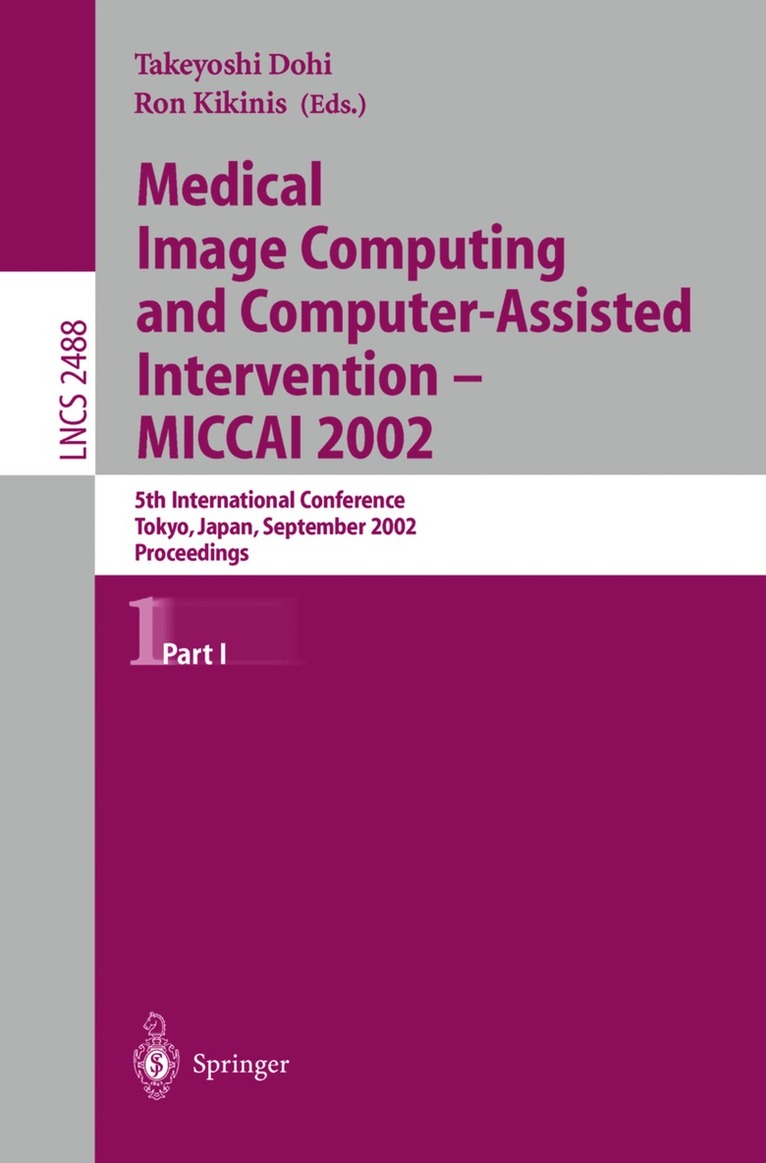
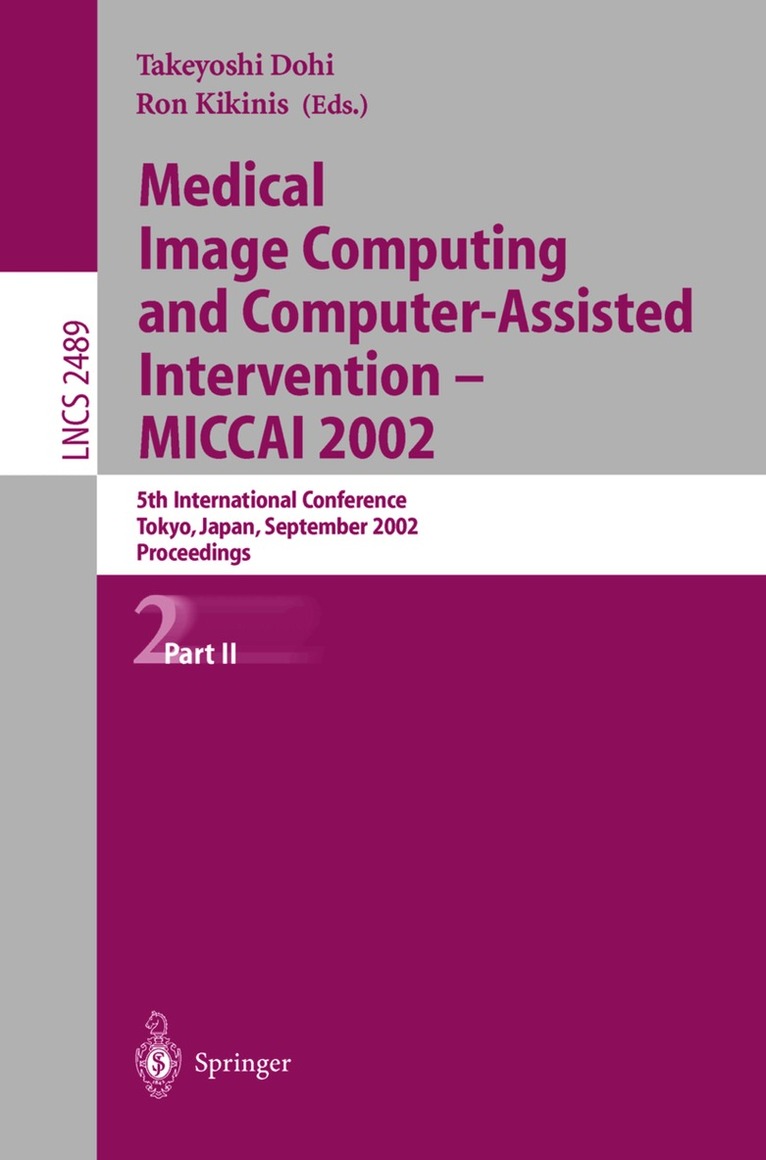
The fifth international Conference in Medical Image Computing and Computer Assisted Intervention (MICCAI 2002) was held in Tokyo from September 25th to 28th, 2002. This was the first time that the conference was held in Asia since its foundation in 1998. The objective of the conference is to offer clinicians and scientists the opportunity to collaboratively create and explore the new medical field. Specifically, MICCAI offers a forum for the discussion of the state of art in computer-assisted interventions, medical robotics, and image processing among experts from multi-disciplinary professions, including but not limited to clinical doctors, computer scientists, and mechanical and biomedical engineers. The expectations of society are very high; the advancement of medicine will depend on computer and device technology in coming decades, as they did in the last decades. We received 321 manuscripts, of which 41 were chosen for oral presentation and 143 for poster presentation. Each paperhas been included in these proceedings in eight-page full paper format, without any differentiation between oral and poster papers. Adherence to this full paper format, along with the increased number of manuscripts, surpassing all our expectations, has led us to issue two proceedings volumes for the first time in MICCAI’s history. Keeping to a single volume by assigning fewer pages to each paper was certainly an option for us considering our budget constraints. However, we decided to increase the volume to offer authors maximum opportunity to argue the state of art in their work and to initiate constructive discussions among the MICCAI audience.
Häftad, Engelska, 2002
1 112 kr
Skickas inom 10-15 vardagar
The fifth international Conference in Medical Image Computing and Computer Assisted Intervention (MICCAI 2002) was held in Tokyo from September 25th to 28th, 2002. This was the first time that the conference was held in Asia since its foundation in 1998. The objective of the conference is to offer clinicians and scientists the opportunity to collaboratively create and explore the new medical field. Specifically, MICCAI offers a forum for the discussion of the state of art in computer-assisted interentions, medical robotics, and image processing among experts from multi-disciplinary professions, including but not limited to clinical doctors, computer scientists, and mechanical and biomedical engineers. The expectations of society are very high; the advancement of medicine will depend on computer and device technology in coming decades, as they did in the last decades. We received 321 manuscripts, of which 41 were chosen for oral presentation and 143 for poster presentation. Each paper has been included in these proceedings in eight-page full paper format, without any differentiation between oral and poster papers. Adherence to this full paper format, along with the increased number of manuscripts, surpassing all our expectations, has led us to issue two proceedings volumes for the first time in MICCAI’s history. Keeping to a single volume by assigning fewer pages to each paper was certainly an option for us considering our budget constraints. However, we decided to increase the volume to offer authors maximum opportunity to argue the state of art in their work and to initiate constructive discussions among the MICCAI audience.
E-bok
PDF, Engelska, 20031 408 kr
Läs direkt efter köp
The fifth international Conference in Medical Image Computing and Computer Assisted Intervention (MICCAI 2002) was held in Tokyo from September 25th to 28th, 2002. This was the first time that the conference was held in Asia since its foundation in 1998. The objective of the conference is to offer clinicians and scientists the opportunity to collaboratively create and explore the new medical field. Specifically, MICCAI offers a forum for the discussion of the state of art in computer-assisted interventions, medical robotics, and image processing among experts from multi-disciplinary professions, including but not limited to clinical doctors, computer scientists, and mechanical and biomedical engineers. The expectations of society are very high; the advancement of medicine will depend on computer and device technology in coming decades, as they did in the last decades. We received 321 manuscripts, of which 41 were chosen for oral presentation and 143 for poster presentation. Each paperhas been included in these proceedings in eight-page full paper format, without any differentiation between oral and poster papers. Adherence to this full paper format, along with the increased number of manuscripts, surpassing all our expectations, has led us to issue two proceedings volumes for the first time in MICCAI’s history. Keeping to a single volume by assigning fewer pages to each paper was certainly an option for us considering our budget constraints. However, we decided to increase the volume to offer authors maximum opportunity to argue the state of art in their work and to initiate constructive discussions among the MICCAI audience.
E-bok
PDF, Engelska, 20031 459 kr
Läs direkt efter köp
The fifth international Conference in Medical Image Computing and Computer Assisted Intervention (MICCAI 2002) was held in Tokyo from September 25th to 28th, 2002. This was the first time that the conference was held in Asia since its foundation in 1998. The objective of the conference is to offer clinicians and scientists the opportunity to collaboratively create and explore the new medical field. Specifically, MICCAI offers a forum for the discussion of the state of art in computer-assisted interentions, medical robotics, and image processing among experts from multi-disciplinary professions, including but not limited to clinical doctors, computer scientists, and mechanical and biomedical engineers. The expectations of society are very high; the advancement of medicine will depend on computer and device technology in coming decades, as they did in the last decades. We received 321 manuscripts, of which 41 were chosen for oral presentation and 143 for poster presentation. Each paper has been included in these proceedings in eight-page full paper format, without any differentiation between oral and poster papers. Adherence to this full paper format, along with the increased number of manuscripts, surpassing all our expectations, has led us to issue two proceedings volumes for the first time in MICCAI’s history. Keeping to a single volume by assigning fewer pages to each paper was certainly an option for us considering our budget constraints. However, we decided to increase the volume to offer authors maximum opportunity to argue the state of art in their work and to initiate constructive discussions among the MICCAI audience.
Häftad, Engelska, 2008
559 kr
Skickas inom 10-15 vardagar
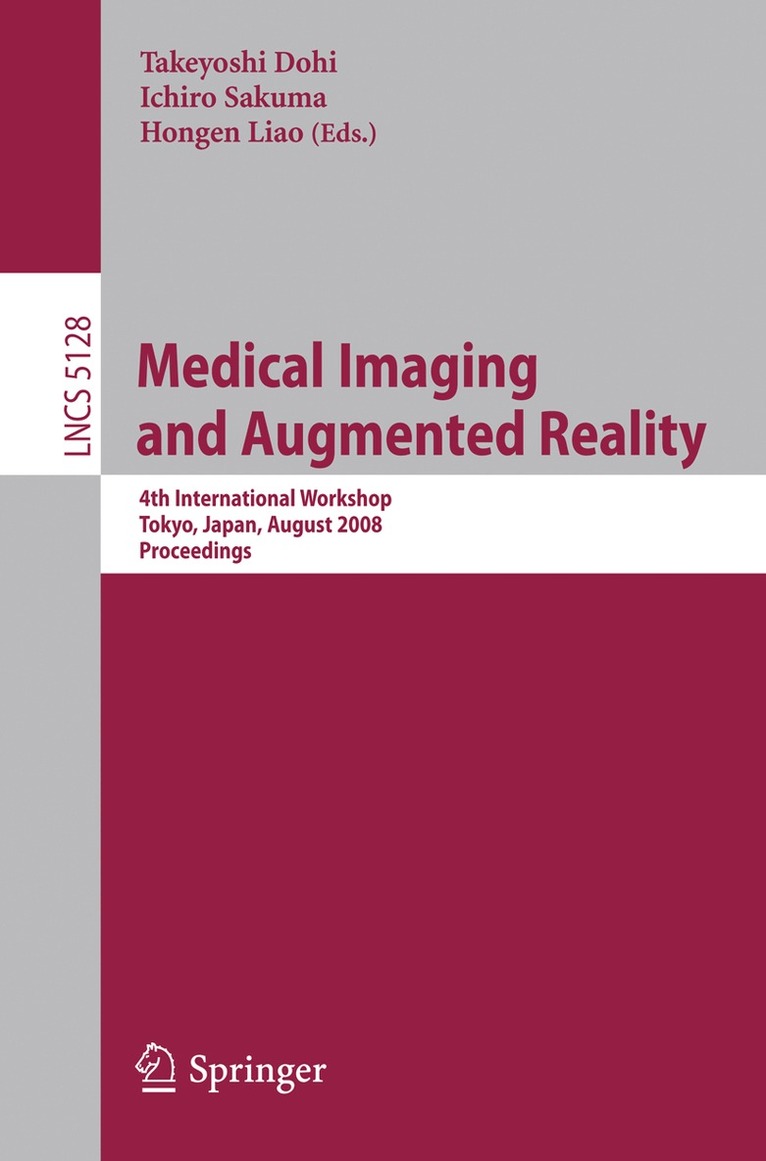
The 4th International Workshop on Medical Imaging and Augmented Reality, MIAR 2008, was held at the University of Tokyo, Tokyo, Japan during August 1–2, 2008. The goal of MIAR 2008 was to bring together researchersin medical imaging and intervention to present state-of-the-art developments in this ever-growing research area. Rapid technical advances in medical imaging, including its gr- ing application in drug/gene therapy and invasive/interventional procedures, have attracted signi?cant interest in the close integration of research in the life sciences, medicine, physical sciences, and engineering. Current research is also motivated by the fact that medical imaging is moving increasingly from a p- marily diagnostic modality towards a therapeutic and interventional aid, driven by the streamlining of diagnostic and therapeutic processes for human diseases by means of imaging modalities and robotic-assisted surgery. The impact of MIAR on these ?elds increases each year, and the quality of submitted papers this yearwas veryimpressive. We received90 full submissions, which were subsequently reviewed by up to ?ve reviewers. Reviewer a?liations were carefully checked against author a?liations to avoid con?icts of interest, and the review process was run as a double-blind process. A special procedure was also devised for papers from the universities of the organizers, upholding a double-blind review process for these papers. The MIAR 2008 Program C- mittee ?nally accepted 44 full papers. For this workshop, we also included three papers from the invited speakers coveringregistration and segmentation, virtual reality, and perceptual docking for robotic control.
E-bok
PDF, Engelska, 2008734 kr
Läs direkt efter köp
The 4th International Workshop on Medical Imaging and Augmented Reality, MIAR 2008, was held at the University of Tokyo, Tokyo, Japan during August 1–2, 2008. The goal of MIAR 2008 was to bring together researchersin medical imaging and intervention to present state-of-the-art developments in this ever-growing research area. Rapid technical advances in medical imaging, including its gr- ing application in drug/gene therapy and invasive/interventional procedures, have attracted signi?cant interest in the close integration of research in the life sciences, medicine, physical sciences, and engineering. Current research is also motivated by the fact that medical imaging is moving increasingly from a p- marily diagnostic modality towards a therapeutic and interventional aid, driven by the streamlining of diagnostic and therapeutic processes for human diseases by means of imaging modalities and robotic-assisted surgery. The impact of MIAR on these ?elds increases each year, and the quality of submitted papers this yearwas veryimpressive. We received90 full submissions, which were subsequently reviewed by up to ?ve reviewers. Reviewer a?liations were carefully checked against author a?liations to avoid con?icts of interest, and the review process was run as a double-blind process. A special procedure was also devised for papers from the universities of the organizers, upholding a double-blind review process for these papers. The MIAR 2008 Program C- mittee ?nally accepted 44 full papers. For this workshop, we also included three papers from the invited speakers coveringregistration and segmentation, virtual reality, and perceptual docking for robotic control.
Häftad, Engelska, 2012
559 kr
Skickas inom 10-15 vardagar
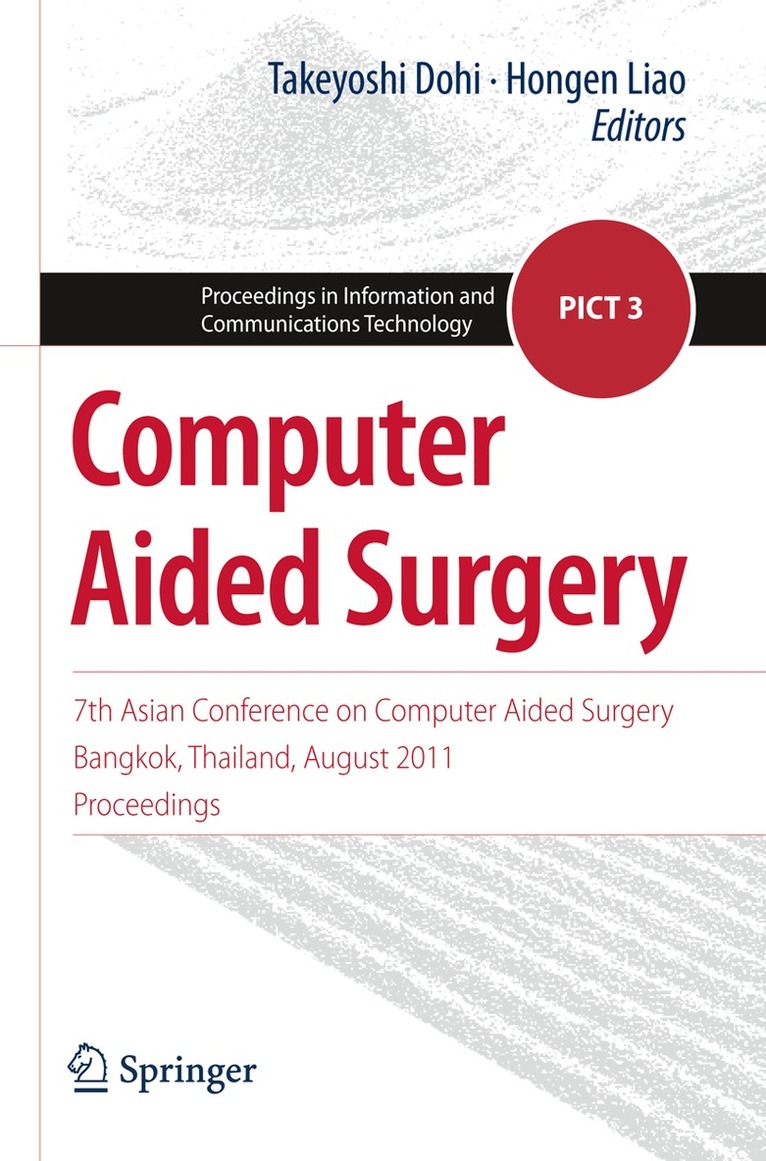
The aim of computer-aided surgery (CAS) is to advance the utilization of computers in the development of new technologies for medical services. The Asian Conference on Computer Aided Surgery (ACCAS) series provides a forum for academic researchers, clinical scientists, surgeons, and industrial partners to exchange new ideas, techniques, and the latest developments in the field. The ACCAS brings together researchers from all fields related to medical activity visualization, simulation and modeling, virtual reality for CAS, image-guided diagnosis and therapies, CAS for minimally invasive intervention, medical robotics and instrumentation, surgical navigation, clinical application of CAS, telemedicine and telesurgery, and CAS education. The ACCAS is also interested in promoting collaboration among people from different disciplines and different countries in Asia and the world. This volume helps to achieve that goal and is a valuable resource for researchers and clinicians in the field.
E-bok
PDF, Engelska, 2012734 kr
Läs direkt efter köp
The aim of computer-aided surgery (CAS) is to advance the utilization of computers in the development of new technologies for medical services. The Asian Conference on Computer Aided Surgery (ACCAS) series provides a forum for academic researchers, clinical scientists, surgeons, and industrial partners to exchange new ideas, techniques, and the latest developments in the field. The ACCAS brings together researchers from all fields related to medical activity visualization, simulation and modeling, virtual reality for CAS, image-guided diagnosis and therapies, CAS for minimally invasive intervention, medical robotics and instrumentation, surgical navigation, clinical application of CAS, telemedicine and telesurgery, and CAS education. The ACCAS is also interested in promoting collaboration among people from different disciplines and different countries in Asia and the world. This volume helps to achieve that goal and is a valuable resource for researchers and clinicians in the field.