Tali Sharot – författare
Visar alla böcker från författaren Tali Sharot. Handla med fri frakt och snabb leverans.
18 produkter
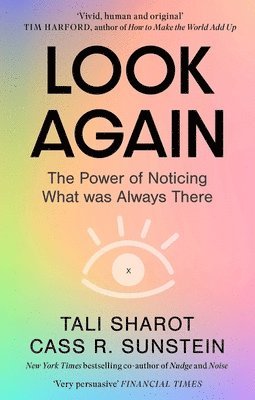
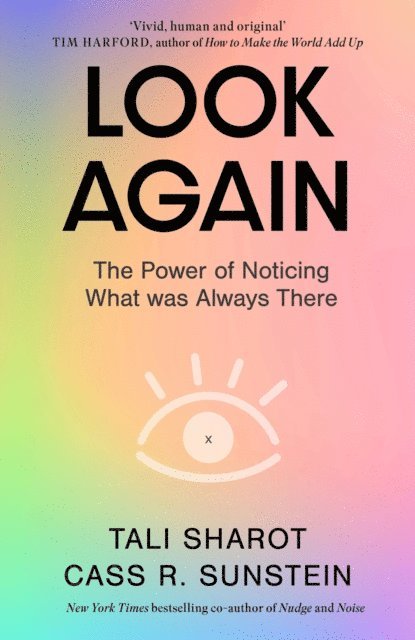
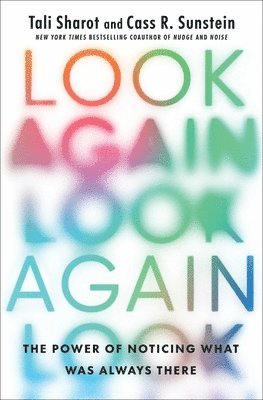
Look Again
The Power of Noticing What was Always There
Av Tali Sharot, Cass R. Sunstein
Häftad, 2025
146 kr
Lägg i varukorg
'Such a vivid, human and original book,' Tim HarfordWhat if we could find a way to see everything anew? For fans of Thinking, Fast and Slow and The Power of Habit, a groundbreaking new study of how disrupting our well-worn routines, both good and bad, can rejuvenate our days and reset our brains to …
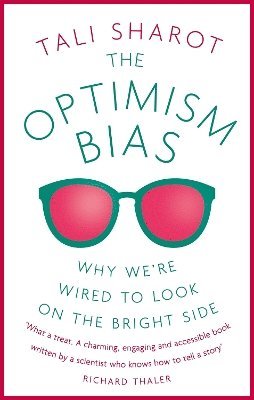
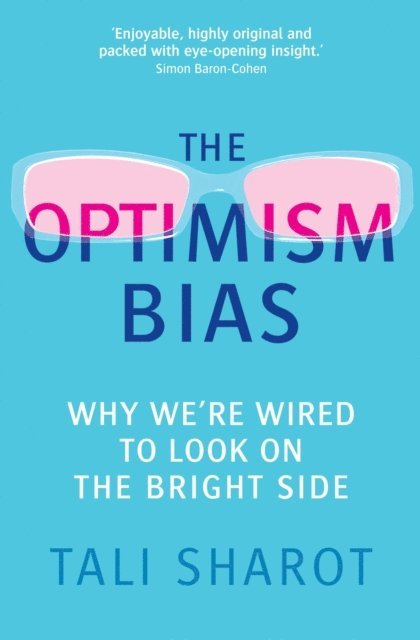
Optimism Bias
Why we're wired to look on the bright side
Av Tali Sharot
Häftad, 2012
143 kr
Lägg i varukorg
Winner of the British Psychological Society Book Award for Popular PsychologyPsychologists have long been aware that most people tend to maintain an irrationally positive outlook on life. In fact, optimism may be crucial to our existence. Tali Sharot's original cognitive research demonstrates in …
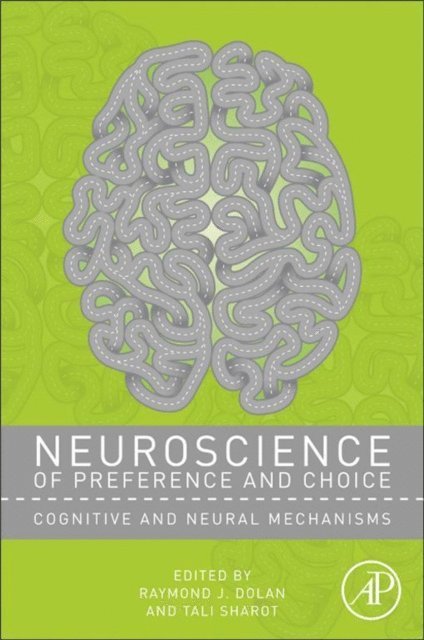
Neuroscience of Preference and Choice
Cognitive and Neural Mechanisms
Av Raymond J. Dolan, Tali Sharot
Inbunden, 2011
730 kr
Lägg i varukorg
One of the most pressing questions in neuroscience, psychology and economics today is how does the brain generate preferences and make choices? With a unique interdisciplinary approach, this volume is among the first to explore the cognitive and neural mechanisms mediating the generation of the …
Neuroscience of Preference and Choice
Cognitive and Neural Mechanisms
Av Tali Sharot, Raymond J. Dolan
E-bok, 2011
808 kr
Lägg i varukorg
One of the most pressing questions in neuroscience, psychology and economics today is how does the brain generate preferences and make choices? With a unique interdisciplinary approach, this volume is among the first to explore the cognitive and neural mechanisms mediating the generation of the …
Optimism Bias
A Tour of the Irrationally Positive Brain
Av Tali Sharot
E-bok, 2011
110 kr
Lägg i varukorg
From one of the most innovative neuroscientists at work today, an investigation into the bias toward optimism that exists on a neural level in our brains and plays a major part in determining how we live our lives. Psychologists have long been aware that most people maintain an often irrationally …
The Optimism Bias: A Tour of the Irrationally Positive Brain
Av Tali Sharot
Häftad, 2012
277 kr
Lägg i varukorg
Look Again
The Power of Noticing What was Always There
Av Tali Sharot, Cass R. Sunstein
Inbunden, 2024
244 kr
Lägg i varukorg
For fans of Thinking, Fast and Slow and The Power of Habit, a groundbreaking new study of how disrupting our well-worn routines, both good and bad, can rejuvenate our days and reset our brains to allow us to live happier and more fulfilling lives.Have you ever noticed that what is thrilling on …
Look Again
The Power of Noticing What was Always There
Av Tali Sharot, Cass R. Sunstein
Häftad, 2024
184 kr
Lägg i varukorg
For fans of Thinking, Fast and Slow and The Power of Habit, a groundbreaking new study of how disrupting our well-worn routines, both good and bad, can rejuvenate our days and reset our brains to allow us to live happier and more fulfilling lives.Have you ever noticed that what is thrilling on …
Look Again
The Power of Noticing What was Always There
Av Cass R. Sunstein, Tali Sharot
E-bok, 2024
45 kr
Lägg i varukorg
For fans of Thinking, Fast and Slow and The Power of Habit , a groundbreaking new study of how disrupting our well-worn routines, both good and bad, can rejuvenate our days and reset our brains to allow us to live happier and more fulfilling lives. Have you ever noticed that what is thrilling on …
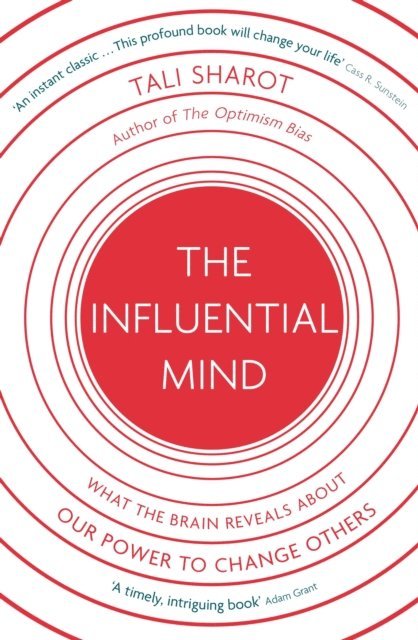
Influential Mind
What the Brain Reveals About Our Power to Change Others
Av Tali Sharot
Häftad, 2018
121 kr
Lägg i varukorg
Selected as a best book of 2017 by Forbes, The Times, Huffington Post, Bloomberg, Greater Good Magazine, Stanford Business School and more.'A timely, intriguing book' Adam Grant, New York Times bestselling author of Originals and Give and Take'This profound book will change your life. An instant …
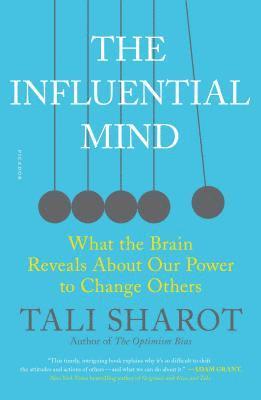
The Influential Mind
What the Brain Reveals About Our Power to Change Others
Av Tali Sharot
Häftad, 2018
242 kr
Lägg i varukorg
A cutting-edge, research-based inquiry into how we influence those around us, and how understanding the brain can help us change minds for the better. In The Influential Mind, neuroscientist Tali Sharot takes us on a thrilling exploration of the nature of influence. We all have a duty to affect …
Influential Mind
What the Brain Reveals About Our Power to Change Others
Av Tali Sharot
E-bok, 2017
44 kr
Lägg i varukorg
Selected as a best book of 2017 by Forbes , The Times , Huffington Post , Bloomberg, Greater Good Magazine , Stanford Business School and more. ''A timely, intriguing book'' Adam Grant, New York Times bestselling author of Originals and Give and Take '' This profound book will change your life. An …
Look Again: The Power of Noticing What Was Always There
Av Tali Sharot, Cass R. Sunstein
Häftad, 2025
236 kr
Lägg i varukorg
Optimism Bias
Why we're wired to look on the bright side
Av Tali Sharot
E-bok, 2012
89 kr
Lägg i varukorg
Winner of the British Psychological Society Book Award for Popular Psychology Psychologists have long been aware that most people tend to maintain an irrationally positive outlook on life. In fact, optimism may be crucial to our existence. Tali Sharot''s original cognitive research demonstrates in …
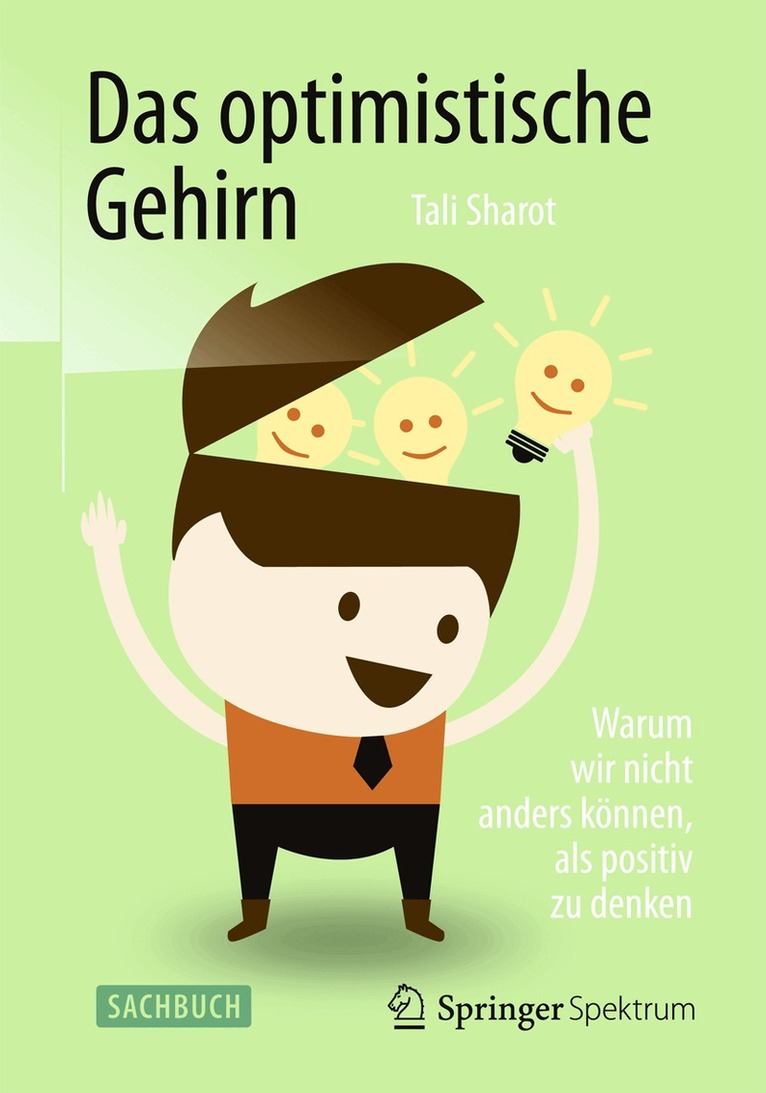
Das optimistische Gehirn
Warum wir nicht anders können, als positiv zu denken
Av Tali Sharot
Häftad, 2014
211 kr
Lägg i varukorg
Das Gehirn ist die Zuversicht in Person Wie erzeugt unser Gehirn Hoffnung? Wie bringt es uns dazu, positiv in die Zukunft zu blicken? Was geschieht, wenn ihm das nicht gelingt? Wie unterscheiden sich die Gehirne von Optimisten und Pessimisten? Warum ist für die einen das Glas halbvoll, für die …
Das optimistische Gehirn
Warum wir nicht anders können, als positiv zu denken
Av Tali Sharot
E-bok, 2013
228 kr
Lägg i varukorg
Das Gehirn ist die Zuversicht in Person Wie erzeugt unser Gehirn Hoffnung? Wie bringt es uns dazu, positiv in die Zukunft zu blicken? Was geschieht, wenn ihm das nicht gelingt? Wie unterscheiden sich die Gehirne von Optimisten und Pessimisten? Warum ist für die einen das Glas halbvoll, für die …
THE OPTIMISM BIAS: A TOUR OF THE IRRATIONALLY POSITIVE BRAIN
Av Tali Sharot
E-bok, 2018
102 kr
Lägg i varukorg
Kak mozg porozhdaet nadezhdu? Kakim obrazom on pobuzhdaet nas dvigat''sya vpered? Otlichaetsya li mozg optimista ot mozga pessimista? Vse my sklonny predstavlyat'' budushchee, v kotorom nas zhdut professional''nyj uspekh, prekrasnye otnosheniya s blizkimi, finansovaya stabil''nost'' i krepkoe …
THE INFLUENTIAL MIND What the Brain Reveals About Our Power to Change Others
Av Tali Sharot
E-bok, 2018
79 kr
Lägg i varukorg
CHto opredelyaet vashu sposobnost'' vliyat'' na drugih lyudej? I naoborot: ot chego zavisit, udastsya li komu-to izmenit'' vashi ubezhdeniya i povedenie? Uchenye dokazali, chto strategiya vliyaniya na okruzhayushchih uspeshna lish'' v tom sluchae, esli ona ne protivorechit osnovnym principam raboty …