Tamalika Das – författare
Visar alla böcker från författaren Tamalika Das. Handla med fri frakt och snabb leverans.
5 produkter
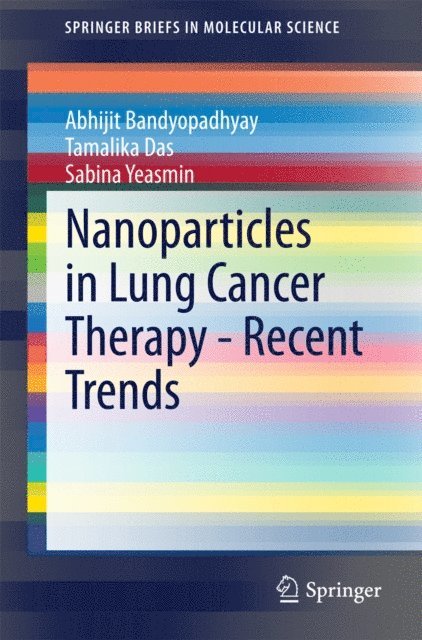
Nanoparticles in Lung Cancer Therapy - Recent Trends
Av Abhijit Bandyopadhyay, Tamalika Das m. fl.
Häftad, 2014
568 kr
Lägg i varukorg
This brief provides an insight into the present scenario of the role of nanotechnology in the diagnosis and treatment of lung cancer at an early stage. Currently, lung cancer is the subject of major concern owing to the very high mortality rate throughout the world. Most of the conventional …
Nanoparticles in Lung Cancer Therapy - Recent Trends
Av Sabina Yeasmin, Tamalika Das m. fl.
E-bok, 2014
755 kr
Lägg i varukorg
This brief provides an insight into the present scenario of the role of nanotechnology in the diagnosis and treatment of lung cancer at an early stage. Currently, lung cancer is the subject of major concern owing to the very high mortality rate throughout the world. Most of the conventional …
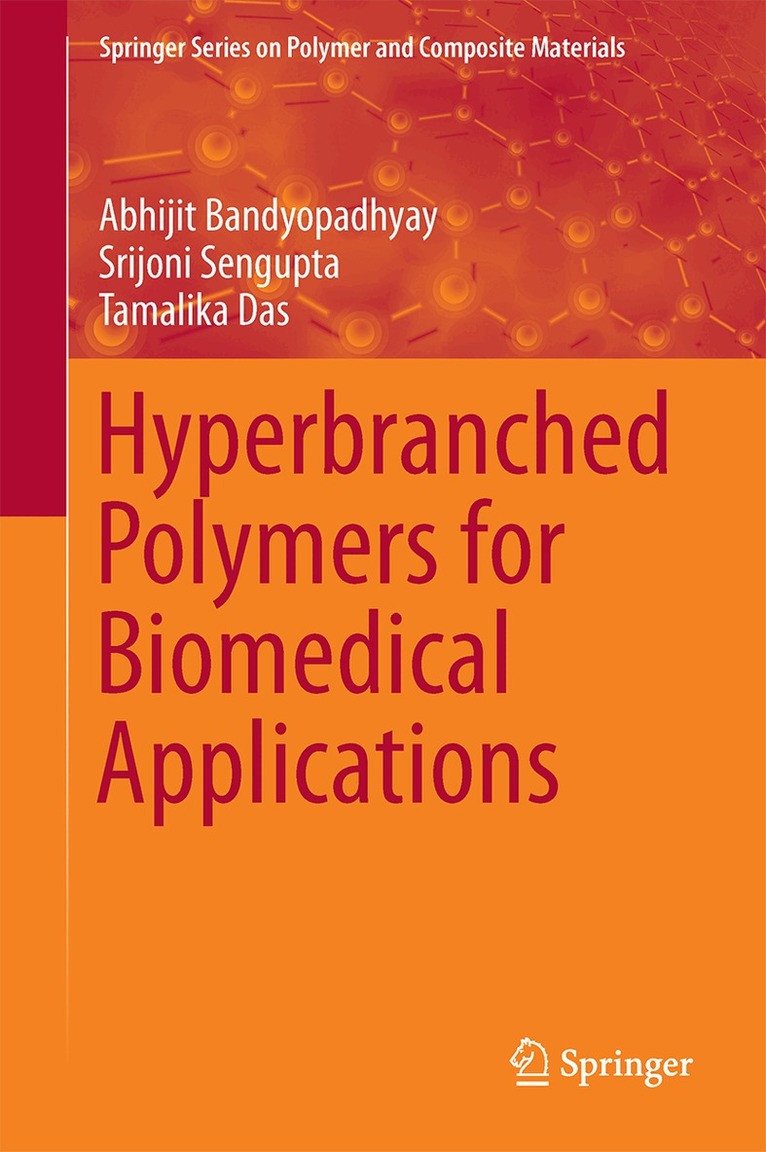
Hyperbranched Polymers for Biomedical Applications
Av Abhijit Bandyopadhyay, Srijoni Sengupta m. fl.
Inbunden, 2017
568 kr
Lägg i varukorg
This book presents a comprehensive study on a new class of branched polymers, known as hyperbranched polymers (HBPs). It discusses in detail the synthesis strategies for these particular classes of polymers as well as biocompatible and biodegradable HBPs, which are of increasing interest to polymer …
Hyperbranched Polymers for Biomedical Applications
Av Tamalika Das, Srijoni Sengupta m. fl.
E-bok, 2017
739 kr
Lägg i varukorg
This book presents a comprehensive study on a new class of branched polymers, known as hyperbranched polymers (HBPs). It discusses in detail the synthesis strategies for these particular classes of polymers as well as biocompatible and biodegradable HBPs, which are of increasing interest to polymer …
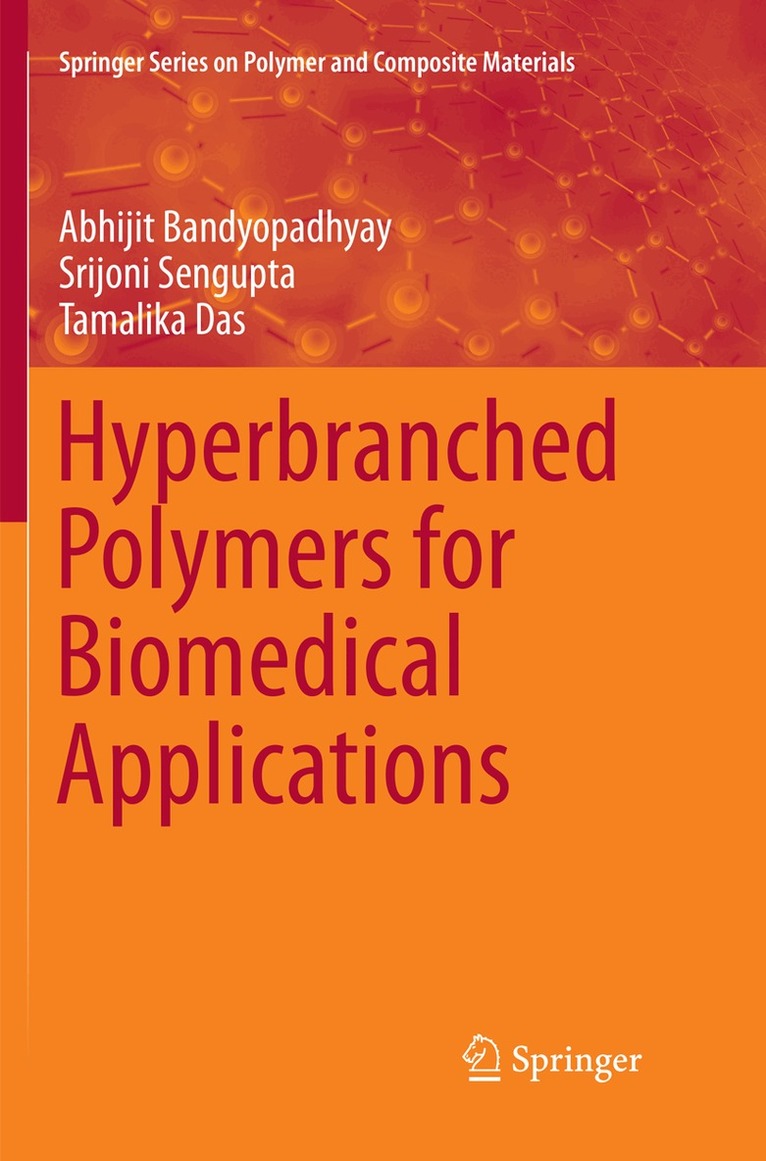
Hyperbranched Polymers for Biomedical Applications
Av Abhijit Bandyopadhyay, Srijoni Sengupta m. fl.
Häftad, 2018
568 kr
Lägg i varukorg
This book presents a comprehensive study on a new class of branched polymers, known as hyperbranched polymers (HBPs). It discusses in detail the synthesis strategies for these particular classes of polymers as well as biocompatible and biodegradable HBPs, which are of increasing interest to polymer …