Tamara Giles-Vernick - Böcker
Visar alla böcker från författaren Tamara Giles-Vernick. Handla med fri frakt och snabb leverans.
6 produkter
6 produkter
Cutting the Vines of the Past
Environmental Histories of the Central African Rain Forest
Inbunden, Engelska, 2002
813 kr
Skickas inom 10-15 vardagar
Cutting the Vines of the Past offers a novel argument: African ways of seeing and interpreting their environments and past are not only critical to how historians write environmental history; they also have important lessons for policymakers and conservationists. Tamara Giles-Vernick demonstrates how various outsiders intervening in African land-use practices have repeatedly met failure because of their inability or unwillingness to understand how Africans see their land and their pasts. Giles-Vernick takes as her focus doli, the environmental and historical perceptions and knowledge of the Mpiemu people in the Central African Republic. She argues that Mpiemu opposition to a modern environmental conservation project - the Dzanga-Ndoki National Park and the Dzanga-Sangha Special Reserve - derives from the people's interpretations of their past experiences with environmental interventions imposed by concessionary companies, colonial officials, other Africans, Christian missionaries, and the postcolonial state. At the same time, Mpiemu people associate these contemporary conservationists with the bosses and Christian missionaries of the colonial past, viewing them as sources of jobs, consumer goods, and other support. Giles-Vernick's argument will interest conservationists and policymakers as well as environmental historians. By examining Africans' environmental and historical ways of seeing and knowing, and by revealing how these have changed, Giles-Vernick offers a fresh perspective on the writing of environmental history.
Cutting the Vines of the Past
Environmental Histories of the Central African Rain Forest
Häftad, Engelska, 2002
298 kr
Skickas inom 7-10 vardagar
Cutting the Vines of the Past offers a novel argument: African ways of seeing and interpreting their environments and past are not only critical to how historians write environmental history; they also have important lessons for policymakers and conservationists. Tamara Giles-Vernick demonstrates how various outsiders intervening in African land-use practices have repeatedly met failure because of their inability or unwillingness to understand how Africans see their land and their pasts. Giles-Vernick takes as her focus doli, the environmental and historical perceptions and knowledge of the Mpiemu people in the Central African Republic. She argues that Mpiemu opposition to a modern environmental conservation project - the Dzanga-Ndoki National Park and the Dzanga-Sangha Special Reserve - derives from the people's interpretations of their past experiences with environmental interventions imposed by concessionary companies, colonial officials, other Africans, Christian missionaries, and the postcolonial state. At the same time, Mpiemu people associate these contemporary conservationists with the bosses and Christian missionaries of the colonial past, viewing them as sources of jobs, consumer goods, and other support. Giles-Vernick's argument will interest conservationists and policymakers as well as environmental historians. By examining Africans' environmental and historical ways of seeing and knowing, and by revealing how these have changed, Giles-Vernick offers a fresh perspective on the writing of environmental history.
893 kr
Skickas inom 10-15 vardagar
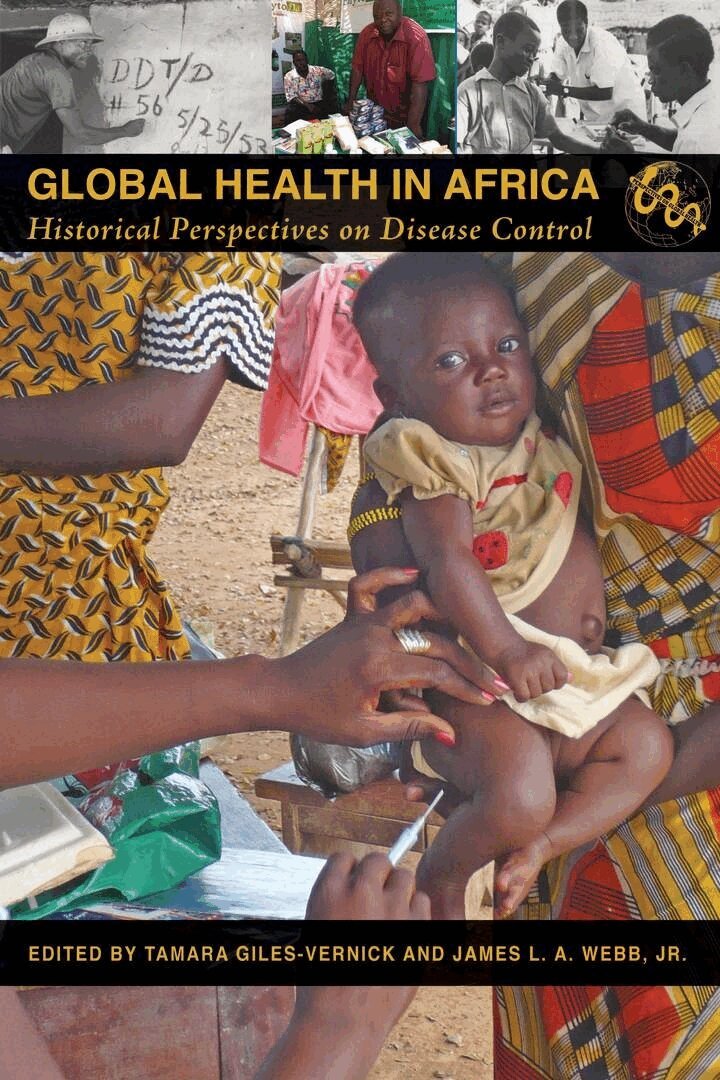
Global Health in Africa is a first exploration of selected histories of global health initiatives in Africa. The collection addresses some of the most important interventions in disease control, including mass vaccination, large-scale treatment and/or prophylaxis campaigns, harm reduction efforts, and nutritional and virological research.The chapters in this collection are organized in three sections that evaluate linkages between past, present, and emergent. Part I, "Looking Back," contains four chapters that analyze colonial-era interventions and reflect upon their implications for contemporary interventions. Part II, "The Past in the Present," contains essays exploring the historical dimensions and unexamined assumptions of contemporary disease control programs. Part III, "The Past in the Future," examines two fields of public health intervention in which efforts to reduce disease transmission and future harm are premised on an understanding of the past.This much-needed volume brings together international experts from the disciplines of demography, anthropology, and historical epidemiology. Covering health initiatives from smallpox vaccinations to malaria control to HIV campaigns, Global Health in Africa offers a first comprehensive look at some of global health's most important challenges.
381 kr
Skickas inom 10-15 vardagar
Global Health in Africa is a first exploration of selected histories of global health initiatives in Africa. The collection addresses some of the most important interventions in disease control, including mass vaccination, large-scale treatment and/or prophylaxis campaigns, harm reduction efforts, and nutritional and virological research.The chapters in this collection are organized in three sections that evaluate linkages between past, present, and emergent. Part I, "Looking Back," contains four chapters that analyze colonial-era interventions and reflect upon their implications for contemporary interventions. Part II, "The Past in the Present," contains essays exploring the historical dimensions and unexamined assumptions of contemporary disease control programs. Part III, "The Past in the Future," examines two fields of public health intervention in which efforts to reduce disease transmission and future harm are premised on an understanding of the past.This much-needed volume brings together international experts from the disciplines of demography, anthropology, and historical epidemiology. Covering health initiatives from smallpox vaccinations to malaria control to HIV campaigns, Global Health in Africa offers a first comprehensive look at some of global health's most important challenges.
696 kr
Skickas inom 10-15 vardagar
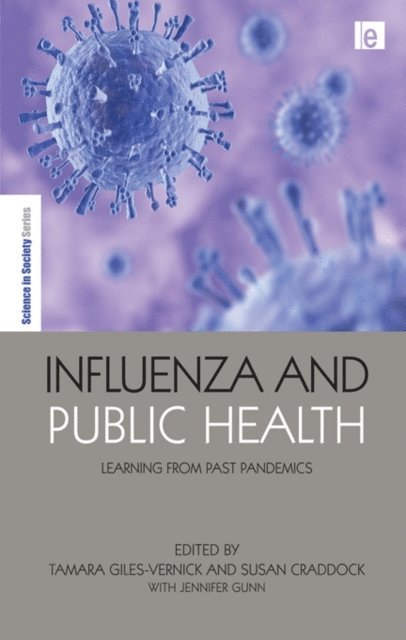
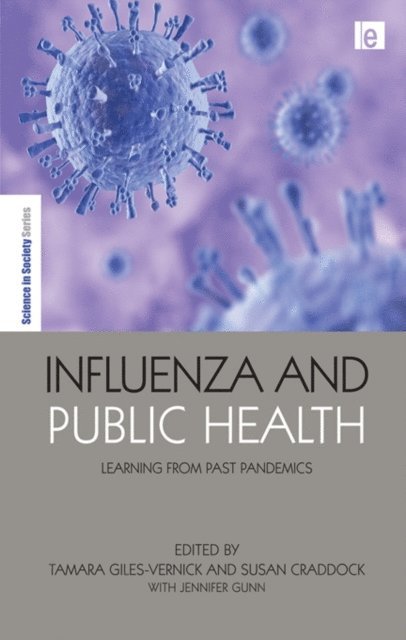
Major influenza pandemics pose a constant threat. As evidenced by recent H5N1 avian flu and novel H1N1, influenza outbreaks can come in close succession, yet differ in their transmission and impact. With accelerated levels of commercial and population mobility, new forms of flu virus can also spread across the globe with unprecedented speed. Responding quickly and adequately to each outbreak becomes imperative on the part of governments and global public health organizations, but the difficulties of doing so are legion. One tool for pandemic planning is analysis of responses to past pandemics that provide insight into productive ways forward. This book investigates past influenza pandemics in light of today's, so as to afford critical insights into possible transmission patterns, experiences, mistakes, and interventions. It explores several pandemics over the past century, from the infamous 1918 Spanish Influenza, the avian flu epidemic of 2003, and the novel H1N1 pandemic of 2009, to lesser-known outbreaks such as the 1889-90 influenza pandemic and the Hong Kong Flu of 1968. Contributors to the volume examine cases from a wide range of disciplines, including history, sociology, epidemiology, virology, geography, and public health, identifying patterns that cut across pandemics in order to guide contemporary responses to infectious outbreaks.
1 935 kr
Skickas inom 10-15 vardagar
Major influenza pandemics pose a constant threat. As evidenced by recent H5N1 avian flu and novel H1N1, influenza outbreaks can come in close succession, yet differ in their transmission and impact. With accelerated levels of commercial and population mobility, new forms of flu virus can also spread across the globe with unprecedented speed. Responding quickly and adequately to each outbreak becomes imperative on the part of governments and global public health organizations, but the difficulties of doing so are legion. One tool for pandemic planning is analysis of responses to past pandemics that provide insight into productive ways forward. This book investigates past influenza pandemics in light of today's, so as to afford critical insights into possible transmission patterns, experiences, mistakes, and interventions. It explores several pandemics over the past century, from the infamous 1918 Spanish Influenza, the avian flu epidemic of 2003, and the novel H1N1 pandemic of 2009, to lesser-known outbreaks such as the 1889-90 influenza pandemic and the Hong Kong Flu of 1968. Contributors to the volume examine cases from a wide range of disciplines, including history, sociology, epidemiology, virology, geography, and public health, identifying patterns that cut across pandemics in order to guide contemporary responses to infectious outbreaks.