Tamara Perišin – författare
Visar alla böcker från författaren Tamara Perišin. Handla med fri frakt och snabb leverans.
12 produkter
12 produkter
Inbunden, Engelska, 2018
1 196 kr
Skickas inom 10-15 vardagar
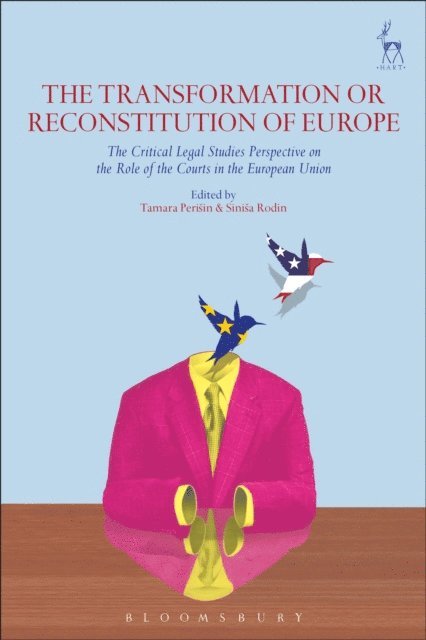
It is generally understood that EU law as interpreted by the ECJ has not merely reconstituted the national legal matrix at the supranational level, but has also transformed Europe and shaken the well-established, often formalist, ways of thinking about law in the Member States. This innovative new study seeks to examine such a narrative through the lens of the American critical legal studies (CLS) perspective. The introduction explains how the editors understand CLS and why its methodology is relevant in the European context. Part II examines whether and how judges embed policy choices or even ideologies in their decisions, and how to detect them. Part III assesses how the ECJ acts to ensure the legitimacy of its decisions, whether it resists implementing political ideologies, what the ideology of European integration is, and how the selection of judges influences these issues. Part IV uses the critical perspective to examine some substantive parts of EU law, rules on internal and external movement, and the European arrest warrant. It seeks to determine whether the role of the ECJ has really been transformative and whether that transformation is reversible. Part V considers the role of academics in shaping the narratives of EU integration.
E-bok
PDF, Engelska, 2018484 kr
Läs direkt efter köp
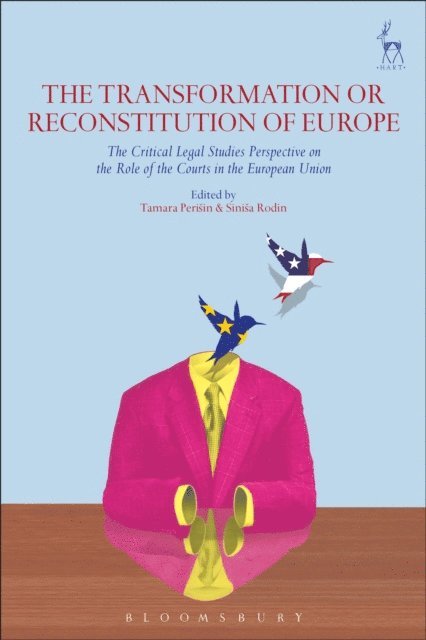
It is generally understood that EU law as interpreted by the ECJ has not merely reconstituted the national legal matrix at the supranational level, but has also transformed Europe and shaken the well-established, often formalist, ways of thinking about law in the Member States. This innovative new study seeks to examine such a narrative through the lens of the American critical legal studies (CLS) perspective. The introduction explains how the editors understand CLS and why its methodology is relevant in the European context. Part II examines whether and how judges embed policy choices or even ideologies in their decisions, and how to detect them. Part III assesses how the ECJ acts to ensure the legitimacy of its decisions, whether it resists implementing political ideologies, what the ideology of European integration is, and how the selection of judges influences these issues. Part IV uses the critical perspective to examine some substantive parts of EU law, rules on internal and external movement, and the European arrest warrant. It seeks to determine whether the role of the ECJ has really been transformative and whether that transformation is reversible. Part V considers the role of academics in shaping the narratives of EU integration.
E-bok
Engelska, 2018484 kr
Läs direkt efter köp
It is generally understood that EU law as interpreted by the ECJ has not merely reconstituted the national legal matrix at the supranational level, but has also transformed Europe and shaken the well-established, often formalist, ways of thinking about law in the Member States. This innovative new study seeks to examine such a narrative through the lens of the American critical legal studies (CLS) perspective. The introduction explains how the editors understand CLS and why its methodology is relevant in the European context. Part II examines whether and how judges embed policy choices or even ideologies in their decisions, and how to detect them. Part III assesses how the ECJ acts to ensure the legitimacy of its decisions, whether it resists implementing political ideologies, what the ideology of European integration is, and how the selection of judges influences these issues. Part IV uses the critical perspective to examine some substantive parts of EU law, rules on internal and external movement, and the European arrest warrant. It seeks to determine whether the role of the ECJ has really been transformative and whether that transformation is reversible. Part V considers the role of academics in shaping the narratives of EU integration.
Inbunden, Engelska, 2022
1 134 kr
Skickas inom 10-15 vardagar
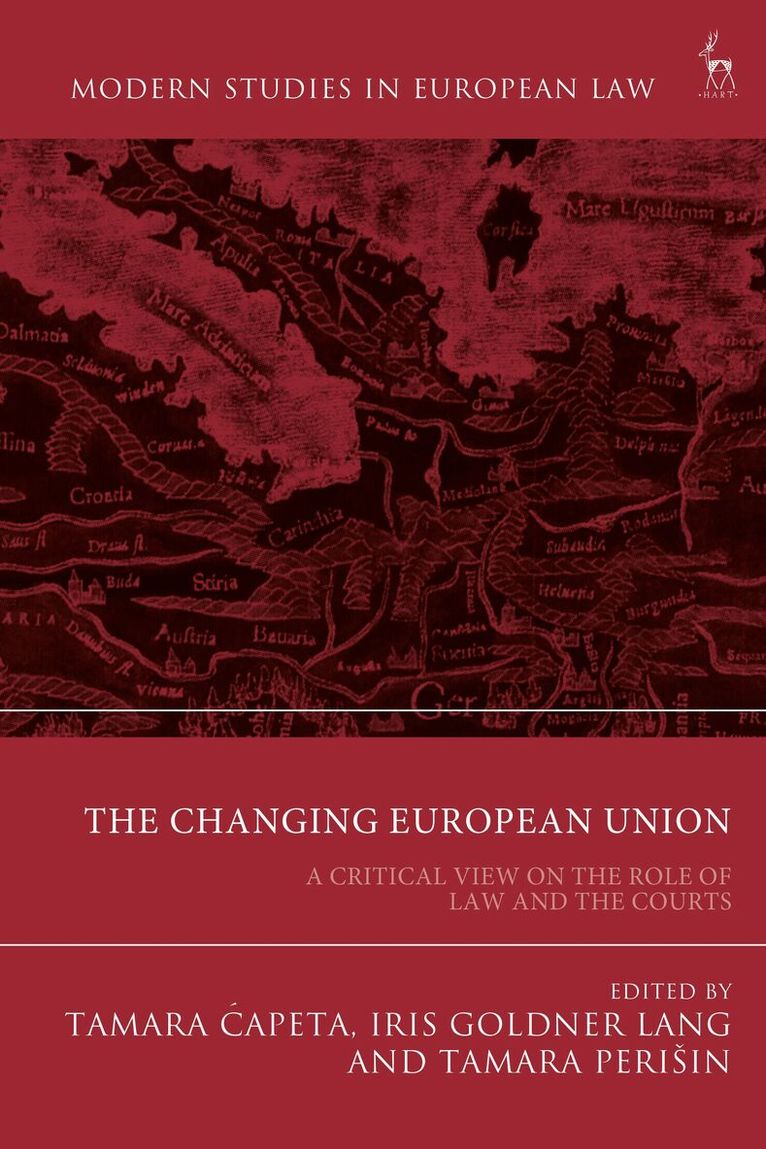
It is widely recognised that international order is undergoing transformative change and the old norms no longer apply. This collection looks at how the EU, specifically its judicial wing, is responding to these new challenges. It looks both externally at those internationally shared problems of unequal societies, the rise of populism and the migrant crisis and internally at Brexit, the differences between the EU centre and peripheries and the division of competences. Taking a multifaceted approach, it draws on voices from academia and the judiciary to suggest how the EU might respond effectively to the challenges faced.
E-bok
Engelska, 2022578 kr
Läs direkt efter köp
It is widely recognised that international order is undergoing transformative change and the old norms no longer apply. This collection looks at how the EU, specifically its judicial wing, is responding to these new challenges. It looks both externally at those internationally shared problems of unequal societies, the rise of populism and the migrant crisis and internally at Brexit, the differences between the EU centre and peripheries and the division of competences. Taking a multifaceted approach, it draws on voices from academia and the judiciary to suggest how the EU might respond effectively to the challenges faced.
E-bok
PDF, Engelska, 2022578 kr
Läs direkt efter köp
It is widely recognised that international order is undergoing transformative change and the old norms no longer apply. This collection looks at how the EU, specifically its judicial wing, is responding to these new challenges. It looks both externally at those internationally shared problems of unequal societies, the rise of populism and the migrant crisis and internally at Brexit, the differences between the EU centre and peripheries and the division of competences. Taking a multifaceted approach, it draws on voices from academia and the judiciary to suggest how the EU might respond effectively to the challenges faced.
Häftad, Engelska, 2020
457 kr
Skickas inom 10-15 vardagar
It is generally understood that EU law as interpreted by the ECJ has not merely reconstituted the national legal matrix at the supranational level, but has also transformed Europe and shaken the well-established, often formalist, ways of thinking about law in the Member States. This innovative new study seeks to examine such a narrative through the lens of the American critical legal studies (CLS) perspective. The introduction explains how the editors understand CLS and why its methodology is relevant in the European context. Part II examines whether and how judges embed policy choices or even ideologies in their decisions, and how to detect them. Part III assesses how the ECJ acts to ensure the legitimacy of its decisions, whether it resists implementing political ideologies, what the ideology of European integration is, and how the selection of judges influences these issues. Part IV uses the critical perspective to examine some substantive parts of EU law, rules on internal and external movement, and the European arrest warrant. It seeks to determine whether the role of the ECJ has really been transformative and whether that transformation is reversible. Part V considers the role of academics in shaping the narratives of EU integration.
Häftad, Engelska, 2024
545 kr
Skickas inom 10-15 vardagar
It is widely recognised that international order is undergoing transformative change and the old norms no longer apply. This collection looks at how the EU, specifically its judicial wing, is responding to these new challenges. It looks both externally at those internationally shared problems of unequal societies, the rise of populism and the migrant crisis and internally at Brexit, the differences between the EU centre and peripheries and the division of competences. Taking a multifaceted approach, it draws on voices from academia and the judiciary to suggest how the EU might respond effectively to the challenges faced.
Inbunden, Engelska, 2015
995 kr
Skickas inom 10-15 vardagar
After the introductory Part I, Part II discusses specific areas of international law, notably the law of Association Agreements between the EU and third countries, the law of the World Trade Organization, and international environmental law (the Aarhus Convention).
E-bok
PDF, Engelska, 20151 269 kr
Läs direkt efter köp
This edited volume presents comparative research on how the courts in Southeast Europe apply international law. After the introductory Part I, Part II discusses specific areas of international law, notably the law of Association Agreements between the EU and third countries, the law of the World Trade Organization, and international environmental law (the Aarhus Convention). Part III consists of country reports on how national courts in Albania, Bosnia and Herzegovina, Croatia, Kosovo, Macedonia, Montenegro, Serbia and Slovenia are currently applying international law.
Häftad, Engelska, 2016
995 kr
Skickas inom 10-15 vardagar
This edited volume presents comparative research on how the courts in Southeast Europe apply international law. After the introductory Part I, Part II discusses specific areas of international law, notably the law of Association Agreements between the EU and third countries, the law of the World Trade Organization, and international environmental law (the Aarhus Convention). Part III consists of country reports on how national courts in Albania, Bosnia and Herzegovina, Croatia, Kosovo, Macedonia, Montenegro, Serbia and Slovenia are currently applying international law.
Inbunden, Engelska, 2008
1 073 kr
Skickas inom 10-15 vardagar
In every system aimed at trade liberalisation, it is necessary to balance this goal with the protection of (other) values. Not only does this have economic implications, but it also strikes at the heart of regulatory autonomy, sovereignty, division of power between levels and branches of government and constitutionalism. The optimal balance necessarily depends on the system's aims, structure, membership and level of homogeneity. This book explores this broad idea in the specific context of the EU and WTO rules on non-pecuniary restrictions on the free movement of goods and seeks to establish how to optimally interpret them. Furthermore, it demonstrates that the EU internal market rules have strong external effects which can be felt within the WTO.