Tana Li – författare
Visar alla böcker från författaren Tana Li. Handla med fri frakt och snabb leverans.
6 produkter
6 produkter
E-bok
Engelska, 20111 258 kr
Läs direkt efter köp
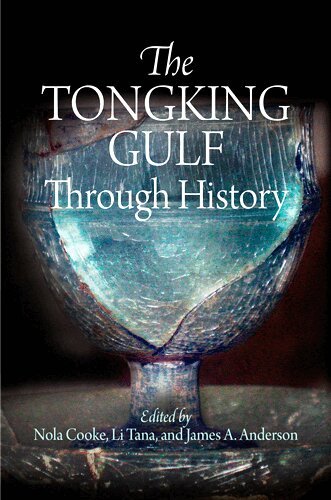
Since 2005, a series of significant developments has been unfolding in the area of the Tongking Gulf under the rubric of an ambitious project called "Two Corridors and One Rim." Proposed by Vietnam in 2004 and enthusiastically embraced by China, the project is designed to link their shared shores and hinterlands by superhighways and high-speed rail. An area that had seemed a backwater for two hundred years has suddenly become a dynamic engine of growth.Yet how innovative are these developments? Drawing on fresh historical insights and recent archaeological research in northern Vietnam and southern China, The Tongking Gulf Through History reveals that this region has long been a center of cultural, political, and economic exchange. From a historical point of view, contributors argue, the Gulf of Tongking has come full circle. Inspired by the Braudelian vision that regionality arises from long-term human interactions, essays avoid state-centered approaches of nationalist histories to focus on local communities throughout the Gulf. In doing so, they reveal a complex pattern of interrelationships and geopolitical factors that has shaped the gulf region for over two millennia.The first half of the volume covers the era from the Neolithic to the tenth century, when an independent state emerged from old Chinese Jiaozhi, or modern northern Vietnam; the second surveys the nine centuries that followed, in which only two states came to share the maritime shores of the Tongking Gulf. Together, the essays illuminate how millennia of recurring human interactions within this geographical space have created a regional ensemble with its own longstanding historical integrity and dynamics.
Inbunden, Engelska, 2011
864 kr
Skickas inom 5-8 vardagar
Since 2005, a series of significant developments has been unfolding in the area of the Tongking Gulf under the rubric of an ambitious project called "Two Corridors and One Rim." Proposed by Vietnam in 2004 and enthusiastically embraced by China, the project is designed to link their shared shores and hinterlands by superhighways and high-speed rail. An area that had seemed a backwater for two hundred years has suddenly become a dynamic engine of growth.Yet how innovative are these developments? Drawing on fresh historical insights and recent archaeological research in northern Vietnam and southern China, The Tongking Gulf Through History reveals that this region has long been a center of cultural, political, and economic exchange. From a historical point of view, contributors argue, the Gulf of Tongking has come full circle. Inspired by the Braudelian vision that regionality arises from long-term human interactions, essays avoid state-centered approaches of nationalist histories to focus on local communities throughout the Gulf. In doing so, they reveal a complex pattern of interrelationships and geopolitical factors that has shaped the gulf region for over two millennia.The first half of the volume covers the era from the Neolithic to the tenth century, when an independent state emerged from old Chinese Jiaozhi, or modern northern Vietnam; the second surveys the nine centuries that followed, in which only two states came to share the maritime shores of the Tongking Gulf. Together, the essays illuminate how millennia of recurring human interactions within this geographical space have created a regional ensemble with its own longstanding historical integrity and dynamics.
Inbunden, Engelska, 2024
1 130 kr
Skickas inom 7-10 vardagar
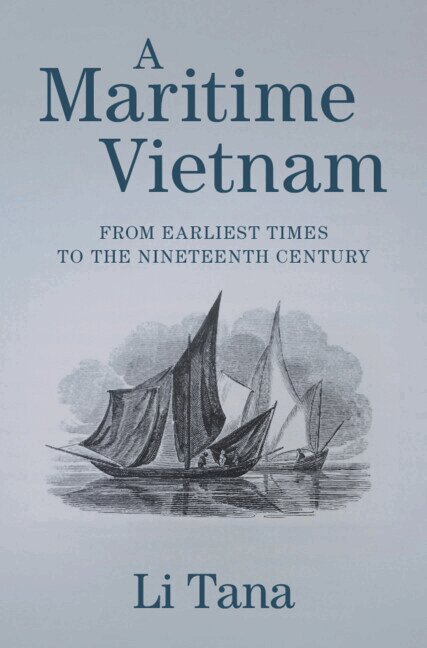
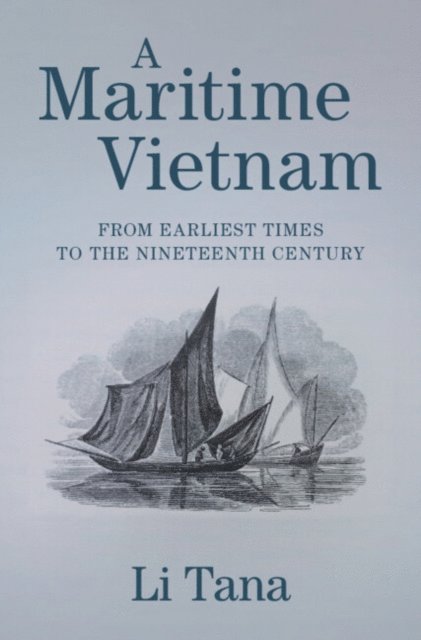
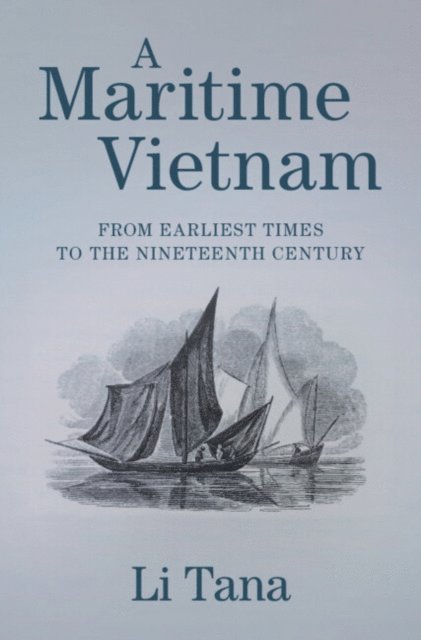
Despite its 3,000 kilometre coastline, few people see Vietnam as a maritime country. Here Li Tana presents a powerful new argument about Vietnamese history: that key political changes resulted from the impact, economic and otherwise, of the sea. This is a finely layered account covering the two millennia before colonisation that radically restructures how we understand the role of the maritime and trans-regional in Vietnam's early history. Drawing on exhaustive research of Chinese, Vietnamese and Japanese sources, Li reveals that it is only when viewed against the background of the sea that Vietnam's past can be properly understood. In contrast to traditional perceptions of an inward-looking society dominated by Chinese cultural influence, Vietnam was shaped by dynamic littoral economic and cultural contact.
Häftad, Engelska, 2024
352 kr
Skickas inom 7-10 vardagar
Despite its 3,000 kilometre coastline, few people see Vietnam as a maritime country. Here Li Tana presents a powerful new argument about Vietnamese history: that key political changes resulted from the impact, economic and otherwise, of the sea. This is a finely layered account covering the two millennia before colonisation that radically restructures how we understand the role of the maritime and trans-regional in Vietnam's early history. Drawing on exhaustive research of Chinese, Vietnamese and Japanese sources, Li reveals that it is only when viewed against the background of the sea that Vietnam's past can be properly understood. In contrast to traditional perceptions of an inward-looking society dominated by Chinese cultural influence, Vietnam was shaped by dynamic littoral economic and cultural contact.
E-bok
PDF, Engelska, 2024425 kr
Läs direkt efter köp
E-bok
Engelska, 2024425 kr
Läs direkt efter köp