2 526 kr
Skickas inom 7-10 vardagar
2 526 kr
Skickas inom 7-10 vardagar
1 074 kr
Skickas inom 7-10 vardagar
670 kr
Läs direkt efter köp
670 kr
Läs direkt efter köp
2 408 kr
Skickas inom 10-15 vardagar
485 kr
Skickas inom 5-8 vardagar
1 130 kr
Skickas inom 5-8 vardagar
1 068 kr
Skickas inom 5-8 vardagar
718 kr
Skickas inom 10-15 vardagar
1 550 kr
Läs direkt efter köp
1 550 kr
Läs direkt efter köp
511 kr
Läs direkt efter köp
1 739 kr
Skickas inom 5-8 vardagar
511 kr
Läs direkt efter köp
533 kr
Skickas
634 kr
Skickas inom 5-8 vardagar
840 kr
Läs direkt efter köp
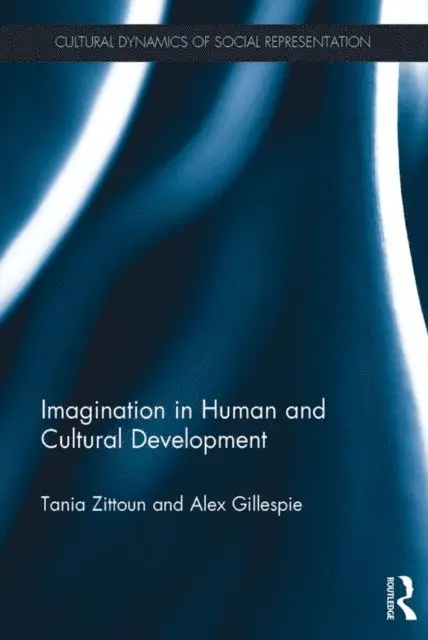
This book positions imagination as a central concept which increases the understanding of daily life, personal life choices, and the way in which culture and society changes. Case studies from micro instances of reverie and daydreaming, to utopian projects, are included and analysed. The theoretical focus is on imagination as a force free from immediate constraints, forming the basis of our individual and collective agency.
In each chapter, the authors review and integrate a wide range of classic and contemporary literature culminating in the proposal of a sociocultural model of imagination. The book takes into account the triggers of imagination, the content of imagination, and the outcomes of imagination. At the heart of the model is the interplay between the individual and culture; an exploration of how the imagination, as something very personal and subjective, grows out of our shared culture, and how our shared culture can be transformed by acts of imagination.
Imagination in Human and Cultural Development offers new perspectives on the study of psychological learning, change, innovation and creativity throughout the lifespan. The book will appeal to academics and scholars in the fields of psychology and the social sciences, especially those with an interest in development, social change, cultural psychology, imagination and creativity.
840 kr
Läs direkt efter köp
This book positions imagination as a central concept which increases the understanding of daily life, personal life choices, and the way in which culture and society changes. Case studies from micro instances of reverie and daydreaming, to utopian projects, are included and analysed. The theoretical focus is on imagination as a force free from immediate constraints, forming the basis of our individual and collective agency.
In each chapter, the authors review and integrate a wide range of classic and contemporary literature culminating in the proposal of a sociocultural model of imagination. The book takes into account the triggers of imagination, the content of imagination, and the outcomes of imagination. At the heart of the model is the interplay between the individual and culture; an exploration of how the imagination, as something very personal and subjective, grows out of our shared culture, and how our shared culture can be transformed by acts of imagination.
Imagination in Human and Cultural Development offers new perspectives on the study of psychological learning, change, innovation and creativity throughout the lifespan. The book will appeal to academics and scholars in the fields of psychology and the social sciences, especially those with an interest in development, social change, cultural psychology, imagination and creativity.
1 671 kr
Skickas inom 3-6 vardagar
634 kr
Skickas inom 5-8 vardagar
1 122 kr
Skickas inom 5-8 vardagar
449 kr
Läs direkt efter köp
What do young people do with the novels they read, the films they see, the music they hear and sing? How do these cultural products act as ‘symbolic resources’ in the process of development? And what can we, as researchers, learn by studying people’s uses of fiction? This monograph approaches development through the study of transitions and the processes of exploration that follow ruptures in people’s lives. Specifically, it examines young people’s symbolic responsibility as they have to choose among the wide range of cultural products societies exposes them to. The book thus examines the books, films and music that young people mobilize when they need to redefine their identity, learn informal know-how, or have to confer meaning to what happens to them in transitions. The book has a theoretical scope. It draws on cultural psychology and psychoanalysis to formulate the importance of semiotic mediation in thinking, feeling and acting. Its main contribution is to propose a model for analyzing uses of symbolic resources, such as books and films, in everyday life. It thus shows how uses of symbolic resources can enable new forms of experiences and conduct. It finally highlights social and personal conditions that might facilitate or hinder developmental uses of symbolic resources. The book, based on in-depth case studies, is addressed to scholars, professional and students in the fields of youth, culture and the media, cultural and developmental psychology, and life-long education.
616 kr
Skickas inom 5-8 vardagar
1 091 kr
Skickas inom 5-8 vardagar
433 kr
Läs direkt efter köp
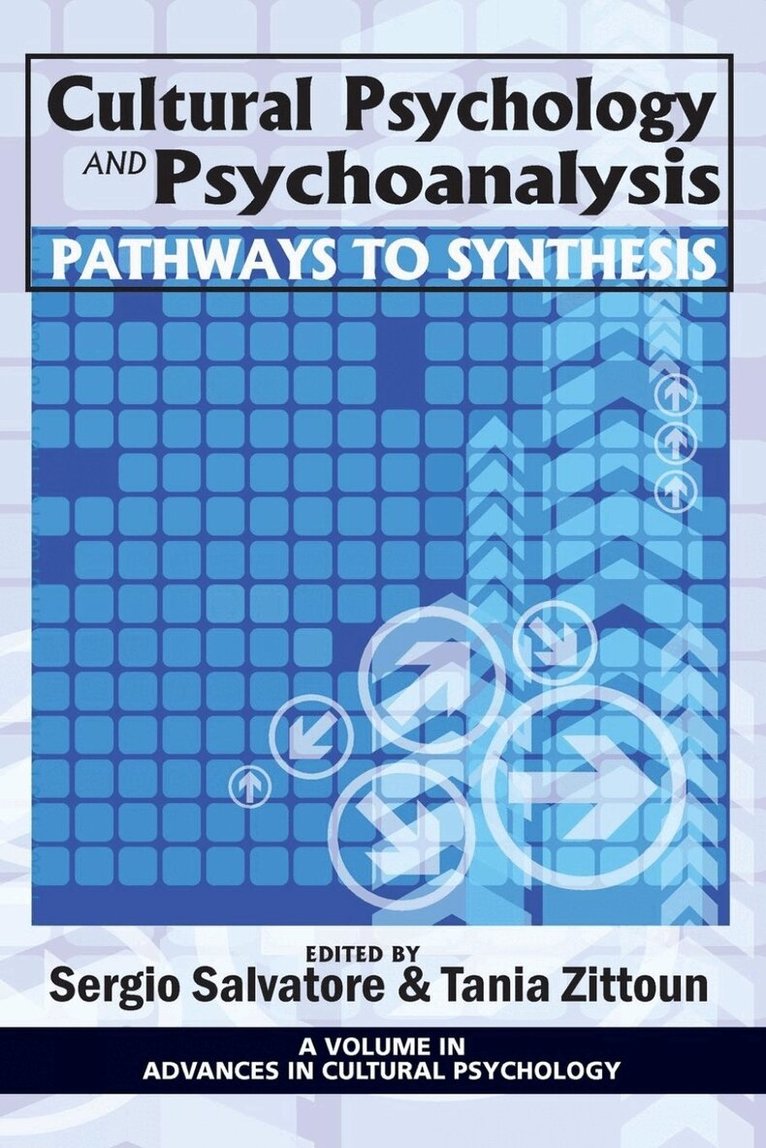
This book explores how psychoanalysis can enrich and complement sociocultural psychology. It presents theoretical integrations of psychoanalytical notions in the sociocultural framework, analyzes the historical similarities, if not intricacies, of the two fields, and presents papers that have tried to apply an enriched theoretical framework in developmental and clinical empirical work. The first section presents editors'' theoretical proposition for an integration of one particular stream of psychoanalysis within sociocultural psychology, which emphasizes both the dialogical and the semiotic nature of psychological dynamics. The second section pursues this theoretical dialogue through a historical perspective. The third section pursues the implications of this parallel reasoning. It invites researchers that propose further syntheses between some strands of psychoanalysis and approaches within social and cultural psychology. The contributions collected in this section show how sociocultural psychology and psychoanalysis can complement each other, when it comes to tracing the emergence of meaning in actual interactive settings.
Showing historical common roots, epistemological similarities, and theoretical complementarities, this book intends to suggests how the encounter and reciprocal contamination between cultural psychology and psychoanalysis could provide innovative theoretical and methodological syntheses. Through the various contributions three directions of development emerge as particularly promising for psychological science. Firstly, the semiotic conceptualization of affects, emerging from several of the contributors, appears to be a significant step ahead in the understanding of the dynamics of sense-making. A second promising direction of development concerns methodology. The reader will find several invitations to rethink the way of analyzing the phenomena of sense-making. Finally, the volume highlights how the connection between theory and practice in psychology is not a mere matter of application. Rather, the psychological intervention could be – needs to be – a theoretical object for cultural psychology, as it already is for psychoanalysis. At the same time, the intervention could be a fertile domain where a psychological practice endowed with reflexive capability generates new theoretical constructions.
654 kr
Läs direkt efter köp
666 kr
Läs direkt efter köp
593 kr
Skickas inom 10-15 vardagar
789 kr
Läs direkt efter köp
1 816 kr
Skickas inom 10-15 vardagar