Tatek Abebe - Böcker
Visar alla böcker från författaren Tatek Abebe. Handla med fri frakt och snabb leverans.
3 produkter
3 produkter
3 172 kr
Skickas inom 10-15 vardagar
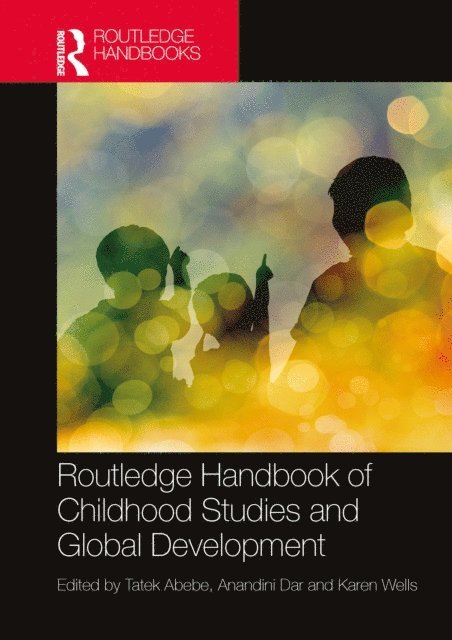
This Routledge Handbook of Childhood Studies and Global Development explores how global development agendas and economic development influence children’s lives. It demonstrates that children are not only the frequent targets or objects of development but that they also shape and influence processes of development and social change in diverse and meaningful ways.The handbook makes the case for the importance of placing children at the heart of developmentdebates, examining the complex social, historical, cultural, economic, epidemiological, ecological, geopolitical, and institutional processes transforming what it means to be young in the world today. Through reports on field research as well as a critical engagement with theories in development studies and childhood studies, contributions unravel the structural connections of global development processes as they relate to children’s life worlds. They tease out and tease apart how global developmental processes influence children’s lives, how children inform and shape development, why it is important to keep children at the centre of debates linked to development and socio- cultural change, and ways of engaging children in development research, policies and practices.Showcasing research from both established scholars and early career researchers, and with particular prominence given to the work of authors from the global south, this handbook will be an essential reference for policymakers, practitioners, and for researchers and students across childhood studies, education, geography, sociology, and international development.
727 kr
Kommande
This Routledge Handbook of Childhood Studies and Global Development explores how global development agendas and economic development influence children’s lives. It demonstrates that children are not only the frequent targets or objects of development but that they also shape and influence processes of development and social change in diverse and meaningful ways.The handbook makes the case for the importance of placing children at the heart of developmentdebates, examining the complex social, historical, cultural, economic, epidemiological, ecological, geopolitical, and institutional processes transforming what it means to be young in the world today. Through reports on field research as well as a critical engagement with theories in development studies and childhood studies, contributions unravel the structural connections of global development processes as they relate to children’s life worlds. They tease out and tease apart how global developmental processes influence children’s lives, how children inform and shape development, why it is important to keep children at the centre of debates linked to development and socio- cultural change, and ways of engaging children in development research, policies and practices.Showcasing research from both established scholars and early career researchers, and with particular prominence given to the work of authors from the global south, this handbook will be an essential reference for policymakers, practitioners, and for researchers and students across childhood studies, education, geography, sociology, and international development.
3 637 kr
Skickas inom 10-15 vardagar
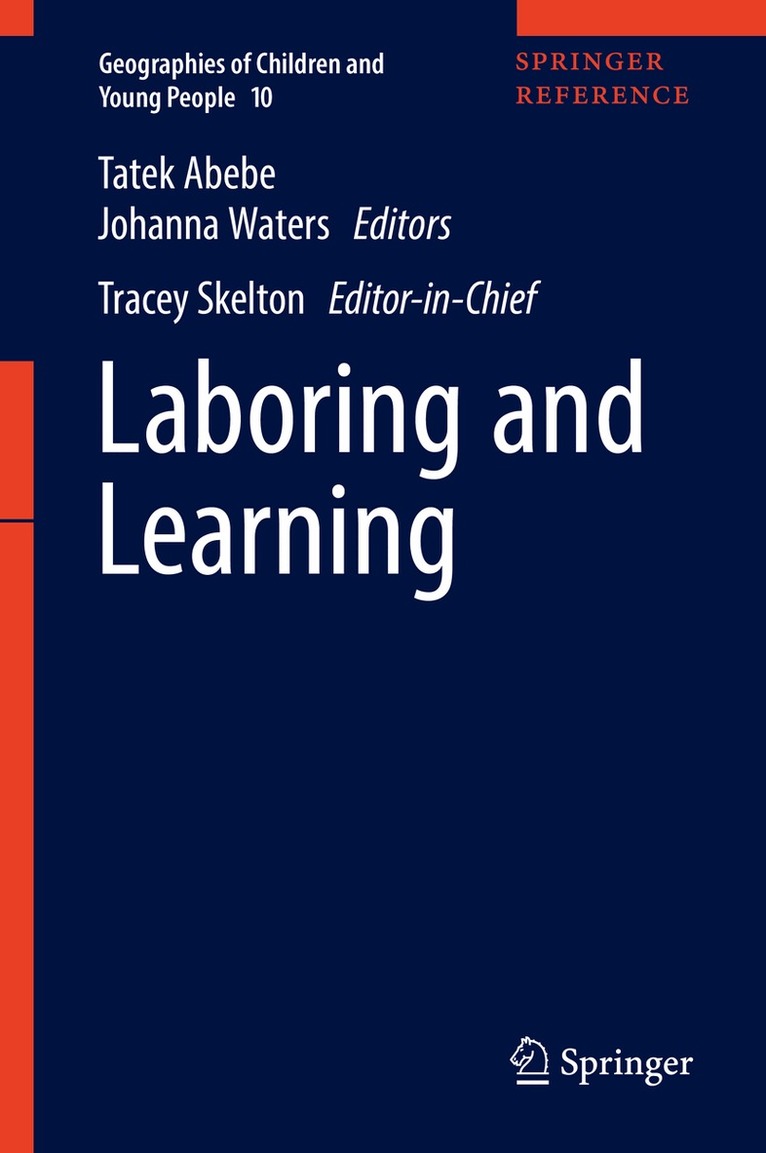
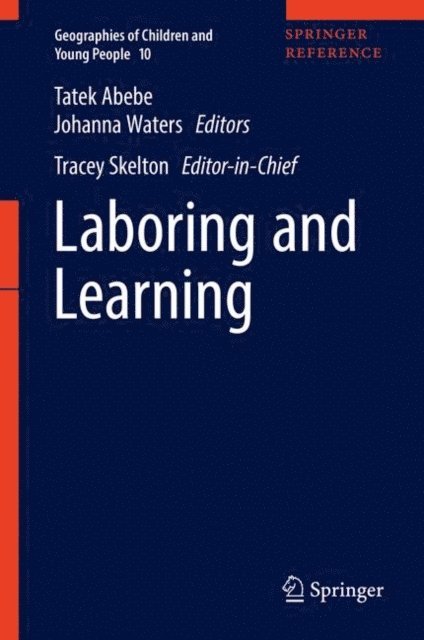
This volume incorporates ground-breaking new academic perspectives on the contributions that children and young people make to societies around the world, with a particular focus on learning and work. The chapters in the volume offer conceptual and empirical insights into how young people learn to labour, and the complex social, spatial, temporal, institutional and relational processes that informs their engagements in daily, generational and social reproduction. The editors have intentionally avoided using the terms ‘education’ and ‘employment’ in the title, as this volume is an attempt to capture the multitude of ways, spaces and contexts (not just ‘formal’) in which learning takes place and work is carried out. Here, learning indicates education in the broadest possible sense, to incorporate not just formal schooling and the acquisition of institutionally recognised academic knowledge and credentials, but also informal learning (including socialization and the on-the-job acquisition of skills that takes place almost imperceptibly, over time). In addition to the theoretical perspectives this volume brings on young people’s education and work, other prominent conceptual themes present throughout the work are mobilities, transitions and gender. Following four initial chapters that engage with conceptual issues, the remainder of the volume is divided into two sections, entitled ‘spaces of labouring and learning’ and ‘livelihoods, transitions and social reproduction’. Within these sections, a broad spectrum of empirical chapters demonstrates how young people live, learn and labour in Africa, Asia, Europe and Latin America. These include, among others, geographies of education; interface between migration, learning and livelihoods; cultural politics of human capital formation; schooling and work; citizenship education; families and parenting; socialization and informal education; education-induced migration; processes and practices of inclusion and exclusion in educational institutions; part-time work; domestic work; care work; informal livelihoods; entrepreneurship; social transitions; and a wide range of social, economic, cultural, political (structural) forces that intersect and dissect these topics. As the reader will become aware, there is no such thing as a standard educational or work trajectory, a ‘normal’ transition or a straight forward relationship between work, education and social reproduction. Indeed, one of the aims of the volume is deliberately to showcase the diversity that young people’s lives hold in this regard.