Tatsuo Itoh – författare
Visar alla böcker från författaren Tatsuo Itoh. Handla med fri frakt och snabb leverans.
6 produkter
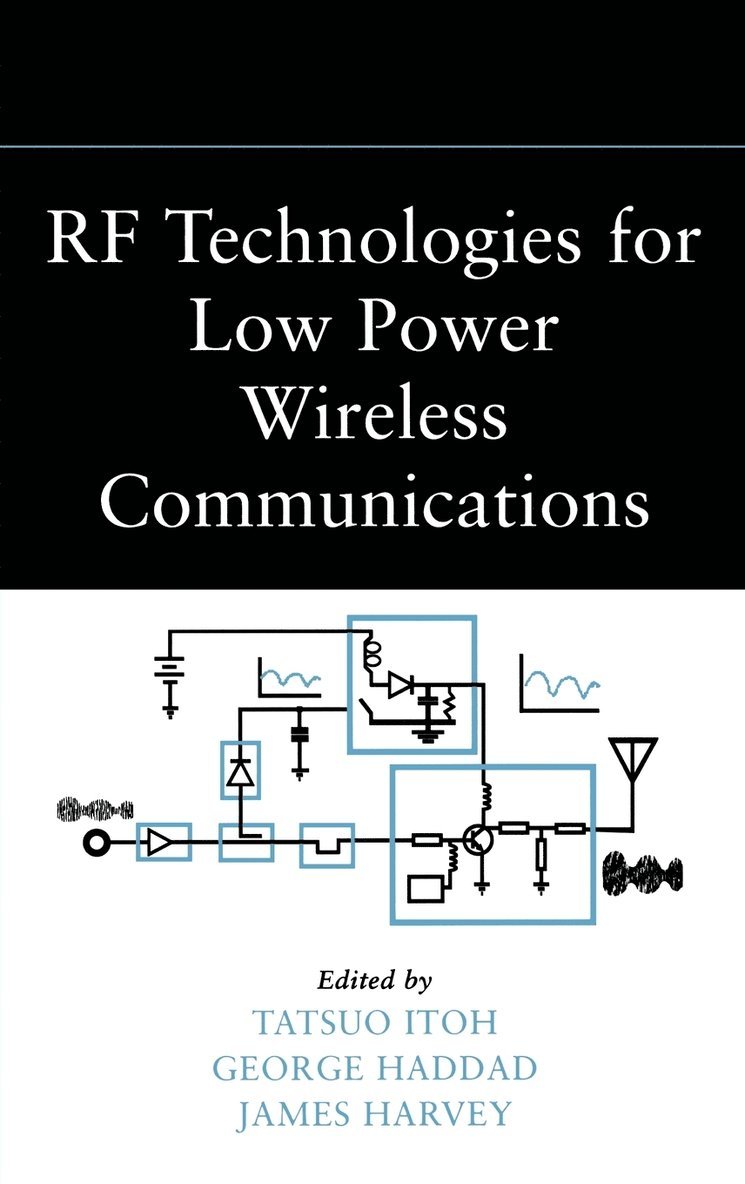
RF Technologies for Low Power Wireless Communications
Inbunden, 2001
2190 kr
Lägg i varukorg
A survey of microwave technology tailored for professionals in wireless communications RF Technologies for Low Power Wireless Communications updates recent developments in wireless communications from a hardware design standpoint and offers specialized coverage of microwave technology with a focus …
Finite Element Software for Microwave Engineering
Inbunden, 1996
2454 kr
Lägg i varukorg
This book presents an overview of finite element software. It discusses the capabilities and limitations of the available softwear and helps readers formulate engineering problems so that they fit into the framework of current software.
RF Technologies for Low Power Wireless Communications
Av James Harvey, George Haddad m. fl.
E-bok, 2004
2487 kr
Lägg i varukorg
A survey of microwave technology tailored for professionals in wireless communications RF Technologies for Low Power Wireless Communications updates recent developments in wireless communications from a hardware design standpoint and offers specialized coverage of microwave technology with a focus …
Numerical Techniques for Microwave and Millimeter-Wave Passive Structures
Av Tatsuo Itoh
Inbunden, 1989
4332 kr
Lägg i varukorg
The most comprehensive work on a number of practical numerical methods for analyzing passive structures in microwave and millimeter-wave integrated circuits. The introduction presents a brief comparison of the various numerical methods and how they may be integrated into computer-aided design …
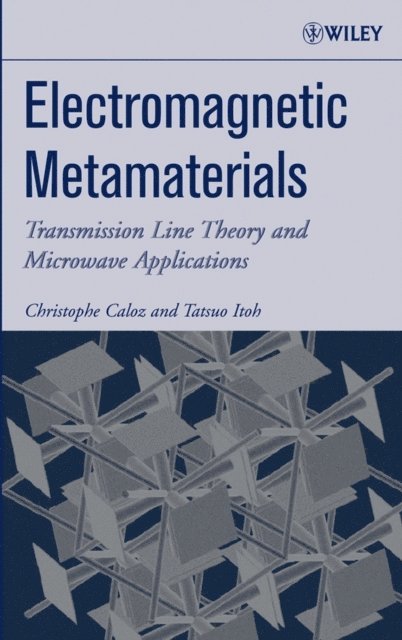
Electromagnetic Metamaterials
Transmission Line Theory and Microwave Applications
Av Christophe Caloz, Tatsuo Itoh
Inbunden, 2005
1868 kr
Lägg i varukorg
Electromagnetic metamaterials-from fundamental physics to advanced engineering applicationsThis book presents an original generalized transmission line approach associated with non-resonant structures that exhibit larger bandwidths, lower loss, and higher design flexibility. It is based on the …
Electromagnetic Metamaterials
Transmission Line Theory and Microwave Applications
Av Tatsuo Itoh, Christophe Caloz
E-bok, 2005
2167 kr
Lägg i varukorg
Electromagnetic metamaterials-from fundamental physics to advanced engineering applications This book presents an original generalized transmission line approach associated with non-resonant structures that exhibit larger bandwidths, lower loss, and higher design flexibility. It is based on the …