One candy heiress, two bullets and three suspects. The small Southern California island of Coronado rarely makes news for violent crime. But in the spring of 1975, World War II widow and retired librarian Ruth Quinn was murdered, execution-style, in her cottage. Her death sent a shock wave through the community. The granddaughter of Jujubes and Jujyfruits creator Henry Heide, Ruth was found fully clothed with her shoes on, in her bed, dead from two gunshot wounds. To this day, her murder has never been solved, but whispers about her brother, her son and even a local petty thief still swirl. Author Taylor Baldwin Kiland sifts through the dirt for the facts about Ruth's life and her untimely end in Coronado.
Why were the American POWs imprisoned at the “Hanoi Hilton” so resilient in captivity and so successful in their subsequent careers? This book presents six principles practiced within the POW organizational culture that can be used to develop high-performance teams everywhere. The authors offer examples from both the POWs’ time in captivity and their later professional lives that identify, in real-life situations, the characteristics necessary for sustainable, high-performance teamwork. The book takes readers inside the mind of James Stockdale, a fighter pilot with a degree in philosophy, who was the senior ranking officer at the Hanoi prison. The theories Stockdale practiced become readily understandable in this book. Drawing parallels between Stockdale’s guiding philosophies from the Stoic Epictetus and the principles of modern sports psychology, Peter Fretwell and Taylor Baldwin Kiland show readers how to apply these principles to their own organizations and create a culture with staying power.Originally intending their book to focus on Stockdale’s leadership style, the authors found that his approach toward completing a mission was to assure that it could be accomplished without him. Stockdale, they explain, had created a mission-centric organization, not a leader-centric organization. He had understood that a truly sustainable culture must not be dependent on a single individual. At one level, this book is a business school case study. It is also an examination of how leadership and organizational principles employed in the crucible of a Hanoi prison align with today’s sports psychology and modern psychological theories and therapies, as well as the training principles used by Olympic athletes and Navy SEALs. Any group willing to apply these principles can move their mission forward and create a culture with staying power—one that outlives individual members.
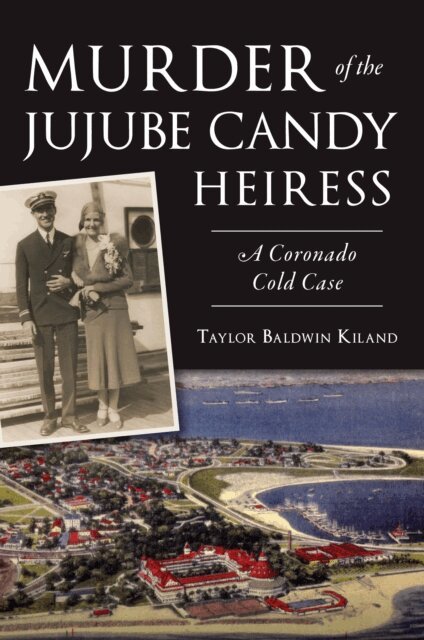
One candy heiress, two bullets and three suspects. The small Southern California island of Coronado rarely makes news for violent crime. But in the spring of 1975, World War II widow and retired librarian Ruth Quinn was murdered, execution-style, in her cottage. Her death sent a shock wave through the community. The granddaughter of Jujubes and Jujyfruits creator Henry Heide, Ruth was found fully clothed with her shoes on, in her bed, dead from two gunshot wounds. To this day, her murder has never been solved, but whispers about her brother, her son and even a local petty thief still swirl. Author Taylor Baldwin Kiland sifts through the dirt for the facts about Ruth's life and her untimely end in Coronado.
Why were the American POWs imprisoned at the “Hanoi Hilton” so resilient in captivity and so successful in their subsequent careers? This book presents six principles practiced within the POW organizational culture that can be used to develop high-performance teams everywhere. The authors offer examples from both the POWs’ time in captivity and their later professional lives that identify, in real-life situations, the characteristics necessary for sustainable, high-performance teamwork. The book takes readers inside the mind of James Stockdale, a fighter pilot with a degree in philosophy, who was the senior ranking officer at the Hanoi prison. The theories Stockdale practiced become readily understandable in this book. Drawing parallels between Stockdale’s guiding philosophies from the Stoic Epictetus and the principles of modern sports psychology, Peter Fretwell and Taylor Baldwin Kiland show readers how to apply these principles to their own organizations and create a culture with staying power.Originally intending their book to focus on Stockdale’s leadership style, the authors found that his approach toward completing a mission was to assure that it could be accomplished without him. Stockdale, they explain, had created a mission-centric organization, not a leader-centric organization. He had understood that a truly sustainable culture must not be dependent on a single individual. At one level, this book is a business school case study. It is also an examination of how leadership and organizational principles employed in the crucible of a Hanoi prison align with today’s sports psychology and modern psychological theories and therapies, as well as the training principles used by Olympic athletes and Navy SEALs. Any group willing to apply these principles can move their mission forward and create a culture with staying power—one that outlives individual members.