Terence Critchlow – författare
Visar alla böcker från författaren Terence Critchlow. Handla med fri frakt och snabb leverans.
5 produkter
5 produkter
E-bok
Engelska, 2003880 kr
Läs direkt efter köp
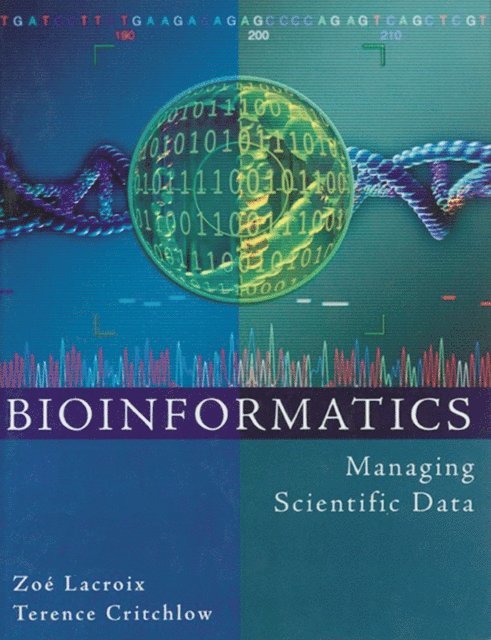
Life science data integration and interoperability is one of the most challenging problems facing bioinformatics today. In the current age of the life sciences, investigators have to interpret many types of information from a variety of sources: lab instruments, public databases, gene expression profiles, raw sequence traces, single nucleotide polymorphisms, chemical screening data, proteomic data, putative metabolic pathway models, and many others. Unfortunately, scientists are not currently able to easily identify and access this information because of the variety of semantics, interfaces, and data formats used by the underlying data sources. Bioinformatics: Managing Scientific Data tackles this challenge head-on by discussing the current approaches and variety of systems available to help bioinformaticians with this increasingly complex issue. The heart of the book lies in the collaboration efforts of eight distinct bioinformatics teams that describe their own unique approaches to data integration and interoperability. Each system receives its own chapter where the lead contributors provide precious insight into the specific problems being addressed by the system, why the particular architecture was chosen, and details on the system''s strengths and weaknesses. In closing, the editors provide important criteria for evaluating these systems that bioinformatics professionals will find valuable.* Provides a clear overview of the state-of-the-art in data integration and interoperability in genomics, highlighting a variety of systems and giving insight into the strengths and weaknesses of their different approaches. * Discusses shared vocabulary, design issues, complexity of use cases, and the difficulties of transferring existing data management approaches to bioinformatics systems, which serves to connect computer and life scientists. * Written by the primary contributors of eight reputable bioinformatics systems in academia and industry including: BioKris, TAMBIS, K2, GeneExpress, P/FDM, MBM, SDSC, SRS, and DiscoveryLink.
E-bok
Engelska, 2016901 kr
Läs direkt efter köp
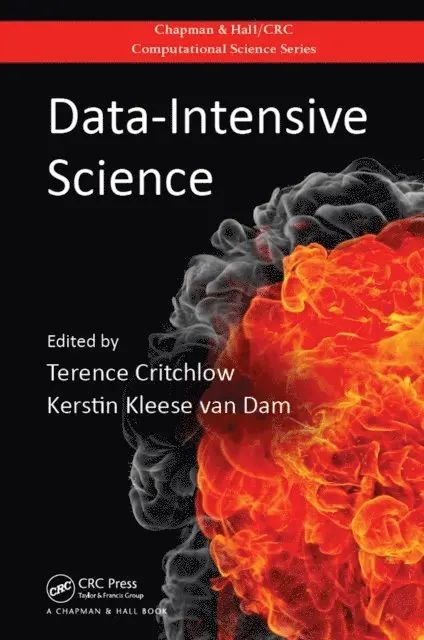
Data-intensive science has the potential to transform scientific research and quickly translate scientific progress into complete solutions, policies, and economic success. But this collaborative science is still lacking the effective access and exchange of knowledge among scientists, researchers, and policy makers across a range of disciplines. Bringing together leaders from multiple scientific disciplines, Data-Intensive Science shows how a comprehensive integration of various techniques and technological advances can effectively harness the vast amount of data being generated and significantly accelerate scientific progress to address some of the world''s most challenging problems. In the book, a diverse cross-section of application, computer, and data scientists explores the impact of data-intensive science on current research and describes emerging technologies that will enable future scientific breakthroughs. The book identifies best practices used to tackle challenges facing data-intensive science as well as gaps in these approaches. It also focuses on the integration of data-intensive science into standard research practice, explaining how components in the data-intensive science environment need to work together to provide the necessary infrastructure for community-scale scientific collaborations. Organizing the material based on a high-level, data-intensive science workflow, this book provides an understanding of the scientific problems that would benefit from collaborative research, the current capabilities of data-intensive science, and the solutions to enable the next round of scientific advancements.
Häftad, Engelska, 2017
764 kr
Skickas inom 10-15 vardagar
Data-intensive science has the potential to transform scientific research and quickly translate scientific progress into complete solutions, policies, and economic success. But this collaborative science is still lacking the effective access and exchange of knowledge among scientists, researchers, and policy makers across a range of disciplines. Bringing together leaders from multiple scientific disciplines, Data-Intensive Science shows how a comprehensive integration of various techniques and technological advances can effectively harness the vast amount of data being generated and significantly accelerate scientific progress to address some of the world’s most challenging problems.In the book, a diverse cross-section of application, computer, and data scientists explores the impact of data-intensive science on current research and describes emerging technologies that will enable future scientific breakthroughs. The book identifies best practices used to tackle challenges facing data-intensive science as well as gaps in these approaches. It also focuses on the integration of data-intensive science into standard research practice, explaining how components in the data-intensive science environment need to work together to provide the necessary infrastructure for community-scale scientific collaborations.Organizing the material based on a high-level, data-intensive science workflow, this book provides an understanding of the scientific problems that would benefit from collaborative research, the current capabilities of data-intensive science, and the solutions to enable the next round of scientific advancements.
E-bok
PDF, Engelska, 2016901 kr
Läs direkt efter köp
Data-intensive science has the potential to transform scientific research and quickly translate scientific progress into complete solutions, policies, and economic success. But this collaborative science is still lacking the effective access and exchange of knowledge among scientists, researchers, and policy makers across a range of disciplines. Bringing together leaders from multiple scientific disciplines, Data-Intensive Science shows how a comprehensive integration of various techniques and technological advances can effectively harness the vast amount of data being generated and significantly accelerate scientific progress to address some of the world''s most challenging problems. In the book, a diverse cross-section of application, computer, and data scientists explores the impact of data-intensive science on current research and describes emerging technologies that will enable future scientific breakthroughs. The book identifies best practices used to tackle challenges facing data-intensive science as well as gaps in these approaches. It also focuses on the integration of data-intensive science into standard research practice, explaining how components in the data-intensive science environment need to work together to provide the necessary infrastructure for community-scale scientific collaborations. Organizing the material based on a high-level, data-intensive science workflow, this book provides an understanding of the scientific problems that would benefit from collaborative research, the current capabilities of data-intensive science, and the solutions to enable the next round of scientific advancements.
Inbunden, Engelska, 2013
1 570 kr
Tillfälligt slut
Data-intensive science has the potential to transform scientific research and quickly translate scientific progress into complete solutions, policies, and economic success. But this collaborative science is still lacking the effective access and exchange of knowledge among scientists, researchers, and policy makers across a range of disciplines. Bringing together leaders from multiple scientific disciplines, Data-Intensive Science shows how a comprehensive integration of various techniques and technological advances can effectively harness the vast amount of data being generated and significantly accelerate scientific progress to address some of the world’s most challenging problems.In the book, a diverse cross-section of application, computer, and data scientists explores the impact of data-intensive science on current research and describes emerging technologies that will enable future scientific breakthroughs. The book identifies best practices used to tackle challenges facing data-intensive science as well as gaps in these approaches. It also focuses on the integration of data-intensive science into standard research practice, explaining how components in the data-intensive science environment need to work together to provide the necessary infrastructure for community-scale scientific collaborations.Organizing the material based on a high-level, data-intensive science workflow, this book provides an understanding of the scientific problems that would benefit from collaborative research, the current capabilities of data-intensive science, and the solutions to enable the next round of scientific advancements.