Teresa A. Toulouse – författare
Visar alla böcker från författaren . Handla med fri frakt och snabb leverans.
4 produkter
4 produkter
E-bok
Engelska, 20131 059 kr
Läs direkt efter köp
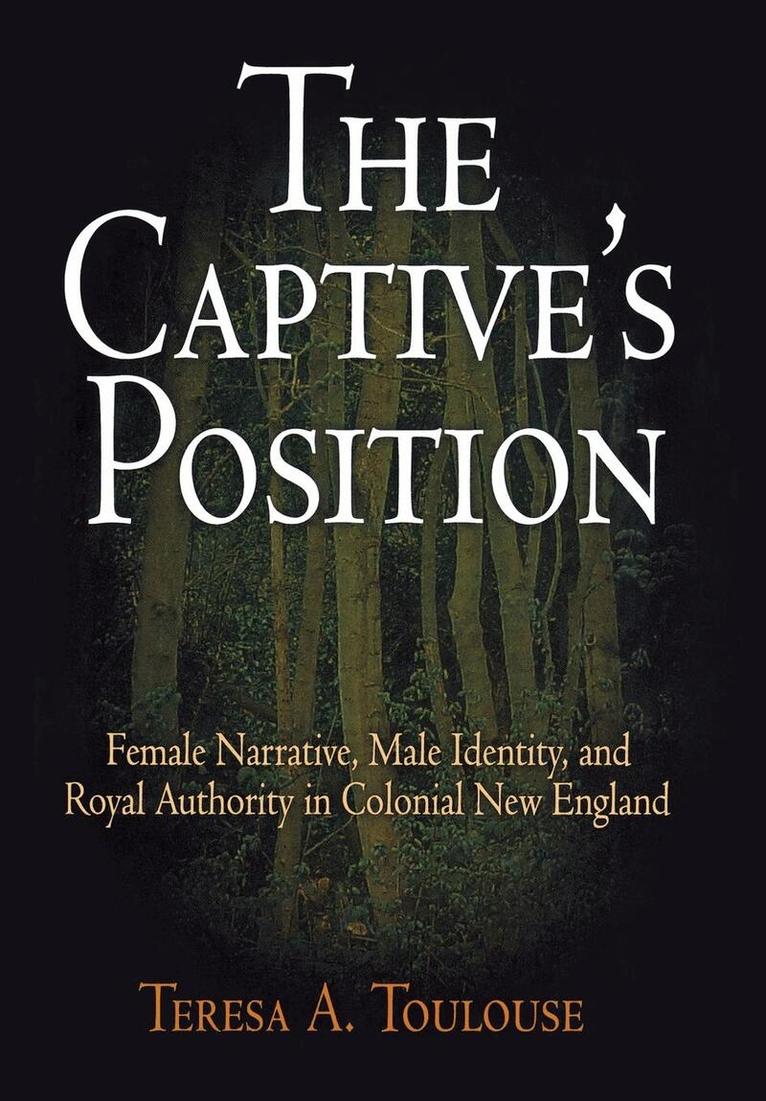
Why do narratives of Indian captivity emerge in New England between 1682 and 1707 and why are these texts, so centrally concerned with women's experience, supported and even written by a powerful group of Puritan ministers? In The Captive's Position, Teresa Toulouse argues for a new interpretation of the captivity narrative-one that takes into account the profound shifts in political and social authority and legitimacy that occurred in New England at the end of the seventeenth century.While North American narratives of Indian captivity had been written before this period by French priests and other European adventurers, those stories had focused largely on Catholic conversions and martyrdoms or male strategies for survival among the Indians. In contrast, the New England texts represented a colonial Protestant woman who was separated brutally from her family but who demonstrated qualities of religious acceptance, humility, and obedience until she was eventually returned to her own community. Toulouse explores how the female captive's position came to resonate so powerfully for traditional male elites in the second and third generation of the Massachusetts colony. Threatened by ongoing wars with Indians and French as well as by a range of royal English interventions in New England political and cultural life, figures such as Increase Mather, Cotton Mather, and John Williams perceived themselves to be equally challenged by religious and social conflicts within New England. By responding to and employing popular representations of female captivity, they were enabled to express their ambivalence toward the world of their fathers and toward imperial expansion and thereby to negotiate their own complicated sense of personal and cultural identity.Examining the captivity narratives of Mary Rowlandson, Hannah Dustan, Hannah Swarton, and John Williams (who comes to stand in for the female captive), Toulouse asserts the need to read these gendered texts as cultural products that variably engage, shape, and confound colonial attitudes toward both Europe and the local scene in Massachusetts. In doing so, The Captive's Position offers a new story of the rise and breakdown of orthodox Puritan captivities and a meditation on the relationship between dreams of authority and historical change.
Inbunden, Engelska, 2006
753 kr
Skickas inom 10-15 vardagar
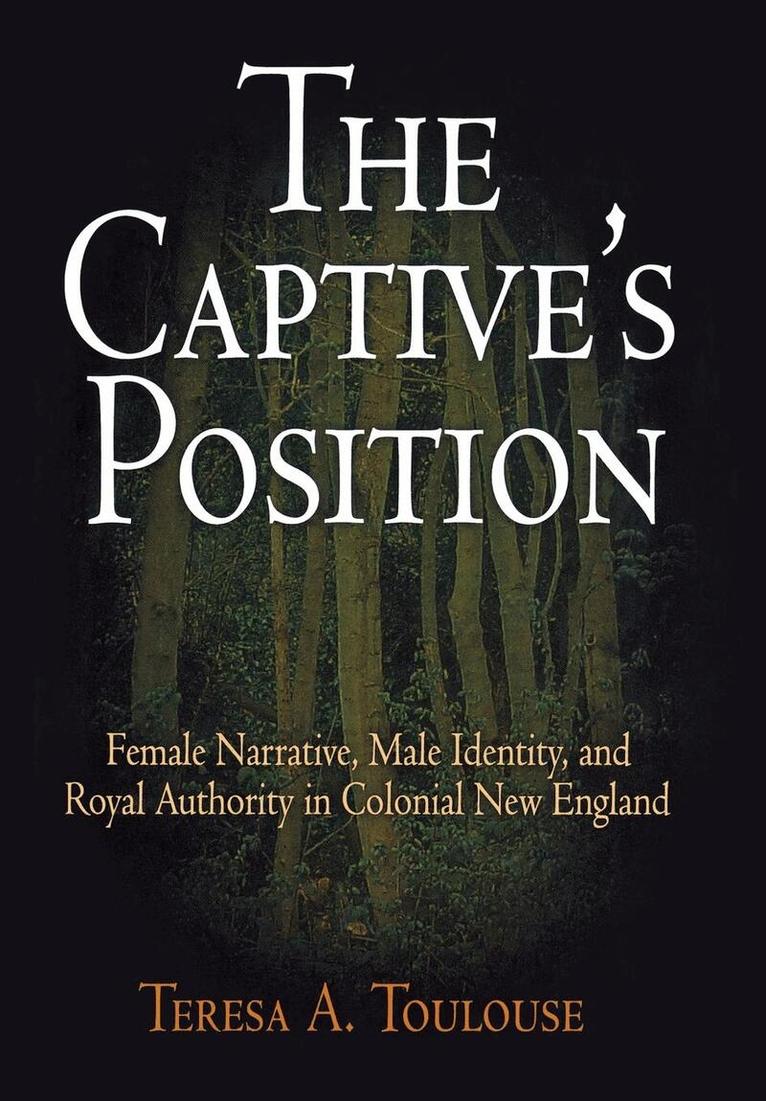
Why do narratives of Indian captivity emerge in New England between 1682 and 1707 and why are these texts, so centrally concerned with women's experience, supported and even written by a powerful group of Puritan ministers? In The Captive's Position, Teresa Toulouse argues for a new interpretation of the captivity narrative-one that takes into account the profound shifts in political and social authority and legitimacy that occurred in New England at the end of the seventeenth century.While North American narratives of Indian captivity had been written before this period by French priests and other European adventurers, those stories had focused largely on Catholic conversions and martyrdoms or male strategies for survival among the Indians. In contrast, the New England texts represented a colonial Protestant woman who was separated brutally from her family but who demonstrated qualities of religious acceptance, humility, and obedience until she was eventually returned to her own community. Toulouse explores how the female captive's position came to resonate so powerfully for traditional male elites in the second and third generation of the Massachusetts colony. Threatened by ongoing wars with Indians and French as well as by a range of royal English interventions in New England political and cultural life, figures such as Increase Mather, Cotton Mather, and John Williams perceived themselves to be equally challenged by religious and social conflicts within New England. By responding to and employing popular representations of female captivity, they were enabled to express their ambivalence toward the world of their fathers and toward imperial expansion and thereby to negotiate their own complicated sense of personal and cultural identity.Examining the captivity narratives of Mary Rowlandson, Hannah Dustan, Hannah Swarton, and John Williams (who comes to stand in for the female captive), Toulouse asserts the need to read these gendered texts as cultural products that variably engage, shape, and confound colonial attitudes toward both Europe and the local scene in Massachusetts. In doing so, The Captive's Position offers a new story of the rise and breakdown of orthodox Puritan captivities and a meditation on the relationship between dreams of authority and historical change.
Inbunden, Engelska, 2018
1 269 kr
Skickas inom 10-15 vardagar
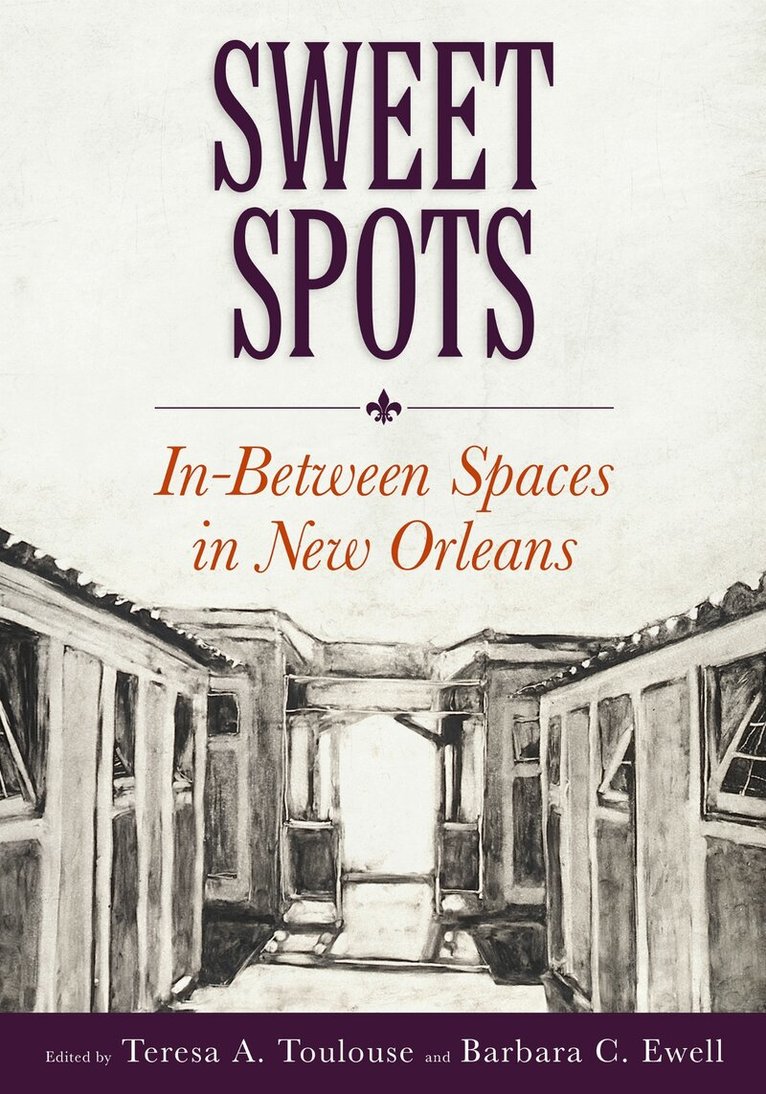
Contributions by Carrie Bernhard, Scott Bernhard, Marilyn R. Brown, Richard Campanella, John P. Clark, Joel Dinerstein, Pableaux Johnson, John P. Klingman, Angel Adams Parham, Bruce Boyd Raeburn, Ruth Salvaggio, Christopher Schaberg, Teresa A. Toulouse, and Beth WillingerMuch has been written about New Orleans's distinctive architecture and urban fabric, as well as the city's art, literature, and music. There is, however, little discussion connecting these features. Sweet Spots--a title drawn from jazz musicians' name for the space ""in-between"" performers and dancers where music best resonates--provides multiple connections between the city's spaces, its complex culture, and its future.Drawing on the late Tulane architect Malcolm Heard's ideas about ""interstitial"" spaces, this collection examines how a variety of literal and represented ""in-between"" spaces in New Orleans have addressed race, class, gender, community, and environment. As scholars of architecture, art, African American studies, English, history, jazz, philosophy, and sociology, the authors incorporate materials from architectural history and practice, literary texts, paintings, drawings, music, dance, and even statistical analyses. Interstitial space refers not only to functional elements inside and outside of many New Orleans houses--high ceilings, hidden staircases, galleries, and courtyards--but also to compelling spatial relations between the city's houses, streets, and neighborhoods.Rich with visual materials, Sweet Spots reveals the ways that diverse New Orleans spaces take on meanings and accrete stories that promote certain consequences both for those who live in them and for those who read such stories. The volume evokes, preserves, criticizes, and amends understanding of a powerful and often-missed feature of New Orleans's elusive reality.
Häftad, Engelska, 2018
446 kr
Skickas inom 5-8 vardagar
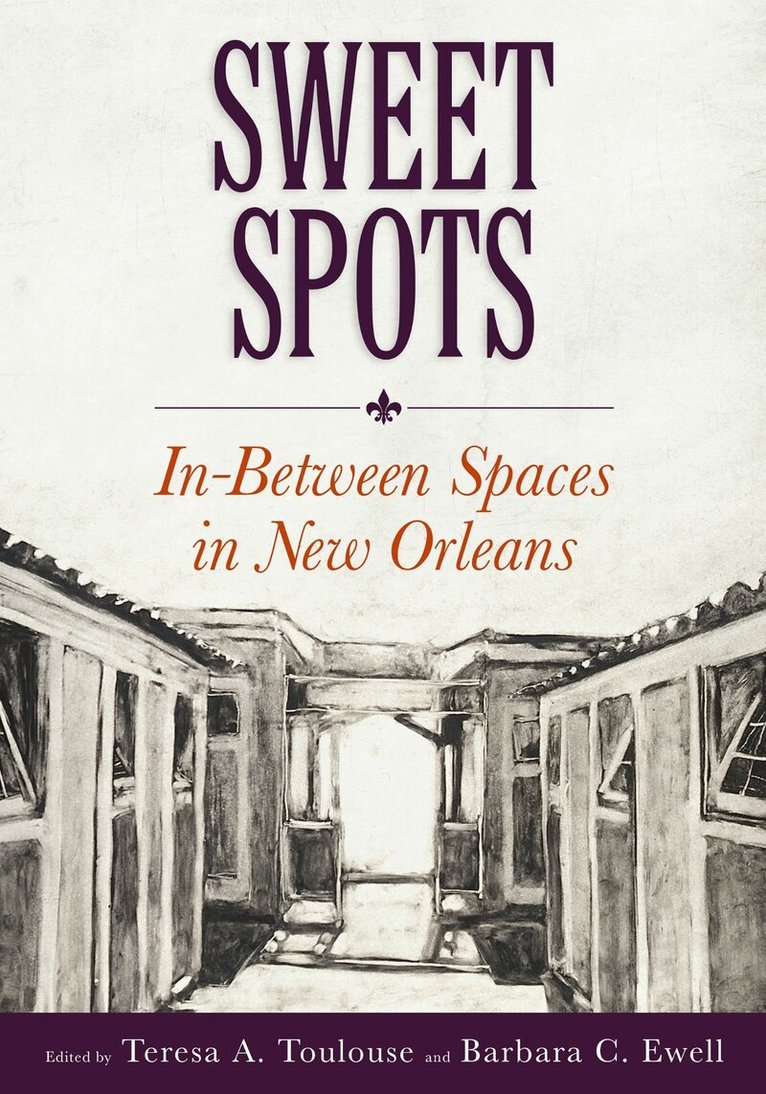
Contributions by Carrie Bernhard, Scott Bernhard, Marilyn R. Brown, Richard Campanella, John P. Clark, Joel Dinerstein, Pableaux Johnson, John P. Klingman, Angel Adams Parham, Bruce Boyd Raeburn, Ruth Salvaggio, Christopher Schaberg, Teresa A. Toulouse, and Beth WillingerMuch has been written about New Orleans's distinctive architecture and urban fabric, as well as the city's art, literature, and music. There is, however, little discussion connecting these features. Sweet Spots--a title drawn from jazz musicians' name for the space ""in-between"" performers and dancers where music best resonates--provides multiple connections between the city's spaces, its complex culture, and its future.Drawing on the late Tulane architect Malcolm Heard's ideas about ""interstitial"" spaces, this collection examines how a variety of literal and represented ""in-between"" spaces in New Orleans have addressed race, class, gender, community, and environment. As scholars of architecture, art, African American studies, English, history, jazz, philosophy, and sociology, the authors incorporate materials from architectural history and practice, literary texts, paintings, drawings, music, dance, and even statistical analyses. Interstitial space refers not only to functional elements inside and outside of many New Orleans houses--high ceilings, hidden staircases, galleries, and courtyards--but also to compelling spatial relations between the city's houses, streets, and neighborhoods.Rich with visual materials, Sweet Spots reveals the ways that diverse New Orleans spaces take on meanings and accrete stories that promote certain consequences both for those who live in them and for those who read such stories. The volume evokes, preserves, criticizes, and amends understanding of a powerful and often-missed feature of New Orleans's elusive reality.