Teresa Escobet - Böcker
Visar alla böcker från författaren Teresa Escobet. Handla med fri frakt och snabb leverans.
4 produkter
4 produkter
1 690 kr
Skickas inom 10-15 vardagar
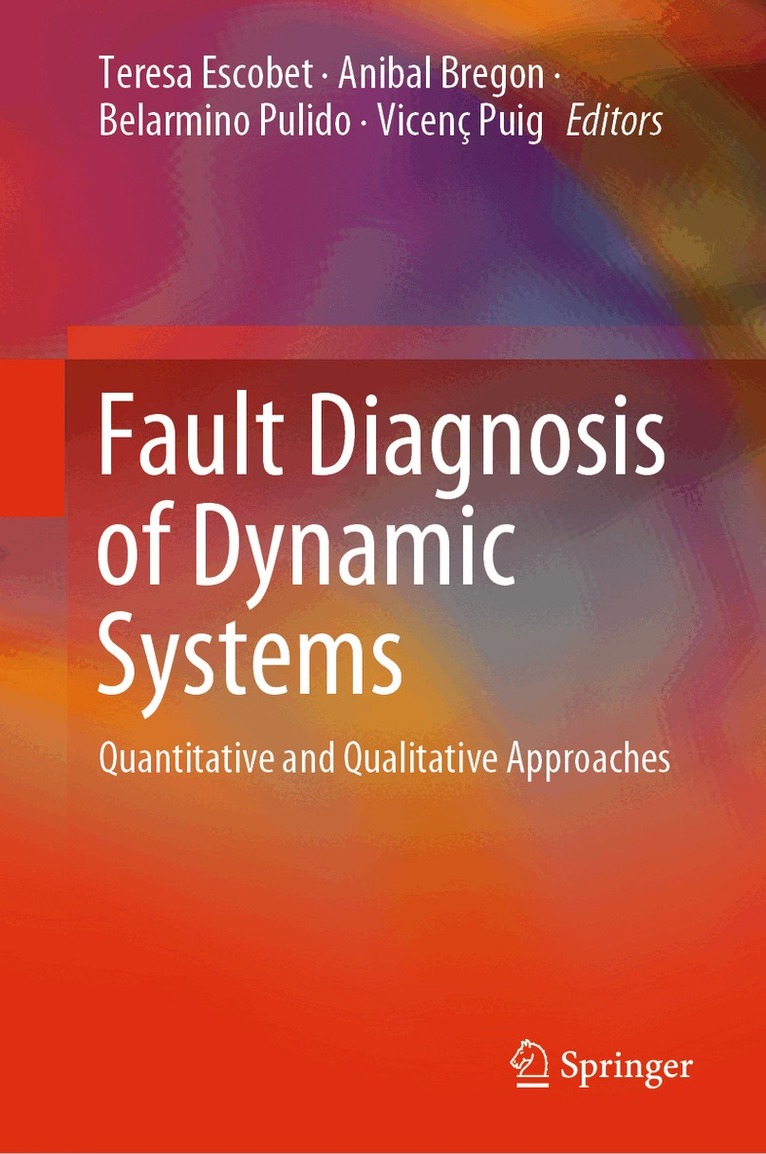
Fault Diagnosis of Dynamic Systems provides readers with a glimpse into the fundamental issues and techniques of fault diagnosis used by Automatic Control (FDI) and Artificial Intelligence (DX) research communities. The book reviews the standard techniques and approaches widely used in both communities. It also contains benchmark examples and case studies that demonstrate how the same problem can be solved using the presented approaches. The book also introduces advanced fault diagnosis approaches that are currently still being researched, including methods for non-linear, hybrid, discrete-event and software/business systems, as well as, an introduction to prognosis.Fault Diagnosis of Dynamic Systems is valuable source of information for researchers and engineers starting to work on fault diagnosis and willing to have a reference guide on the main concepts and standard approaches on fault diagnosis. Readers with experience on one of the two main communities will also find it useful to learn the fundamental concepts of the other community and the synergies between them. The book is also open to researchers or academics who are already familiar with the standard approaches, since they will find a collection of advanced approaches with more specific and advanced topics or with application to different domains. Finally, engineers and researchers looking for transferable fault diagnosis methods will also find useful insights in the book.
1 690 kr
Skickas inom 10-15 vardagar
Fault Diagnosis of Dynamic Systems provides readers with a glimpse into the fundamental issues and techniques of fault diagnosis used by Automatic Control (FDI) and Artificial Intelligence (DX) research communities. The book reviews the standard techniques and approaches widely used in both communities. It also contains benchmark examples and case studies that demonstrate how the same problem can be solved using the presented approaches. The book also introduces advanced fault diagnosis approaches that are currently still being researched, including methods for non-linear, hybrid, discrete-event and software/business systems, as well as, an introduction to prognosis.Fault Diagnosis of Dynamic Systems is valuable source of information for researchers and engineers starting to work on fault diagnosis and willing to have a reference guide on the main concepts and standard approaches on fault diagnosis. Readers with experience on one of the two main communities will also find it useful to learn the fundamental concepts of the other community and the synergies between them. The book is also open to researchers or academics who are already familiar with the standard approaches, since they will find a collection of advanced approaches with more specific and advanced topics or with application to different domains. Finally, engineers and researchers looking for transferable fault diagnosis methods will also find useful insights in the book.
1 584 kr
Skickas inom 10-15 vardagar
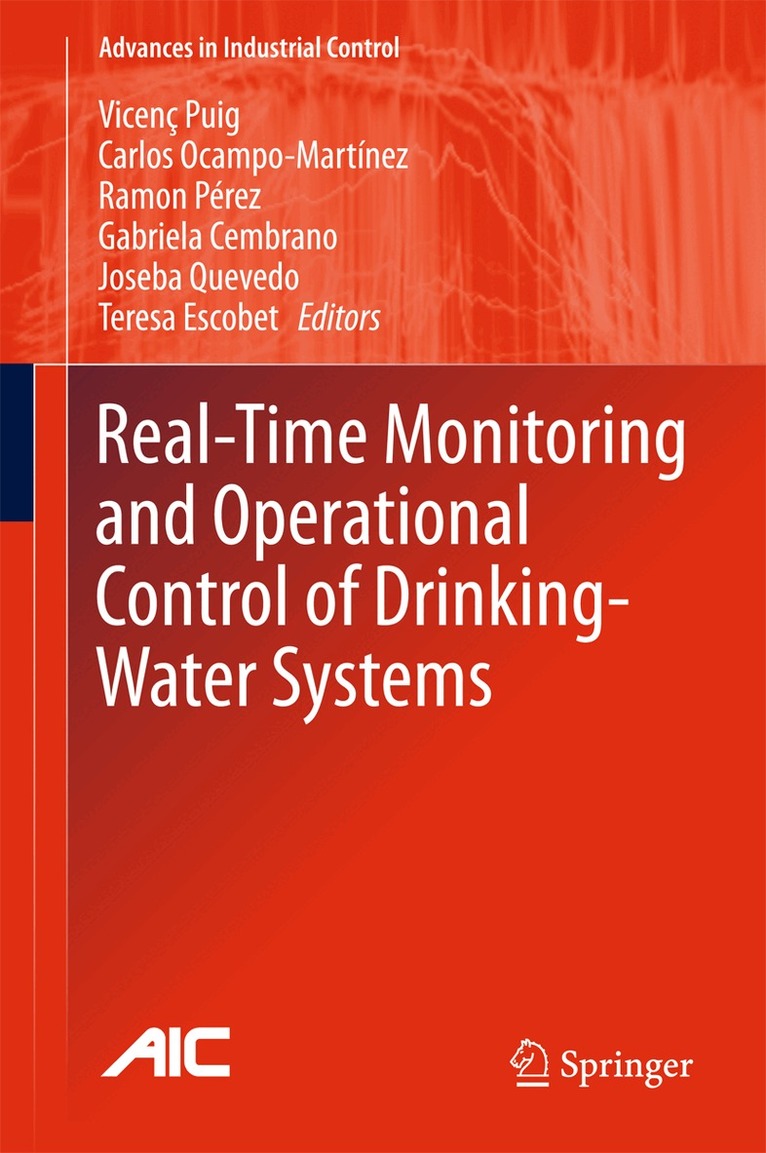
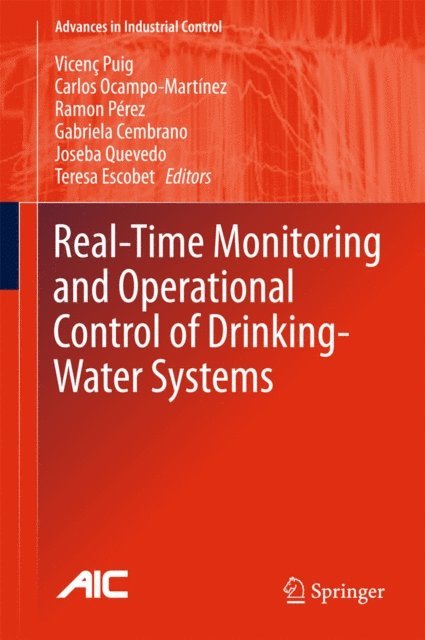
This book presents a set of approaches for the real-time monitoring and control of drinking-water networks based on advanced information and communication technologies. It shows the reader how to achieve significant improvements in efficiency in terms of water use, energy consumption, water loss minimization, and water quality guarantees.The methods and approaches presented are illustrated and have been applied using real-life pilot demonstrations based on the drinking-water network in Barcelona, Spain.The proposed approaches and tools cover:• decision-making support for real-time optimal control of water transport networks, explaining how stochastic model predictive control algorithms that take explicit account of uncertainties associated with energy prices and real demand allow the main flow and pressure actuators—pumping stations and pressure regulation valves— and intermediate storage tanks to beoperated to meet demand using the most sustainable types of source and with minimum electricity costs;• decision-making support for monitoring water balance and distribution network quality in real time, implementing fault detection and diagnosis techniques and using information from hundreds of flow, pressure, and water-quality sensors together with hydraulic and quality-parameter-evolution models to detect and locate leaks in the network, possible breaches in water quality, and failures in sensors and/or actuators;• consumer-demand prediction, based on smart metering techniques, producing detailed analyses and forecasts of consumption patterns, providing a customer communications service, and suggesting economic measures intended to promote more efficient use of water at the household level.Researchers and engineers working with drinking-water networks will find this a vital support in overcoming the problems associated with increasedpopulation, environmental sensitivities and regulation, aging infrastructures, energy requirements, and limited water sources.
1 584 kr
Skickas inom 10-15 vardagar
This book presents a set of approaches for the real-time monitoring and control of drinking-water networks based on advanced information and communication technologies. It shows the reader how to achieve significant improvements in efficiency in terms of water use, energy consumption, water loss minimization, and water quality guarantees.The methods and approaches presented are illustrated and have been applied using real-life pilot demonstrations based on the drinking-water network in Barcelona, Spain.The proposed approaches and tools cover:• decision-making support for real-time optimal control of water transport networks, explaining how stochastic model predictive control algorithms that take explicit account of uncertainties associated with energy prices and real demand allow the main flow and pressure actuators—pumping stations and pressure regulation valves— and intermediate storage tanks to beoperated to meet demand using the most sustainable types of source and with minimum electricity costs;• decision-making support for monitoring water balance and distribution network quality in real time, implementing fault detection and diagnosis techniques and using information from hundreds of flow, pressure, and water-quality sensors together with hydraulic and quality-parameter-evolution models to detect and locate leaks in the network, possible breaches in water quality, and failures in sensors and/or actuators;• consumer-demand prediction, based on smart metering techniques, producing detailed analyses and forecasts of consumption patterns, providing a customer communications service, and suggesting economic measures intended to promote more efficient use of water at the household level.Researchers and engineers working with drinking-water networks will find this a vital support in overcoming the problems associated with increasedpopulation, environmental sensitivities and regulation, aging infrastructures, energy requirements, and limited water sources.