Tero Tulenheimo – författare
Visar alla böcker från författaren Tero Tulenheimo. Handla med fri frakt och snabb leverans.
10 produkter
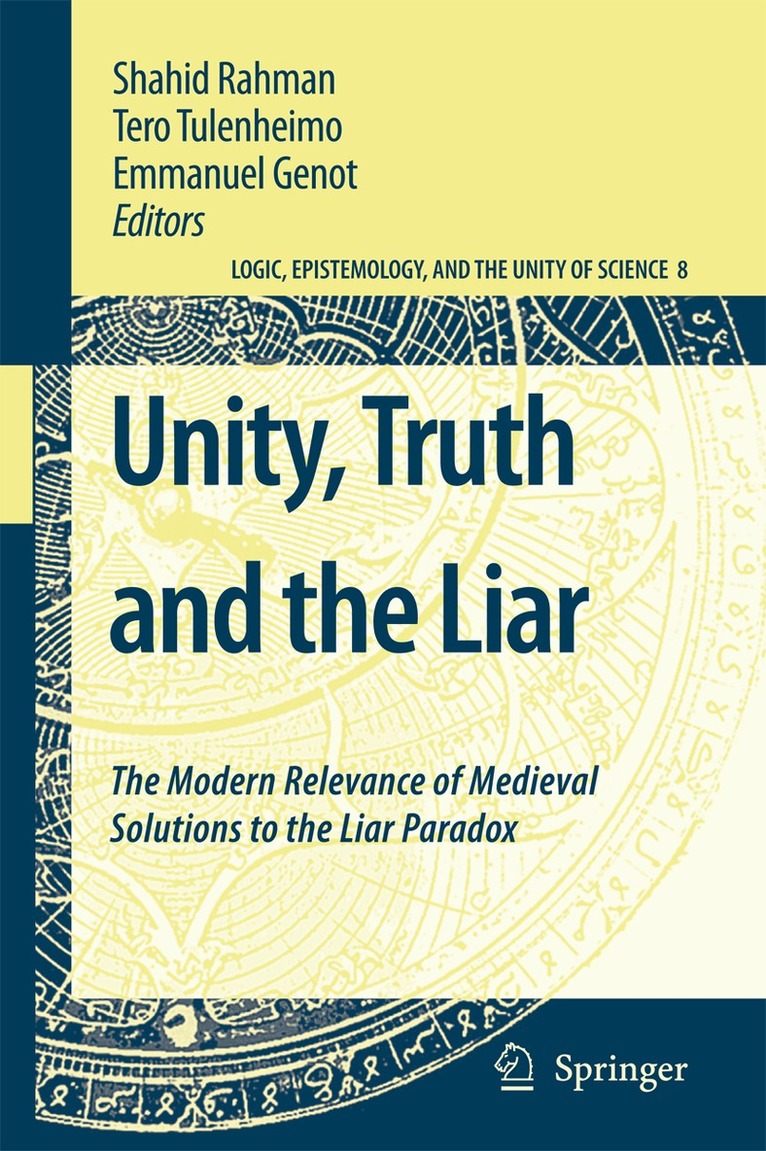
Unity, Truth and the Liar
The Modern Relevance of Medieval Solutions to the Liar Paradox
Av Shahid Rahman, Tero Tulenheimo m. fl.
Inbunden, 2008
1643 kr
Lägg i varukorg
Andinmy haste, I said: “Allmenare Liars” 1 —Psalms 116:11 The Original Lie Philosophical analysis often reveals and seldom solves paradoxes. To quote Stephen Read: A paradox arises when an unacceptable conclusion is supported by a plausible argument from apparently acceptable premises. [...] So …
Unity, Truth and the Liar
The Modern Relevance of Medieval Solutions to the Liar Paradox
Av Emmanuel Genot, Tero Tulenheimo m. fl.
E-bok, 2008
2111 kr
Lägg i varukorg
Andinmy haste, I said: “Allmenare Liars” 1 —Psalms 116:11 The Original Lie Philosophical analysis often reveals and seldom solves paradoxes. To quote Stephen Read: A paradox arises when an unacceptable conclusion is supported by a plausible argument from apparently acceptable premises. [...] So …
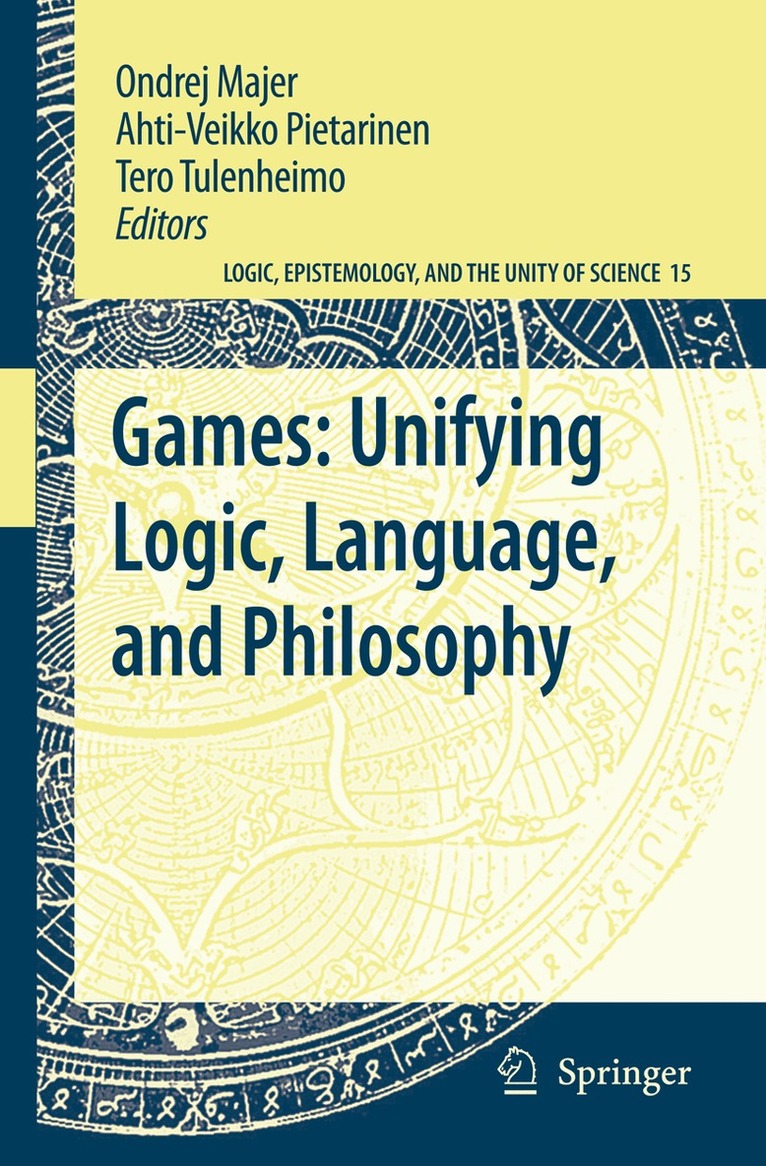
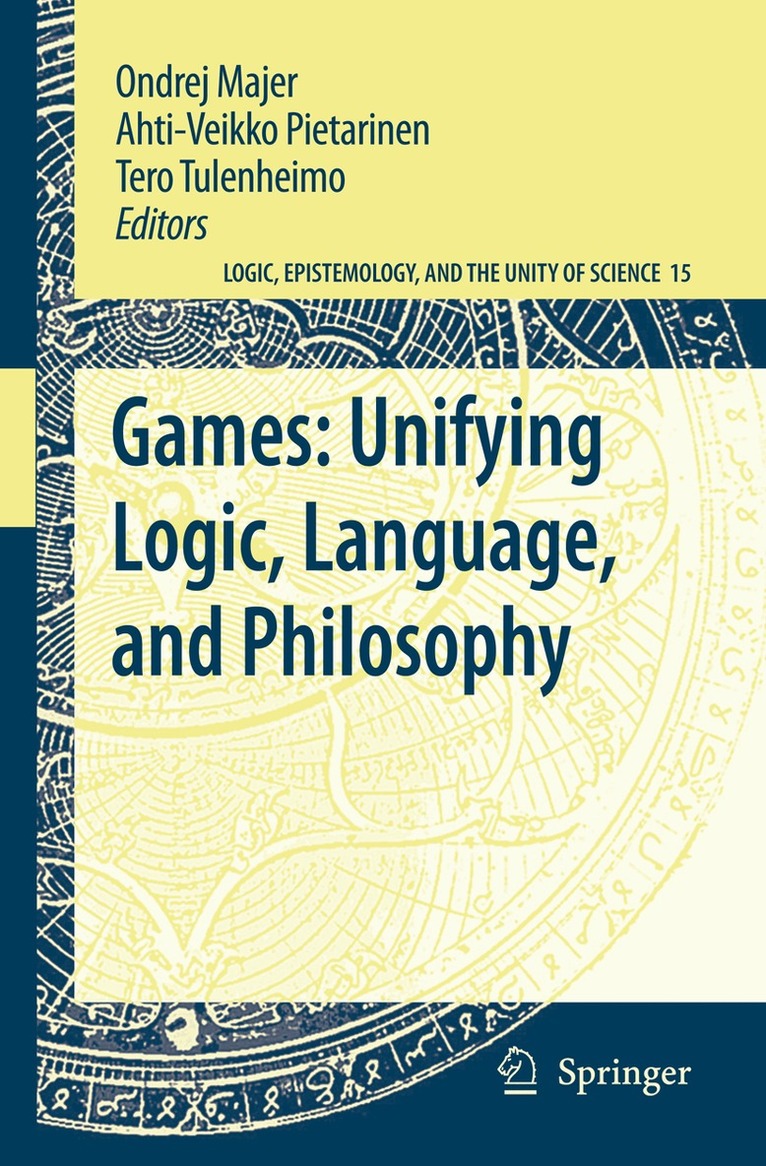
Games: Unifying Logic, Language, and Philosophy
Av Ondrej Majer, Ahti-Veikko Pietarinen m. fl.
Inbunden, 2009
1643 kr
Lägg i varukorg
OndrejMajer,Ahti-VeikkoPietarinen,andTeroTulenheimo 1 Games and logic in philosophy Recent years have witnessed a growing interest in the unifying methodo- gies over what have been perceived as pretty disparate logical ‘systems’, or else merely an assortment of formal and mathematical ‘approaches’ …
Games: Unifying Logic, Language, and Philosophy
Av Tero Tulenheimo, Ahti-Veikko Pietarinen m. fl.
E-bok, 2009
2111 kr
Lägg i varukorg
OndrejMajer,Ahti-VeikkoPietarinen,andTeroTulenheimo 1 Games and logic in philosophy Recent years have witnessed a growing interest in the unifying methodo- gies over what have been perceived as pretty disparate logical ‘systems’, or else merely an assortment of formal and mathematical ‘approaches’ …
Objects and Modalities
A Study in the Semantics of Modal Logic
Inbunden, 2017
1098 kr
Lägg i varukorg
This book develops a novel generalization of possible world semantics, called ‘world line semantics’, which recognizes worlds and links between world-bound objects (world lines) as mutually independent aspects of modal semantics. Addressing a wide range of questions vital for contemporary debates …
Objects and Modalities
A Study in the Semantics of Modal Logic
E-bok, 2017
1459 kr
Lägg i varukorg
This book develops a novel generalization of possible world semantics, called ‘world line semantics’, which recognizes worlds and links between world-bound objects (world lines) as mutually independent aspects of modal semantics. Addressing a wide range of questions vital for contemporary debates …
Objects and Modalities
A Study in the Semantics of Modal Logic
Häftad, 2018
1095 kr
Lägg i varukorg
This book develops a novel generalization of possible world semantics, called ‘world line semantics’, which recognizes worlds and links between world-bound objects (world lines) as mutually independent aspects of modal semantics. Addressing a wide range of questions vital for contemporary debates …
Unity, Truth and the Liar
The Modern Relevance of Medieval Solutions to the Liar Paradox
Av Shahid Rahman, Tero Tulenheimo m. fl.
Häftad, 2010
1639 kr
Lägg i varukorg
Andinmy haste, I said: “Allmenare Liars” 1 —Psalms 116:11 The Original Lie Philosophical analysis often reveals and seldom solves paradoxes. To quote Stephen Read: A paradox arises when an unacceptable conclusion is supported by a plausible argument from apparently acceptable premises. [...] So …
Games: Unifying Logic, Language, and Philosophy
Av Ondrej Majer, Ahti-Veikko Pietarinen m. fl.
Häftad, 2010
1639 kr
Lägg i varukorg
OndrejMajer,Ahti-VeikkoPietarinen,andTeroTulenheimo 1 Games and logic in philosophy Recent years have witnessed a growing interest in the unifying methodo- gies over what have been perceived as pretty disparate logical ‘systems’, or else merely an assortment of formal and mathematical ‘approaches’ …
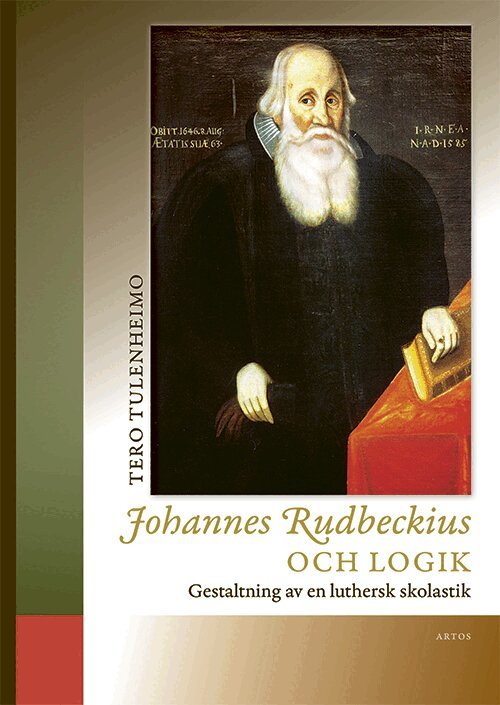
Johannes Rudbeckius och logik : gestaltning av en luthersk skolastik
Häftad, 2024
259 kr
Lägg i varukorg
Johannes Rudbeckius (1581 1646) var en av de främsta kyrkoledarna i stormaktstidens Sverige. Under studietiden i Wittenberg influerades han av luthersk skolastik , enligt vilken förnuft och uppenbarelse är förenliga som kunskapskällor och logik är ett instrument för teologi. I boken visar Tero …