Terrence Wiley – författare
Education of Language Minority Immigrants in the United States
455 kr
Skickas inom 5-8 vardagar
Ebonics
The Urban Education Debate
390 kr
Skickas inom 5-8 vardagar
Ebonics
The Urban Education Debate
1 351 kr
Skickas inom 5-8 vardagar
1 763 kr
Tillfälligt slut
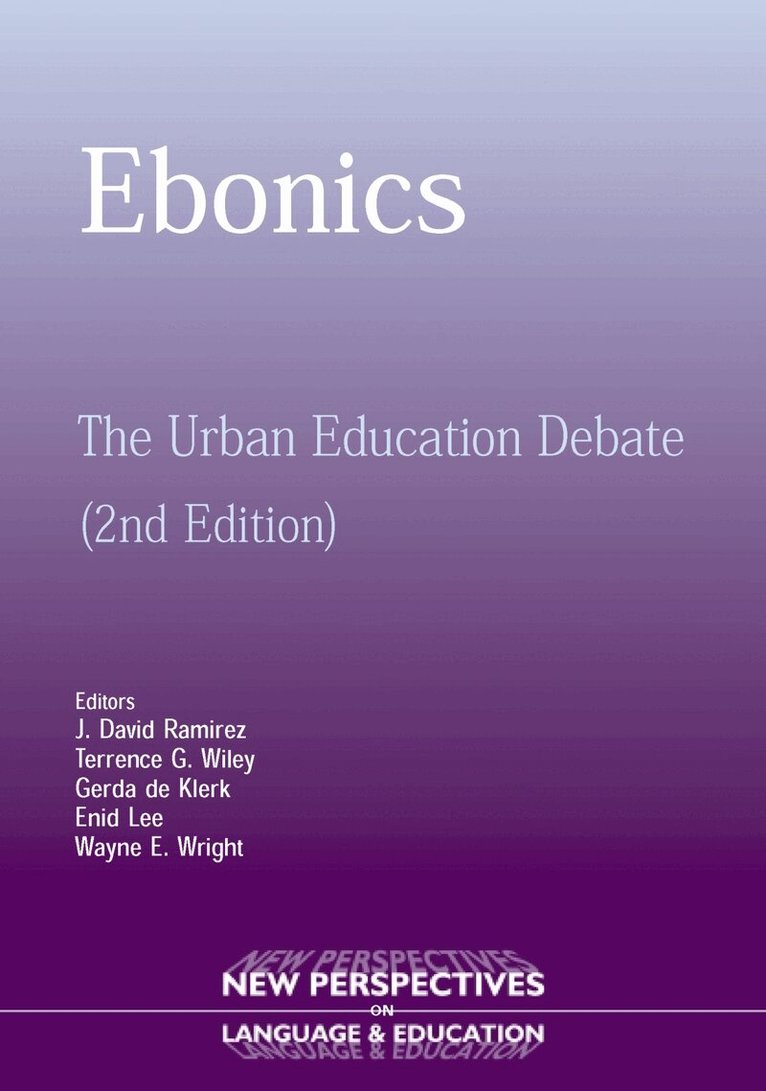
Controversy erupted in 1996 when the Oakland Unified School District’s ‘Ebonics Resolution’ proposed an approach to teaching Standard English that recognized the variety of English spoken by African American students. With new demands for accountability driven by the No Child Left Behind policy and its emphasis on high-stakes testing in Standard English, this debate will no doubt rise again. This book seeks to better inform this next episode.
In Part 1, leading scholars place the debate within its historical and contemporary context, provide clear explanations of what Ebonics is and is not, and offer practical approaches schools can and should follow to address the linguistic needs of African American students. Part 2 provides original documents that accompanied the debate, including the original resolutions, legislation, organization position papers, and commentary/analyses from leading linguists. This book is written for all those whose work impacts the lives of Ebonics speakers in our public schools.
1 763 kr
Tillfälligt slut
Education of Language Minority Immigrants in the United States
1 349 kr
Tillfälligt slut
1 994 kr
Tillfälligt slut
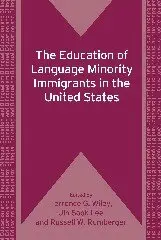
The Education of Language Minority Immigrants in the United States draws from quantitative and qualitative research methodologies to inform educational policy and practice. It is based on cutting-edge research and policy analyses from a number of well-known experts on immigrant language minority education in the USA. The collection includes contributions on the acquisition of English, language shift, the maintenance of heritage languages, prospects for long-term educational achievement, how family background, economic status, and gender and identity influence academic adjustment and achievement, challenges for appropriate language testing and placement, and examples of advocacy action research. It concludes with a thoughtful commentary aimed at broadening our understanding of the need to provide quality immigrant language minority education within the context of globalization. This collection will be of value to students and researchers interested in promoting educational equity and achievement for immigrant language minority students.
1 994 kr
Tillfälligt slut
The Education of Language Minority Immigrants in the United States draws from quantitative and qualitative research methodologies to inform educational policy and practice. It is based on cutting-edge research and policy analyses from a number of well-known experts on immigrant language minority education in the USA. The collection includes contributions on the acquisition of English, language shift, the maintenance of heritage languages, prospects for long-term educational achievement, how family background, economic status, and gender and identity influence academic adjustment and achievement, challenges for appropriate language testing and placement, and examples of advocacy action research. It concludes with a thoughtful commentary aimed at broadening our understanding of the need to provide quality immigrant language minority education within the context of globalization. This collection will be of value to students and researchers interested in promoting educational equity and achievement for immigrant language minority students.
1 994 kr
Tillfälligt slut
1 763 kr
Tillfälligt slut
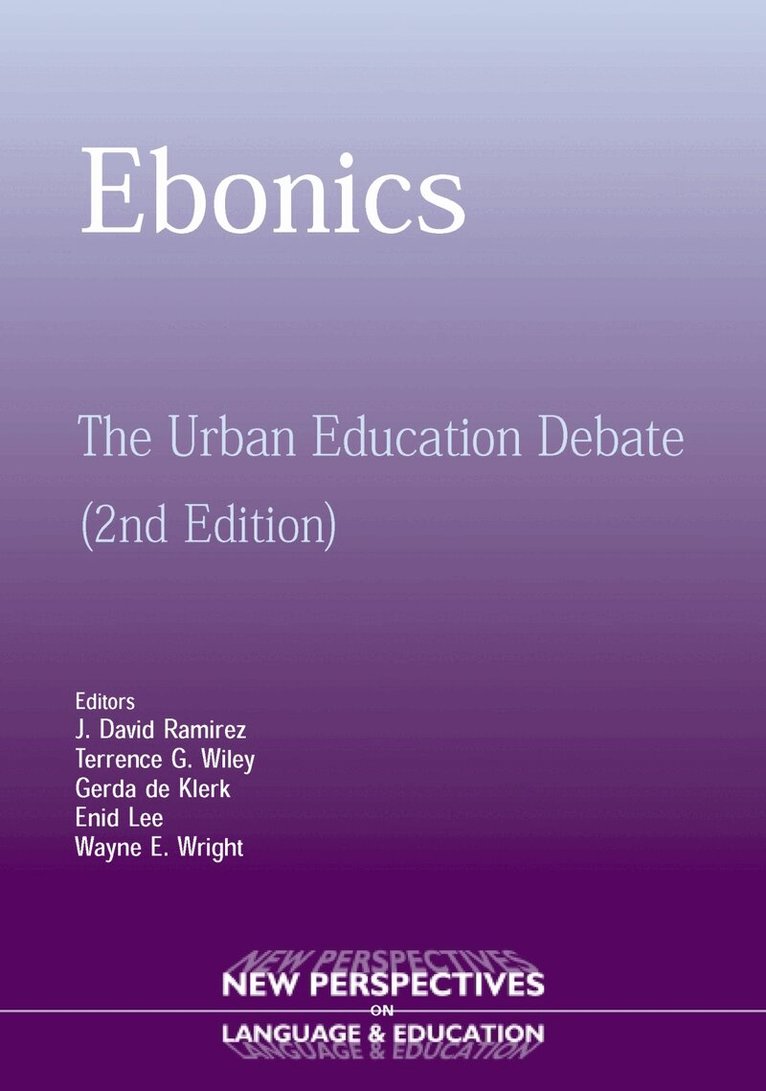
Controversy erupted in 1996 when the Oakland Unified School District’s ‘Ebonics Resolution’ proposed an approach to teaching Standard English that recognized the variety of English spoken by African American students. With new demands for accountability driven by the No Child Left Behind policy and its emphasis on high-stakes testing in Standard English, this debate will no doubt rise again. This book seeks to better inform this next episode.
In Part 1, leading scholars place the debate within its historical and contemporary context, provide clear explanations of what Ebonics is and is not, and offer practical approaches schools can and should follow to address the linguistic needs of African American students. Part 2 provides original documents that accompanied the debate, including the original resolutions, legislation, organization position papers, and commentary/analyses from leading linguists. This book is written for all those whose work impacts the lives of Ebonics speakers in our public schools.