Terry J. McGenity – författare
4 125 kr
Skickas inom 10-15 vardagar
5 038 kr
Läs direkt efter köp
3 800 kr
Skickas inom 10-15 vardagar
4 746 kr
Läs direkt efter köp
1 091 kr
Skickas inom 10-15 vardagar
1 367 kr
Läs direkt efter köp
1 091 kr
Skickas inom 10-15 vardagar
1 379 kr
Läs direkt efter köp
1 091 kr
Skickas inom 10-15 vardagar
1 416 kr
Läs direkt efter köp
1 091 kr
Skickas inom 10-15 vardagar
1 416 kr
Läs direkt efter köp
1 091 kr
Skickas inom 10-15 vardagar
1 416 kr
Läs direkt efter köp
1 091 kr
Skickas inom 10-15 vardagar
1 416 kr
Läs direkt efter köp
1 091 kr
Skickas inom 10-15 vardagar
1 416 kr
Läs direkt efter köp
1 091 kr
Skickas inom 10-15 vardagar
1 379 kr
Läs direkt efter köp
This Volume addresses the pros and cons of oligonucleotide probes, primers and primer combinations, and importantly considers how to design the best tools for the microbial taxa and/or processes being investigated. Individual chapters focus on the design of primers targeting genes that code for enzymes associated with the following functions: degradation of aromatic, aliphatic and chlorinated hydrocarbons under aerobic and anaerobic conditions, methanogenesis, methane oxidation, and the nitrogen cycle.
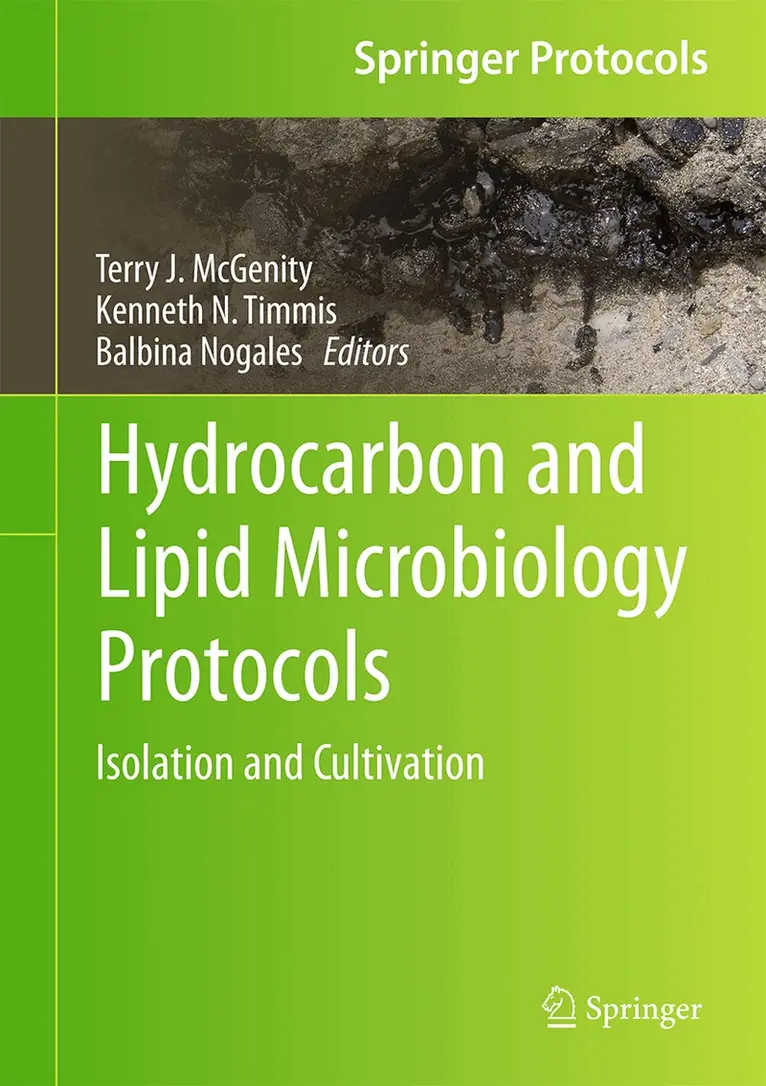
Hydrocarbon and Lipid Microbiology Protocols
There are tens of thousands of structurally different hydrocarbons, hydrocarbon derivatives and lipids, and a wide array of these molecules are required for cells to function. The global hydrocarbon cycle, which is largely driven by microorganisms, has a major impact on our environment and climate. Microbes are responsible for cleaning up the environmental pollution caused by the exploitation of hydrocarbon reservoirs and will also be pivotal in reducing our reliance on fossil fuels by providing biofuels, plastics and industrial chemicals. Gaining an understanding of the relevant functions of the wide range of microbes that produce, consume and modify hydrocarbons and related compounds will be key to responding to these challenges. This comprehensive collection of current and emerging protocols will facilitate acquisition of this understanding and exploitation of useful activities of such microbes.
1 091 kr
Skickas inom 10-15 vardagar
1 367 kr
Läs direkt efter köp
1 091 kr
Skickas inom 10-15 vardagar
1 387 kr
Läs direkt efter köp
This Volume presents a comprehensive series of generic protocols for the genetic and genomic analysis of prokaryotic isolates. Genetic methods for functional analyses employ the latest cloning vectors, gene fusion methods and transposon mutagenesis systems, as well as systems for introducing protease-cleavage sequences into permissive sites in proteins under investigation. Genomic methods described include protocols for transcriptomics, shotgun proteomics, interactomics, metabolic profiling, and lipidomics. Bioinformatic tools for genome annotation, transcriptome display and the integration of transcriptomic data into genome-scale metabolic reconstructions are described. Protocols for 13C-based metabolic flux determinations and analysis of the hierarchical and metabolic regulation of fluxes through pathways are included. The Volume thus enables investigators to functionally analyse an isolate over the entire cellular range spanning the gene, the genome, the transcript repertoire, the proteome, the interactome, the metabolic network with its nodes and their regulatory hierarchies, and the metabolic fluxes and their physiological controls.
Hydrocarbon and Lipid Microbiology Protocols
There are tens of thousands of structurally different hydrocarbons, hydrocarbon derivatives and lipids, and a wide array of these molecules are required for cells to function. The global hydrocarbon cycle, which is largely driven by microorganisms, has a major impact on our environment and climate. Microbes are responsible for cleaning up the environmental pollution caused by the exploitation of hydrocarbon reservoirs and will also be pivotal in reducing our reliance on fossil fuels by providing biofuels, plastics and industrial chemicals. Gaining an understanding of the relevant functions of the wide range of microbes that produce, consume and modify hydrocarbons and related compounds will be key to responding to these challenges. This comprehensive collection of current and emerging protocols will facilitate acquisition of this understanding and exploitation of useful activities of such microbes.1 091 kr
Skickas inom 10-15 vardagar
1 367 kr
Läs direkt efter köp
1 091 kr
Skickas inom 10-15 vardagar
1 416 kr
Läs direkt efter köp
This Volume presents methods for quantifying microbial populations and characterising microbial communities by extracting and analysing biomarkers such as RNA, DNA and lipids. The chapters cover a wide range of topics, including: cell separation from oil-rich environments, enumeration of hydrocarbon degraders and sulphate reducers using most-probable-number techniques, and quantification by means of real-time PCR. A variety of molecular methods are described for microbial community profiling, such as phospholipid fatty acid analysis, DGGE, T-RFLP and SSCP. One chapter examines high-throughput sequencing, and provides important information on the associated procedures required for thorough data analysis. A further chapter is devoted to the characterisation of protistan communities, while the closing chapter describes multiplex fluorescent antibody microarrays for detecting microbial biomarkers.
Hydrocarbon and Lipid Microbiology Protocols
There are tens of thousands of structurally different hydrocarbons, hydrocarbon derivatives and lipids, and a wide array of these molecules are required for cells to function. The global hydrocarbon cycle, which is largely driven by microorganisms, has a major impact on our environment and climate. Microbes are responsible for cleaning up the environmental pollution caused by the exploitation of hydrocarbon reservoirs and will also be pivotal in reducing our reliance on fossil fuels by providing biofuels, plastics and industrial chemicals. Gaining an understanding of the relevant functions of the wide range of microbes that produce, consume and modify hydrocarbons and related compounds will be key to responding to these challenges. This comprehensive collection of current and emerging protocols will facilitate acquisition of this understanding and exploitation of useful activities of such microbes.
1 091 kr
Skickas inom 10-15 vardagar
1 367 kr
Läs direkt efter köp
This Volume presents methods for analysing and quantifying petroleum, hydrocarbons and lipids, based on their chemical and physical properties as well as their biological effects. It features protocols for extracting hydrocarbons from solid matrices, water and air, and a dedicated chapter focusing on volatile organic compounds. Several approaches for separating and detecting diverse classes of hydrocarbons and lipids are described, including: (tandem) gas chromatography (GC) coupled with mass spectrometry (MS) or flame-ionisation detection, Fourier-transform induction-coupled-resonance MS, and fluorescence-based techniques. The book details high-performance liquid chromatography MS for microbial lipids, as well as a combination of techniques for naphthenic acids. Two chapters focus on quantifying bioavailable hydrocarbon fractions by using cyclodextrin sorbents and bacterial bioreporters, respectively, while a closing chapter explains how compound-specific stable-isotope analysis can be used to measure the fate of hydrocarbons in the environment.
Hydrocarbon and Lipid Microbiology Protocols
There are tens of thousands of structurally different hydrocarbons, hydrocarbon derivatives and lipids, and a wide array of these molecules are required for cells to function. The global hydrocarbon cycle, which is largely driven by microorganisms, has a major impact on our environment and climate. Microbes are responsible for cleaning up the environmental pollution caused by the exploitation of hydrocarbon reservoirs and will also be pivotal in reducing our reliance on fossil fuels by providing biofuels, plastics and industrial chemicals. Gaining an understanding of the relevant functions of the wide range of microbes that produce, consume and modify hydrocarbons and related compounds will be key to responding to these challenges. This comprehensive collection of current and emerging protocols will facilitate acquisition of this understanding and exploitation of useful activities of such microbes.