Terunao Hirota – författare
Visar alla böcker från författaren Terunao Hirota. Handla med fri frakt och snabb leverans.
3 produkter
3 produkter
E-bok
PDF, Engelska, 20043 951 kr
Läs direkt efter köp
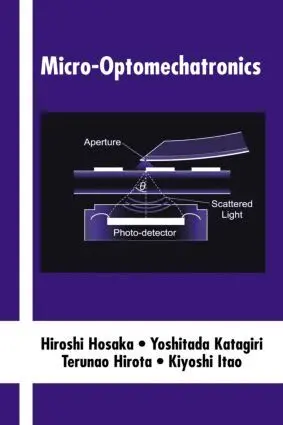
Fusing developments in optics, electronics, and mechanics, this reference systematically explores and describes an abundance of micro-optomechatronic devices and applications. The authors outline the power and position control of a laser beam, as well as fundamental principles in optical technology. Micro-Optomechatronics systematically explains the devices based upon the fusion of optics, electronics, and mechanics via MEMS technology. The book first demonstrates how devices are classified based upon the control methods of power and position of the laser beam. It then describes the devices in detail according to the classification of control methods. Positional control is classified as intermittent control, constant velocity control, and follow-up control. The volume concludes with an explanation of the optics and dynamics that provide the theoretical background of control methods, and an overview of the influence of nanotechnology and near-field optical memory.
Inbunden, Engelska, 2004
3 329 kr
Skickas inom 10-15 vardagar
Fusing developments in optics, electronics, and mechanics, this reference systematically explores and describes an abundance of micro-optomechatronic devices and applications. The authors outline the power and position control of a laser beam, as well as fundamental principles in optical technology.Contains examples of micro-optomechatronic devices in information and communication systems
E-bok
Engelska, 20043 951 kr
Läs direkt efter köp
Fusing developments in optics, electronics, and mechanics, this reference systematically explores and describes an abundance of micro-optomechatronic devices and applications. The authors outline the power and position control of a laser beam, as well as fundamental principles in optical technology. Micro-Optomechatronics systematically explains the devices based upon the fusion of optics, electronics, and mechanics via MEMS technology. The book first demonstrates how devices are classified based upon the control methods of power and position of the laser beam. It then describes the devices in detail according to the classification of control methods. Positional control is classified as intermittent control, constant velocity control, and follow-up control. The volume concludes with an explanation of the optics and dynamics that provide the theoretical background of control methods, and an overview of the influence of nanotechnology and near-field optical memory.