Teun Boekhout – författare
Visar alla böcker från författaren Teun Boekhout. Handla med fri frakt och snabb leverans.
4 produkter
4 produkter
E-bok
Engelska, 20115 649 kr
Läs direkt efter köp
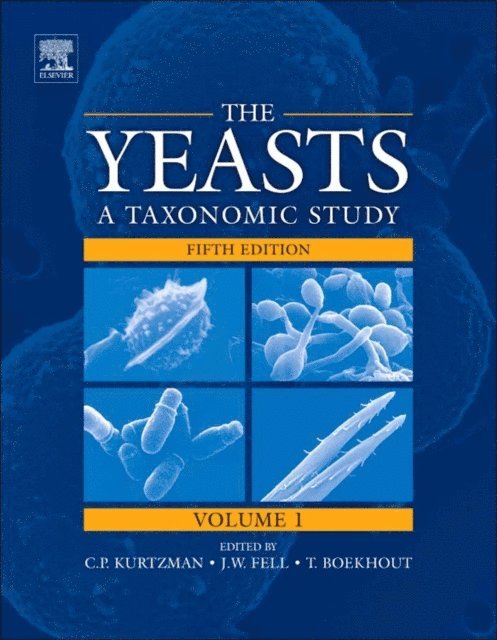
The Yeasts: A Taxonomic Study is a three-volume book that covers the taxonomic aspect of yeasts. The main goal of this book is to provide important information about the identification of yeasts. It also discusses the growth tests that can be used to identify different species of yeasts, and it examines how the more important species of yeasts provide information for the selection of species needed for biotechnology. • Volume 1 discusses the identification, classification and importance of yeasts in the field of biotechnology. • Volume 2 focuses on the identification and classification of ascomycetous yeasts. • Volume 3 deals with the identification and classification of basidiomycetous yeasts, along with the genus Prototheca.- High-quality photomicrographs and line drawings- Detailed phylogenetic trees- Up-to-date, clearly presented yeast taxonomy and systematic, easy-to-use reference sequence accession numbers to allow for correct identification
Inbunden, Engelska, 2010
1 667 kr
Skickas inom 10-15 vardagar
It has been known for many years that the Malassezia yeasts are associated with a n- ber of different human diseases ranging from pityriasis versicolor to seborrhoeic d- matitis. However the evolving history of their taxonomy and pathogenicity, and the management of the diseases that they cause has been a long, and often diffcult, jou- ney. Their fastidious growth requirements defed the initial attempts to culture these organisms on laboratory media and their true identifcation and the relationship between different species only became apparent with the application of modern molecular techniques. Likewise although recognised in the 19th century as potential causes of human infection, piecing together the complex and, in certain cases, still uncertain relationships to different human diseases has taken many years. Recognised initially as causes of infection of the skin, they are now known to be superfcial c- mensals as well as potential causes of infections in domestic animals and more serious human conditions such as fungemia. They have also been implicated in the pathog- esis of allergic and other infammatory diseases.Given this complex, yet fascinating, history it seems appropriate to bring together current thought on these yeasts, their structure and function and their association with both human and animal disease states. This book provides such a view of the genus Malassezia and the diseases caused by its members.
E-bok
PDF, Engelska, 20101 565 kr
Läs direkt efter köp
Häftad, Engelska, 2014
1 225 kr
Skickas inom 10-15 vardagar
It has been known for many years that the Malassezia yeasts are associated with a n- ber of different human diseases ranging from pityriasis versicolor to seborrhoeic d- matitis. However the evolving history of their taxonomy and pathogenicity, and the management of the diseases that they cause has been a long, and often diffcult, jou- ney. Their fastidious growth requirements defed the initial attempts to culture these organisms on laboratory media and their true identifcation and the relationship between different species only became apparent with the application of modern molecular techniques. Likewise although recognised in the 19th century as potential causes of human infection, piecing together the complex and, in certain cases, still uncertain relationships to different human diseases has taken many years. Recognised initially as causes of infection of the skin, they are now known to be superfcial c- mensals as well as potential causes of infections in domestic animals and more serious human conditions such as fungemia. They have also been implicated in the pathog- esis of allergic and other infammatory diseases.Given this complex, yet fascinating, history it seems appropriate to bring together current thought on these yeasts, their structure and function and their association with both human and animal disease states. This book provides such a view of the genus Malassezia and the diseases caused by its members.