Thammarat Koottatep – författare
Visar alla böcker från författaren Thammarat Koottatep. Handla med fri frakt och snabb leverans.
7 produkter
7 produkter
1 697 kr
Tillfälligt slut
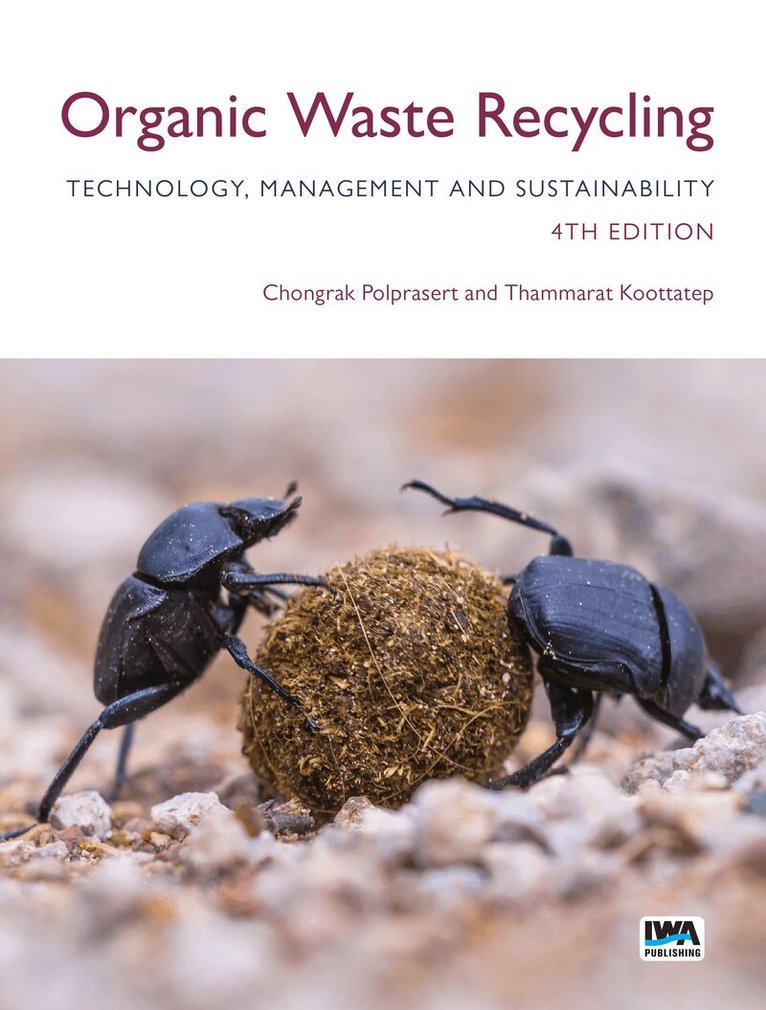
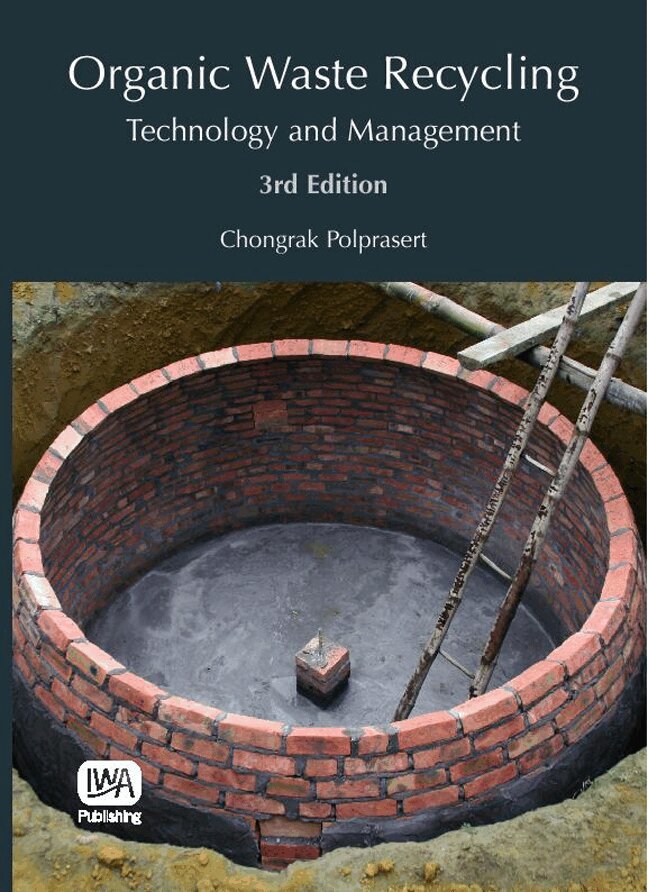
This fourth edition of Organic Waste Recycling is fully updated with new material to create a comprehensive and accessible textbook:- New chapter on constructed wetlands for wastewater and faecal sludge stabilization.- New sections on: waste recycling vs. climate change and water; faecal sludge and its characteristics; hydrothermal carbonization technology; up-to-date environmental criteria and legislation and environmental risk assessment.- New case studies with emphasis on practices in both developed and developing countries have been included, along with more exercises at the end of chapters to help the readers understand the technical principles and their application.- Novel concepts and strategies of waste management are presented.- Up-to-date research findings and innovative technologies of waste recycling program are provided.This textbook is intended for undergraduate and graduate students majoring in environmental sciences and engineering as well as researchers, professionals and policy makers who conduct research and practices in the related fields. It is essential reading for experts in environmental science and engineering and sustainable waste reuse and recycling in both developed and developing countries.
1 759 kr
Tillfälligt slut
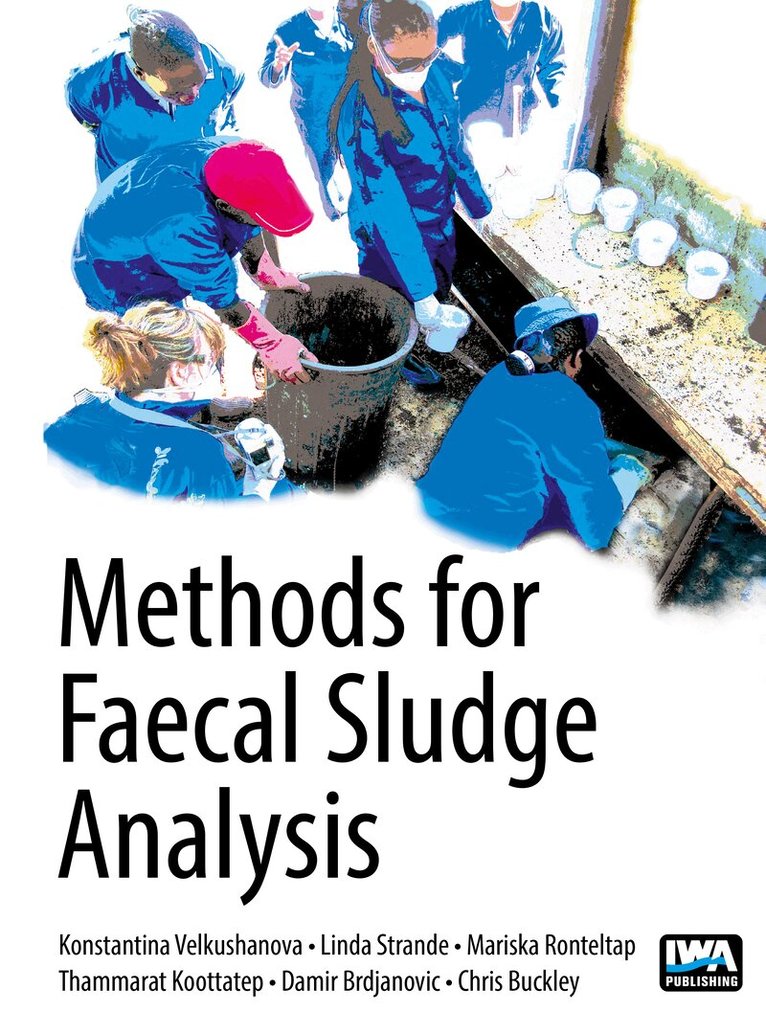
Faecal sludge management is recognized globally as an essential component of city-wide inclusive sanitation. However, a major gap in developing appropriate and adequate management and monitoring for faecal sludge is the ability to understand and predict thecharacteristics and volumes of accumulated faecal sludge, and correlations to source populations. Since standard methods for sampling and analysing faecal sludge do not currently exist, results are not comparable, the actual variability is not yet fully understood, and the transfer of knowledge and data between different regions and institutions can be challenging and often arbitrary.Due to this lack of standard analytical methods for faecal sludge, methods from other fields, such as wastewater management, and soil and food science are frequently applied. However, these methods are not necessarily the most suitable for faecal sludge analysis, and have not been specifically adapted for this purpose. Characteristics of faecal sludge can be different than these other matrices by orders of magnitude. There is also a lack of standard methods for sampling, which is complicated by the difficult nature of in situ sampling, the wide range of onsite sanitation technologies and potential sampling locations, and the diverse heterogeneity of faecal sludge within onsite containments and within cities. This illustrates the urgent need to establish common methods and procedures for faecal sludge characterisation, quantification, sampling, and modelling.The aim of this book is to provide a basis for standardised methods for the analysis of faecal sludge from onsite sanitation technologies, for improved communication between sanitation practitioners, and for greater confidence in the generated data. The book presents background information on types of faecal sludge, methods for sample collection, health and safety procedures for handling, case studies of experimental design, an approach for estimating faecal sludge at community to city-wide scales, modelling containment and treatment processes, recipes for simulants, and laboratory methods for faecal sludge analysis currently in use by faecal sludge laboratories. This book will be beneficial for researchers, laboratory technicians, academics, students and sanitation practitioners.
1 759 kr
Tillfälligt slut
This book proposes Regenerative Sanitation as the next era of sanitation management and attempts to provide a foundation for the study of sanitation on the premise that sanitation is a complex and dynamic system that comprises of social-ecological, technological and resource systems. The preconception is that sanitation will deliver maximal benefits to society only when there exists a cyclical integration of the three subsystems to enable appropriate linkages between ‘technological design’ and the ‘delivery platform’ so as to achieve optimal and sustained sani-solutions. It also calls for the rethinking of sanitation to change the narrative towards more progressive trajectories such as resource recovery and reuse rather than just amelioration. It explores the contributions to food security, livelihood support, urban regeneration, rural development and even local economies.A new paradigm, theory and ten principles for ensuring practical and effective sanitation solutions and management is presented. In addition is a unique conceptual framework applicable to both developed and developing countries, and to all stages, processes and cycles of delivering sanitation solutions that could critically evaluate, analyse and provide credible, adequate and appropriate sanitation solutions. All of which culminates in a strategic and practical application platform called ‘Sanitation 4.0’ that advocates for total rejuvenation and comprehensive overhaul with eight key strategic considerations for the implementation.Regenerative Sanitation: A New Paradigm For Sanitation 4.0 is inter and trans- disciplinary and encourages collaboration between engineers, scientists, technologists, social scientists and others to provide effective and practical user-centred solutions. It includes relevant case studies, examples, exercise and future research recommendations. It is written as both a textbook for researchers and students as well as a practitioners’ guide for policymakers and professionals.
Integrated Functional Sanitation Value Chain
The role of the sanitation economy
Häftad, Engelska, 2022
1 008 kr
Tillfälligt slut
The value chain (VC) system is a key way to address important sanitation technological and institutional gaps in production and service delivery and could constitute a natural platform for development actions and also serve as a market systems approach to improve access to safely-managed sanitation. It has been suggested that sanitation could boost local and national economies and global interconnections with a growing recognition that the private sector can play a bigger role in delivering the Sustainable Development Goal for sanitation, and help businesses understand value-added and product opportunities. This book proposes a pathway towards re-thinking the sanitation value chain (SVC) and suggests that it should cover all processes, activities and products of enterprises/actors in the sanitation supply chain that provide value-added services within each stage. Following the Regenerative Sanitation Principles, this book presents a new perspective to the SVC known as the ‘integrated functional sanitation value chain’ (IFSVC) to address operational functions within sanitation systems in combination with sanitation enterprises, operators and external actors that support the growth of the sanitation economy. The underlying premise of this book is that the IFSVC represents a new perspective that would have major social, environmental and economic implications for local, national, regional and global sanitation service delivery. It is hoped that researchers, business leaders, entrepreneurs, government officials and funders will find this book valuable, and be inspired and enabled to carry sanitation work forward in their own spheres of operation. The book gives several examples of encouraging developments, particularly in technical and business model innovation. It is our hope that this book will provide the stimulus for new learning and its application, particularly through cross-disciplinary and cross-sector partnerships that bring together all the skills and capabilities needed to deliver a fully effective IFSVC.
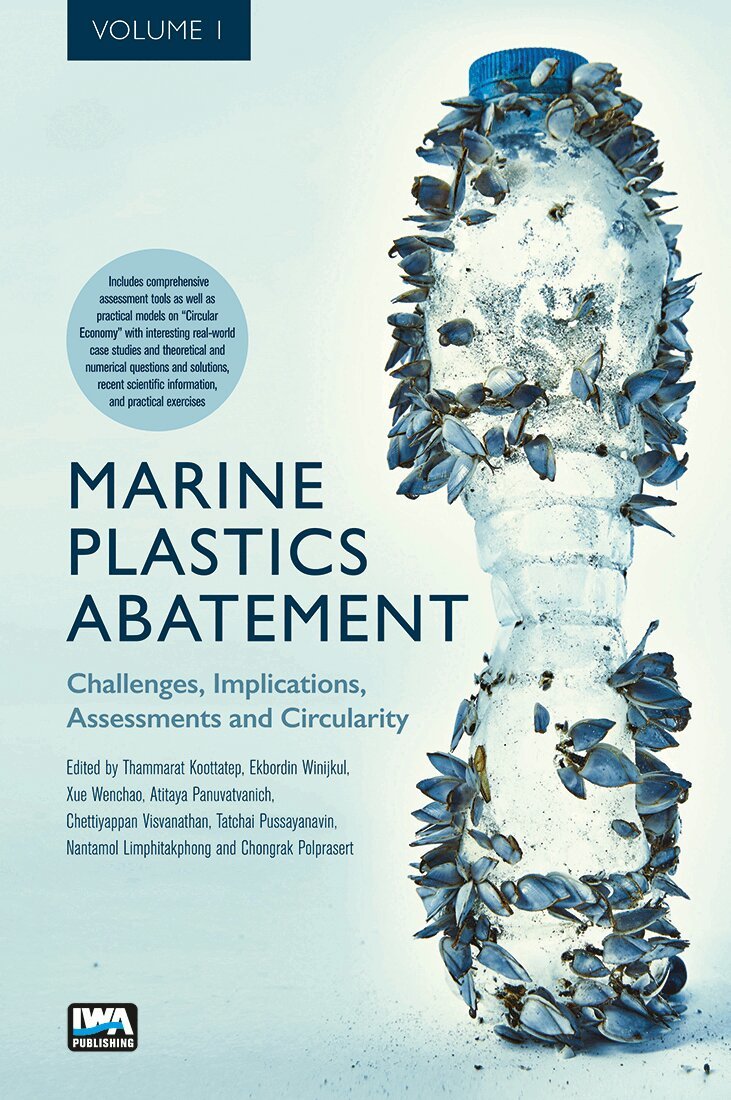
Marine Plastics Abatement: Volume 1. Challenges, Implications, Assessments and Circularity
Häftad, Engelska, 2023
1 071 kr
Tillfälligt slut
Marine Plastics Abatement Volume 1 provides comprehensive knowledge of plastic pollutions in marine ecosystems and their implications on human health, especially from the contamination of micro and nano-plastic particles by which the levels of plastic pollutions in marine, aquatic, terrestrial and atmospheric systems are described. In addition to emerging challenges by plastic pollution, this volume offers comprehensive assessment tools as well as practical models on "Circular Economy" with interesting real-world case studies and theoretical and numerical questions and solutions, recent scientific information, and practical exercises, to ensure a user-friendly text for readers.
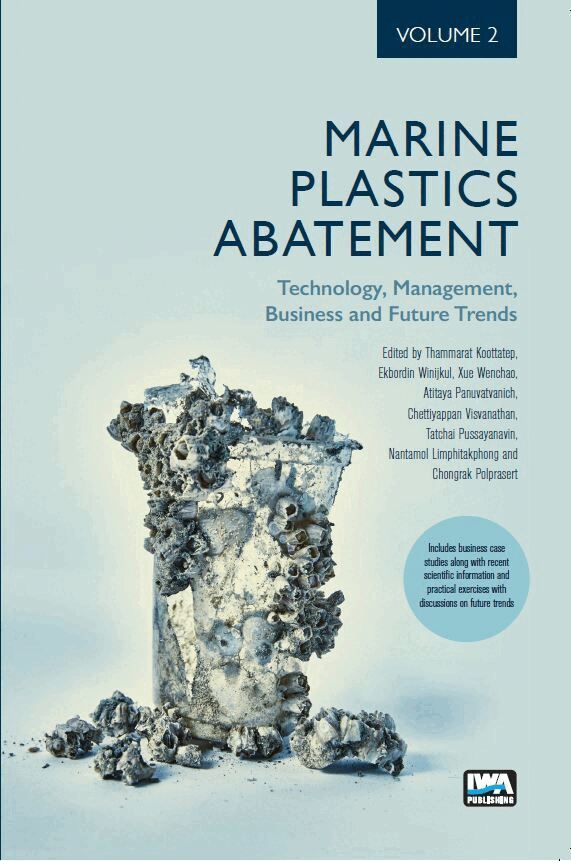
Marine Plastics Abatement: Volume 2. Technology, Management, Business and Future Trends
Häftad, Engelska, 2023
1 071 kr
Tillfälligt slut
Marine Plastics Abatement Volume 2, focusses on abatement strategies and up-to-date technological innovations against marine plastic pollution such as resource recovery, plastics-to-values, co-processing, dumpsite recovery, etc. With an understanding of technological solutions and proper management practices, this volume suggests ways to develop businesses from plastic wastes with several cases from developed and developing countries. Furthermore, business case studies are presented along with recent scientific information, and practical exercises together with discussions on future trends such as introduction of biodegradable, or decomposable plastics; product designs for recycling/upcycling; etc.
1 571 kr
Tillfälligt slut
This book covers the principles and practices of technologies for the control of pollution originating from organic wastes (e.g. human faeces and urine, wastewater, solid wastes, animal manure and agro-industrial wastes) and the recycling of these organic wastes into valuable products such as fertilizer, biofuels, algal and fish protein and irrigated crops. Each recycling technology is described with respect to: Objectives Benefits and limitations Environmental requirements Design criteria of the process Use of the recycled products Public health aspects Organic Waste Recycling Includes case studies, examples, exercises and questionsThis book is intended as a text or reference book for third or fourth year undergraduate students interested in environmental science, engineering and management, and graduate students working in the environment-related disciplines. It also serves as a reference text for policy makers, planners and professionals working in the environment and sustainable development fields.