Theo Lloyds Gaius – författare
Visar alla böcker från författaren . Handla med fri frakt och snabb leverans.
7 produkter
7 produkter
E-bok
Engelska, 202680 kr
Läs direkt efter köp
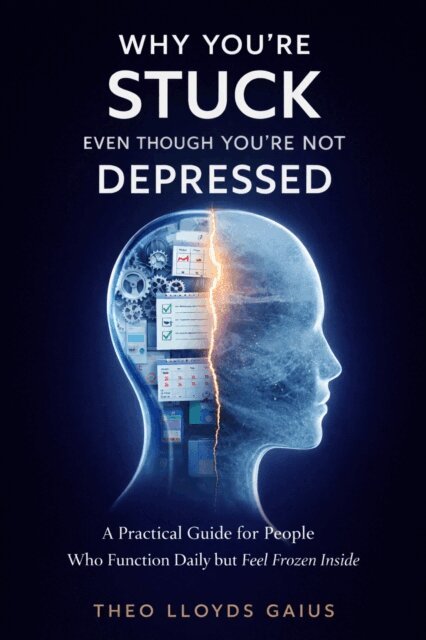
You go to work. You answer emails. You keep the house running and show up where people expect you to. From the outside, nothing looks wrong. But inside, something has gone quiet. You've been feeling frozen inside and going through the motions for weeks, maybe months, doing what needs to be done while the things that actually matter to you sit untouched. The project. The conversation. The decision. You think about them constantly. You just can't make yourself move toward them.If you've been asking yourself why can't I do anything when I'm not even sad, you are not lazy, ungrateful, or unmotivated. You are stuck in a nervous system state that most self-help books never address. It is called functional freeze, and it happens when your body activates a protective shutdown response while keeping just enough energy online to maintain daily functioning. You can perform. You can cope. But you cannot move forward. And no amount of goal-setting, discipline, or motivational advice will fix it, because the problem was never motivation. The problem is that your nervous system has classified forward action as unsafe.This book is a functional freeze symptoms recovery guide written in plain, direct language for people who are tired of being told to just push through. It explains what is happening in your body when you feel stuck but not depressed, why your brain avoids the next step even when you genuinely want to take it, and how the freeze response creates a self-reinforcing loop that gets harder to break the longer it runs. Every claim is backed by published research, and every citation is real and verifiable.The science behind this book draws on nervous system regulation and polyvagal theory, the model developed by neuroscientist Stephen Porges that explains how your autonomic nervous system shifts between states of safety, mobilization, and shutdown. You will learn how dorsal vagal shutdown drives functional freeze, why your body chose this pattern, and what it takes to begin shifting out of it. The explanation is thorough but accessible. No jargon. No clinical language that requires a degree to follow. Just a clear picture of what your nervous system is doing and why.The practical chapters focus on the freeze response and stress and burnout recovery using a body-first approach. Rather than forcing action through willpower, the strategies in this book work with your biology. Specific tools include breathing techniques that activate the vagus nerve within minutes, the 2-Minute Bridge method for approaching tasks your nervous system has flagged as threatening, the One-Task Rule that builds momentum without triggering overwhelm, and a complete 7-Day Reactivation Plan designed to work even on your lowest-energy days. Each day requires no more than 15 minutes of active engagement. Every day includes a minimum viable version for when capacity is limited.This book also explains what to stop doing. Self-criticism, overplanning, waiting for motivation, consuming more information as a substitute for action, and saying yes to things that drain your remaining bandwidth are all patterns that deepen the freeze cycle. Removing them is as important as adding new tools.If you have been stuck and unmotivated and cannot figure out why, if the standard self-help advice has failed you repeatedly, or if you have started to believe the problem is you, this book offers functional freeze help grounded in evidence rather than empty reassurance. It was written for people who function well enough that nobody notices they are struggling, and for anyone who needs a self-help book that finally matches what they are actually experiencing: not depression, not burnout in the traditional sense, but a quiet, persistent inability to move forward while life continues around them.
114 kr
Läs direkt efter köp
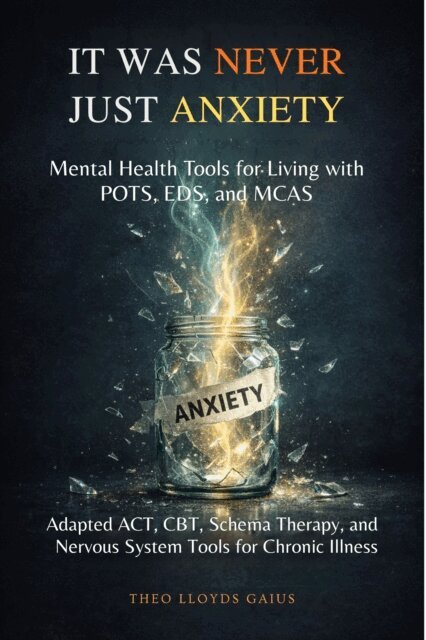
When Your Doctor Says "e;Anxiety"e; But Your Body Knows BetterMore than 75% of people with Postural Orthostatic Tachycardia Syndrome receive at least one psychiatric misdiagnosis before anyone identifies the real cause of their symptoms. Add Ehlers-Danlos Syndrome and Mast Cell Activation Syndrome to the picture, and the result is years of being told that a racing heart is panic, that chronic pain is depression, and that brain fog is stress. The emotional damage of that dismissal runs deep, and it does not disappear when the correct diagnosis finally arrives.Mental Health Care That Understands Your BodyStandard therapy techniques were designed for bodies that follow the rules. Deep breathing can drop blood pressure in POTS. Cold exposure can trigger mast cell reactions. Body scans can increase distress when connective tissue sends unreliable signals. This book adapts four evidence-based therapeutic approaches, Acceptance and Commitment Therapy, Cognitive Behavioral Therapy, Schema Therapy, and nervous system regulation, specifically for people living with autonomic dysfunction, connective tissue disorders, and immune dysregulation. Every technique has been modified so it works with the body, not against it.A Workbook Built for Variable Energy and Brain FogInside are 22 printable exercises including a three-category energy audit that accounts for autonomic load, a flare day protocol with pre-built emotional care, brain fog thought cards designed for days when full cognitive function is not available, a schema inventory adapted for the chronic illness experience, and a 90-day mental health maintenance plan that pulls tools from every chapter into a sustainable daily, weekly, and monthly routine. Each exercise is matched to energy level so there is always something that fits the current day.From Medical Trauma to Sustainable LivingAcross 16 chapters, this guide addresses the full psychological landscape of living with POTS, EDS, and MCAS. Topics include distinguishing autonomic anxiety from psychological anxiety, grieving the life you expected, healing from medical gaslighting, managing guilt and internalized ableism, protecting relationships under pressure, pacing without deprivation, rebuilding identity beyond productivity, navigating workplace accommodations and financial grief, building a support system that helps without harming, and finding meaning and post-traumatic growth without toxic positivity. A one-page clinical summary is included to hand directly to a therapist or mental health provider.
E-bok
Engelska, 202658 kr
Läs direkt efter köp
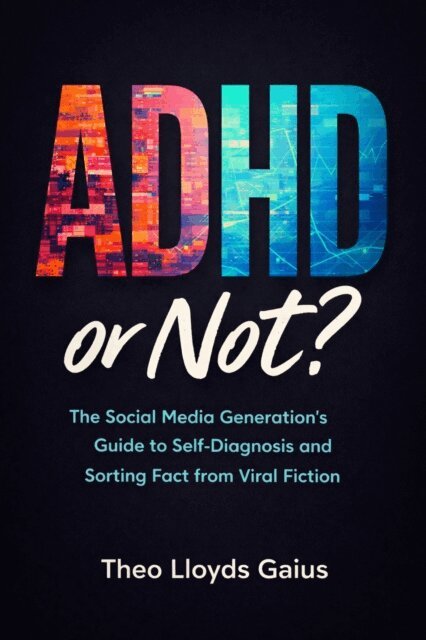
A viral video told you that you might have ADHD. Now you are reading everything you can find, taking every online quiz, and wondering if your entire life finally makes sense. But something still does not feel settled. The quizzes all say different things. The videos contradict each other. And no sixty-second clip can answer the question that actually matters: Do I really have ADHD, or does this just feel relatable?What Social Media Cannot Tell YouADHD content floods every platform, but most of it strips away the context that separates a clinical condition from a shared human experience. This book fills that gap with evidence-based information drawn directly from published research and clinical guidelines. Every claim is cited. Every chapter is built on peer-reviewed science, not engagement metrics. This is the guide that treats your intelligence and your questions with the seriousness they deserve.From Myth Busting to Self-ReflectionFifteen chapters walk through the full ADHD question, from how social media algorithms shape what you see to what a professional evaluation actually involves. The book separates ADHD facts from viral myths, explains why online quizzes cannot diagnose you, and addresses the conditions that look like ADHD but are not. Interactive self-reflection tools help you organize your thoughts and prepare for a productive conversation with a clinician.Practical Strategies That Work NowThis is not a book that leaves you with information and no direction. Detailed chapters cover brain-friendly environmental design, time management techniques, digital wellness strategies, habit building for attention differences, and relationship and workplace tools that apply right now. A dedicated chapter helps parents respond when a teenager says they think they have ADHD after seeing it on social So mediaBuilt for Critical ThinkingThe final chapters turn the lens back on social media itself, providing a five-question evaluation tool for assessing any ADHD claim you encounter online. A curated resource directory, conversation starter scripts for talking to partners, parents, employers, and doctors, and a plain-language glossary ensure this book remains useful long after the last page.This book does not diagnose. It does not replace a clinician. It gives you the vocabulary, the science, and the critical thinking tools to approach the ADHD question with clarity, confidence, and your eyes wide open. Backed by peer-reviewed citations and written at an accessible reading level, this is the ADHD resource for the social media generation, the one that tells you the truth instead of telling you what the algorithm thinks you want to hear.
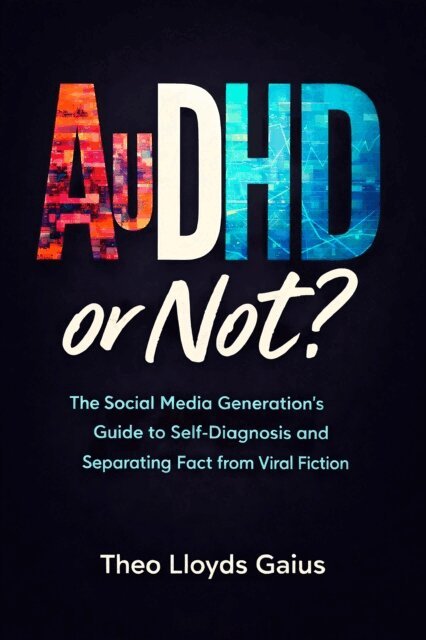
Del 2 - AuDHD or Not?
AuDHD or Not?: The Social Media Generation's Guide to Self-Diagnosis and Separating Fact from Viral Fiction
Häftad, Engelska, 2026
192 kr
Skickas inom 5-8 vardagar
E-bok
Engelska, 202693 kr
Läs direkt efter köp
The Algorithm Told You That You're AuDHD. This Book Helps You Find the Truth.Over two billion TikTok views. Endless "e;signs you might be AuDHD"e; videos. A growing wave of adults convinced they have co-occurring autism and ADHD based on sixty-second clips designed for engagement, not accuracy. Research published in Nature Mental Health (2025) found no significant correlation between self-reported autistic traits and clinician-assessed autism in adults. Over 70% of the most popular autism videos on TikTok contain inaccurate or overgeneralized information. The content feels real. The recognition feels powerful. But feeling seen and having a clinical condition are not the same thing.What AuDHD Actually Is And What It Isn'tCo-occurring autism and ADHD affects 38 to 70% of autistic individuals, yet it was not even permitted as a dual diagnosis until the DSM-5 removed the exclusion rule in 2013. This book explains the clinical reality of AuDHD with evidence-based clarity: how the two conditions interact, where traits amplify or mask each other, and why the "e;two brains at war"e; narrative dominating social media is a dangerous oversimplification. Anxiety disorders, complex PTSD, burnout, borderline personality disorder, OCD, giftedness, and sensory processing sensitivity can all mimic the AuDHD presentation. Without understanding these look-alikes, self-identification becomes a coin toss.From Self-Reflection to Clinical AnswersThis book includes structured self-screening exercises adapted from validated tools (ASRS, AQ-10) with clear disclaimers that these are reflection aids, not diagnostic instruments. It walks through what a comprehensive AuDHD evaluation involves, who is qualified to conduct one, what it costs, and how to access affordable options. It provides the four essential questions that separate clinical AuDHD from relatable social media content: Is it lifelong? Is it pervasive? Does it cause functional impairment? Is it better explained by something else?Practical Strategies That Work With Both ConditionsFor those who are confirmed AuDHD or awaiting evaluation, this book offers real-world strategies designed for the push-pull of dual conditions: environmental design, routine structures with built-in flexibility, sensory management, energy tracking across social, sensory, and cognitive batteries, relationship communication, workplace accommodations, and identity integration. A dedicated parents chapter helps families respond when a teenager comes home saying they think they are AuDHD after watching TikTok.
Häftad, Engelska, 2026
214 kr
Skickas inom 5-8 vardagar
Häftad, Engelska, 2026
222 kr
Skickas inom 5-8 vardagar