Theo van den Hout – författare
Visar alla böcker från författaren Theo van den Hout. Handla med fri frakt och snabb leverans.
7 produkter
The Elements of Hittite
Inbunden, 2011
1475 kr
Lägg i varukorg
Hittite is the earliest attested Indo-European language and was the language of a state which flourished in Asia Minor in the second millennium BC. This exciting and accessible introductory course, which can be used in both trimester and semester systems, offers in ten lessons a comprehensive …
The Elements of Hittite
Häftad, 2011
4,5 utav 5 stjärnor. Totalt antal röster: (2)
636 kr
Lägg i varukorg
Hittite is the earliest attested Indo-European language and was the language of a state which flourished in Asia Minor in the second millennium BC. This exciting and accessible introductory course, which can be used in both trimester and semester systems, offers in ten lessons a comprehensive …
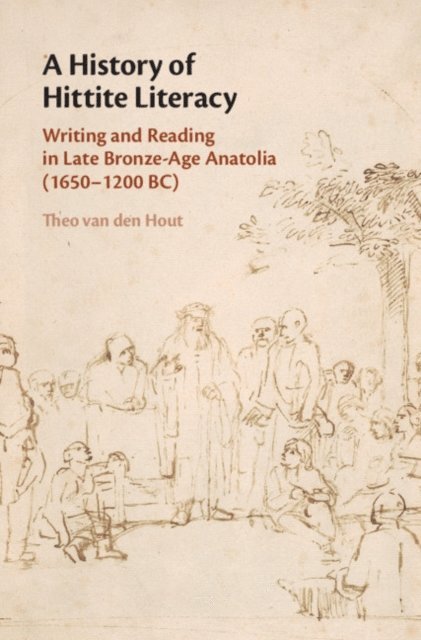
A History of Hittite Literacy
Writing and Reading in Late Bronze-Age Anatolia (1650-1200 BC)
Inbunden, 2021
2314 kr
Lägg i varukorg
Why did the Anatolians remain illiterate for so long, although surrounded by people using script? Why and how did they eventually adopt the cuneiform writing system and why did they still invent a second, hieroglyphic script of their own? What did and didn't they write down and what role did …
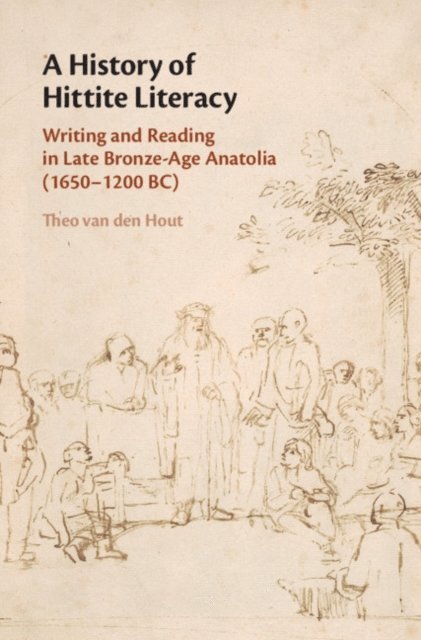
A History of Hittite Literacy
Writing and Reading in Late Bronze-Age Anatolia (1650-1200 BC)
Häftad, 2022
787 kr
Lägg i varukorg
Why did the Anatolians remain illiterate for so long, although surrounded by people using script? Why and how did they eventually adopt the cuneiform writing system and why did they still invent a second, hieroglyphic script of their own? What did and didn't they write down and what role did …
History of Hittite Literacy
Writing and Reading in Late Bronze-Age Anatolia (1650–1200 BC)
E-bok, 2021
772 kr
Lägg i varukorg
Why did the Anatolians remain illiterate for so long, although surrounded by people using script? Why and how did they eventually adopt the cuneiform writing system and why did they still invent a second, hieroglyphic script of their own? What did and didn''t they write down and what role did …
History of Hittite Literacy
Writing and Reading in Late Bronze-Age Anatolia (1650–1200 BC)
E-bok, 2021
772 kr
Lägg i varukorg
Why did the Anatolians remain illiterate for so long, although surrounded by people using script? Why and how did they eventually adopt the cuneiform writing system and why did they still invent a second, hieroglyphic script of their own? What did and didn''t they write down and what role did …
Geschichte des Hethitischen Reiches
Av Volkert Haas, Fiorella Imparati m. fl.
Inbunden, 1998
5197 kr
Lägg i varukorg
The Anatolian people of the Hittites (ca. 1700-1200 B.C.) are the subject of the underlying work. In recent decades scholars have increased our knowledge in the field enormously without bringing the new insights together in a new comprehensive handbook. This long-awaited handbook deals with the …