Theresa Schilhab - Böcker
Visar alla böcker från författaren Theresa Schilhab. Handla med fri frakt och snabb leverans.
8 produkter
8 produkter
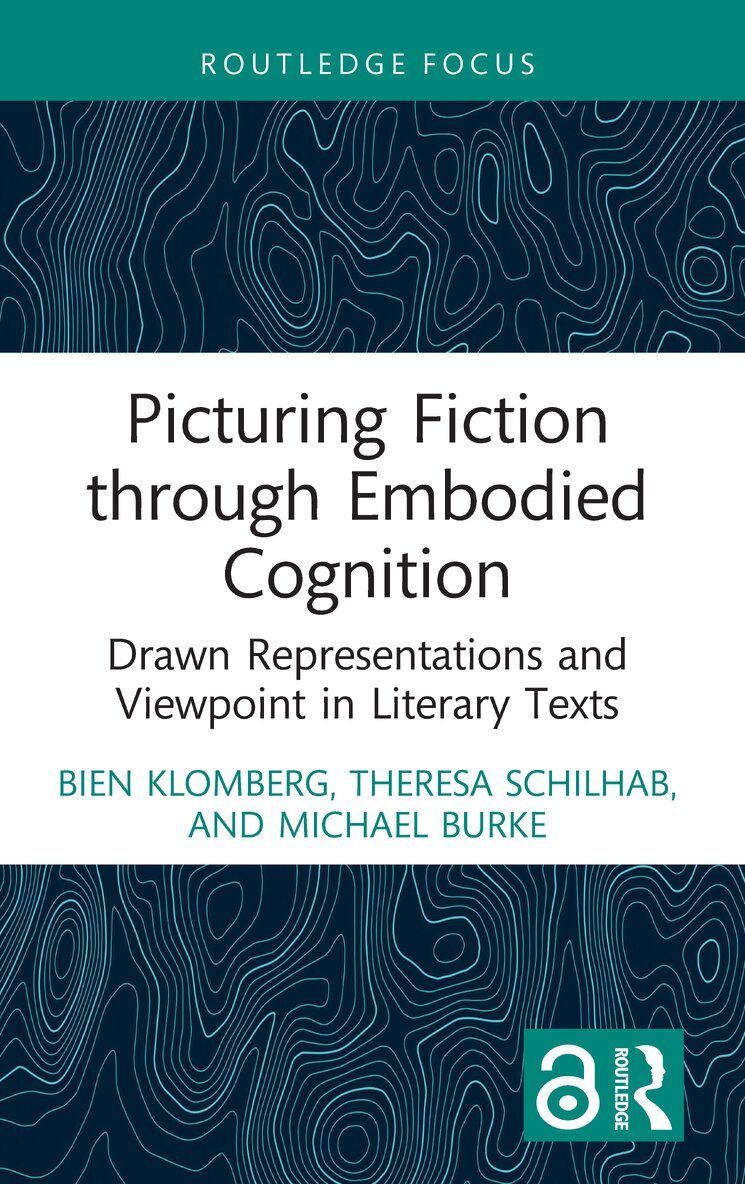
Picturing Fiction through Embodied Cognition
Drawn Representations and Viewpoint in Literary Texts
Inbunden, Engelska, 2022
860 kr
Skickas inom 10-15 vardagar
This concise volume addresses the question of whether or not language, and its structure in literary discourses, determines individuals’ mental "vision," employing an innovative cross-disciplinary approach using readers’ drawings of their mental imagery during reading.The book engages in critical dialogue with the perceived wisdom in stylistics rooted in Roger Fowler’s seminal work on deixis and point of view to test whether or not this theory can fully account for what readers see in their mind's eye and how they see it. The work draws on findings from a study of English and Dutch across a range of literary texts, in which participants read literary text fragments and were then asked to immediately draw representations of what they had seen envisioned. Building on the work of Fowler and more recent theoretical and empirical language-based studies in the area, Klomberg, Schilhab, and Burke argue that models from embodied cognitive science can help account for anomalies in evidence from readers’ drawings, indicating new ways forward for interdisciplinary understandings of individual meaning construction in literary textual interfaces.This book will be of interest to students and scholars in stylistics, cognitive psychology, rhetoric, and philosophy, particularly those working in the field of embodied cognition.The Open Access version of this book, available at http://www.taylorfrancis.com, has been made available under a Creative Commons Attribution-Non-Commercial (CC-BY-NC-) 4.0 license.
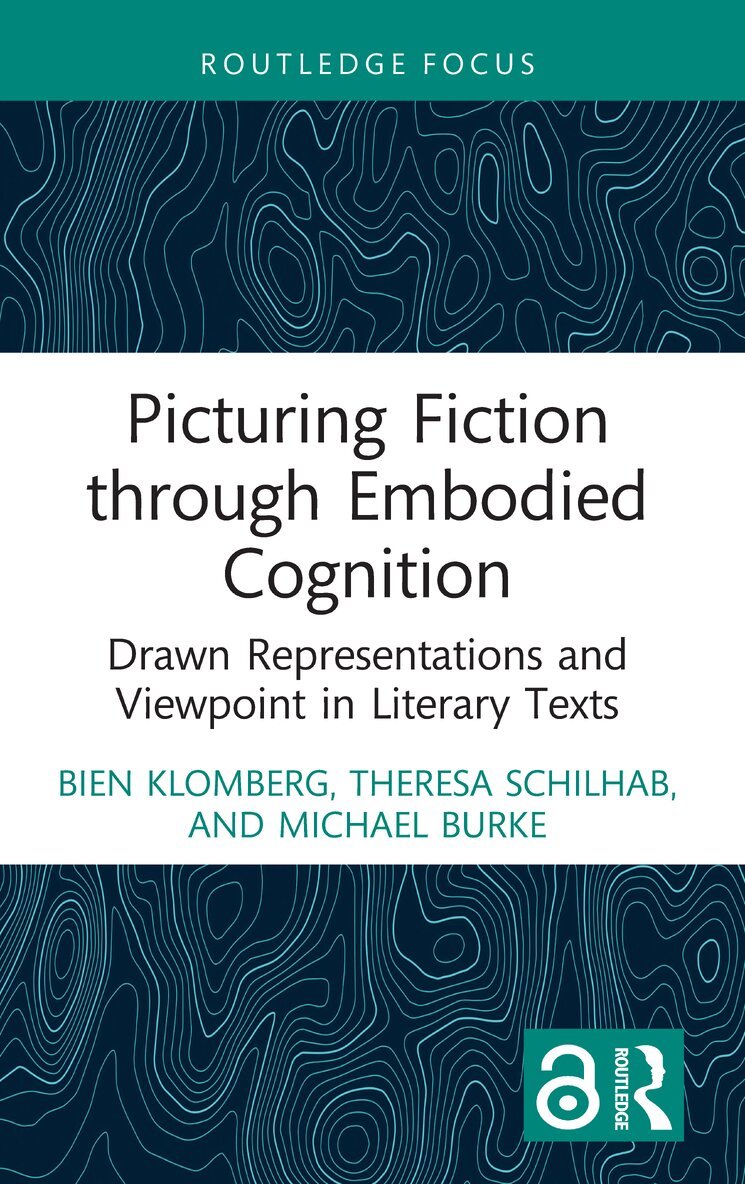
Picturing Fiction through Embodied Cognition
Drawn Representations and Viewpoint in Literary Texts
Häftad, Engelska, 2024
299 kr
Skickas inom 10-15 vardagar
This concise volume addresses the question of whether or not language, and its structure in literary discourses, determines individuals’ mental "vision," employing an innovative cross-disciplinary approach using readers’ drawings of their mental imagery during reading.The book engages in critical dialogue with the perceived wisdom in stylistics rooted in Roger Fowler’s seminal work on deixis and point of view to test whether or not this theory can fully account for what readers see in their mind's eye and how they see it. The work draws on findings from a study of English and Dutch across a range of literary texts, in which participants read literary text fragments and were then asked to immediately draw representations of what they had seen envisioned. Building on the work of Fowler and more recent theoretical and empirical language-based studies in the area, Klomberg, Schilhab, and Burke argue that models from embodied cognitive science can help account for anomalies in evidence from readers’ drawings, indicating new ways forward for interdisciplinary understandings of individual meaning construction in literary textual interfaces.This book will be of interest to students and scholars in stylistics, cognitive psychology, rhetoric, and philosophy, particularly those working in the field of embodied cognition.The Open Access version of this book, available at http://www.taylorfrancis.com, has been made available under a Creative Commons Attribution-Non-Commercial (CC-BY-NC-) 4.0 license.
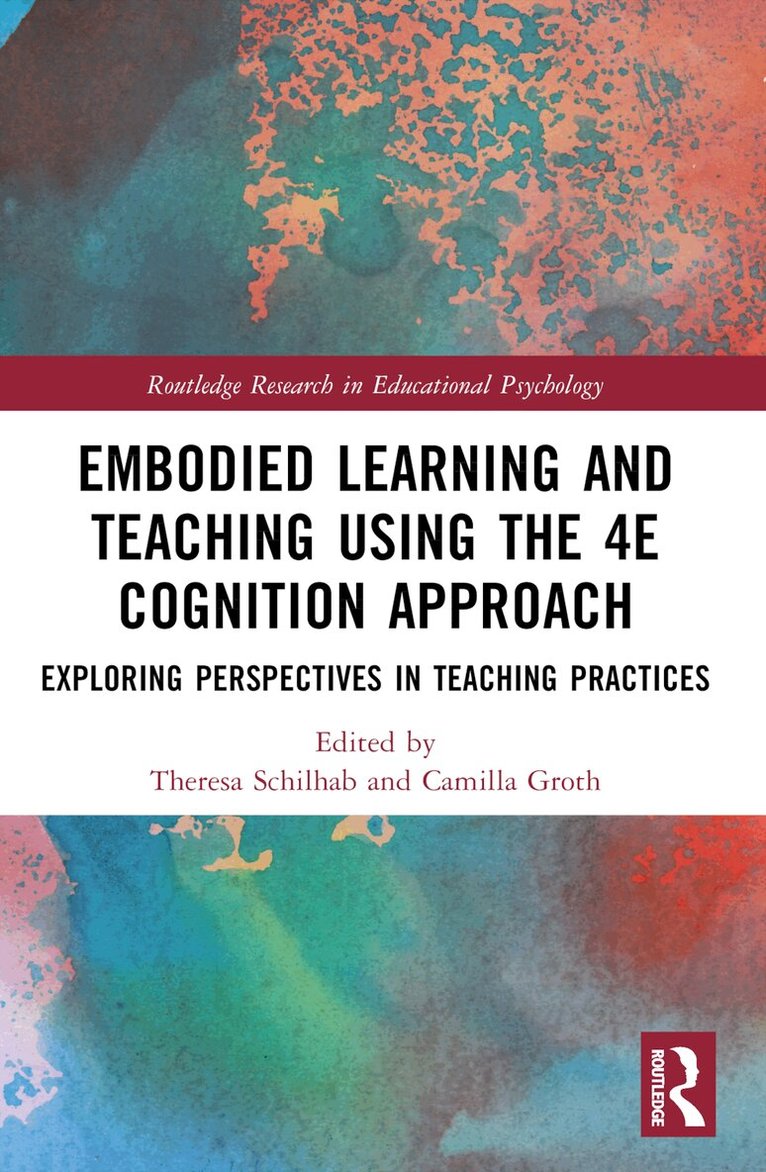
Embodied Learning and Teaching Using the 4E Cognition Approach
Exploring Perspectives in Teaching Practices
Inbunden, Engelska, 2024
2 037 kr
Skickas inom 10-15 vardagar
This book operationalises the new field—EmLearning—that integrates embodiment and grounded cognition perspectives with education using the 4E approach as a guiding principle, which suggests that cognition is embodied, embedded, enacted, or extended.Chapters highlight empirical data, providing readers with research-based insight into the theoretical foundations of embodied cognition in learning, illustrated by practical examples. Ultimately, the volume contributes a radical understanding of embodied cognition, demonstrating the importance of the field to the educational system more broadly and suggesting a fundamental change to the way learning, education, and curriculum design are viewed and considered. Based on contemporary scientific findings, the book addresses the educational area with a focus on opening the embodied approach to a wider audience that will circulate the new knowledge and support their educational practices.Written with the purpose of contributing to a broad spectrum of academic educational fields, this book will be of use to postgraduates, researchers, and academics in the fields of higher education, educational psychology, teacher education, and teaching methodology and practice. Teachers and school politicians should also benefit from this volume more broadly.The Open Access version of this book, available at www.taylorfrancis.com, has been made available under a Creative Commons Attribution-Non Commercial-No Derivatives (CC-BY-NC-ND) 4.0 license.
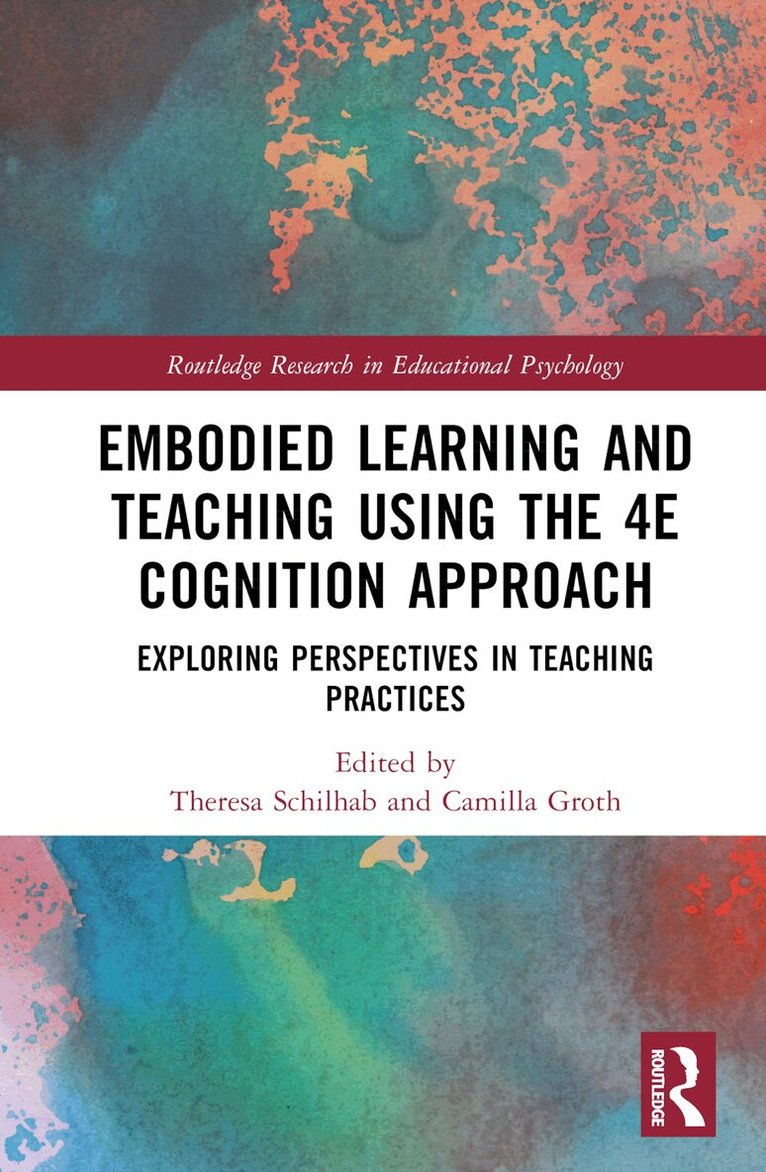
Embodied Learning and Teaching Using the 4E Cognition Approach
Exploring Perspectives in Teaching Practices
Häftad, Engelska, 2025
596 kr
Skickas inom 10-15 vardagar
This book operationalises the new field—EmLearning—that integrates embodiment and grounded cognition perspectives with education using the 4E approach as a guiding principle, which suggests that cognition is embodied, embedded, enacted, or extended.Chapters highlight empirical data, providing readers with research-based insight into the theoretical foundations of embodied cognition in learning, illustrated by practical examples. Ultimately, the volume contributes a radical understanding of embodied cognition, demonstrating the importance of the field to the educational system more broadly and suggesting a fundamental change to the way learning, education, and curriculum design are viewed and considered. Based on contemporary scientific findings, the book addresses the educational area with a focus on opening the embodied approach to a wider audience that will circulate the new knowledge and support their educational practices.Written with the purpose of contributing to a broad spectrum of academic educational fields, this book will be of use to postgraduates, researchers, and academics in the fields of higher education, educational psychology, teacher education, and teaching methodology and practice. Teachers and school politicians should also benefit from this volume more broadly.The Open Access version of this book, available at www.taylorfrancis.com, has been made available under a Creative Commons Attribution-Non Commercial-No Derivatives (CC-BY-NC-ND) 4.0 license.
1 059 kr
Skickas inom 10-15 vardagar
How does knowledge of phenomena and events we have no direct experiences of emerge? Having a brain that learns from being in the world, how can we conceive of prehistoric dinosaurs, Atlantis, unicorns or even ‘desire’? This book is about how abstract knowledge becomes anchored in direct experiences through well-formed conversations.Within the framework of evolutionary biology and through the lens of contemporary studies in cognitive science, the neurosciences, sociology and anthropology, this book traces topics such as our inborn sensitivity to the environment, bottom-up and top-down processes in knowledge formation and the importance of language when we learn to categorise the world. A major objective of this monograph is to identify the key determinants of the specific interactivity mechanisms that control the cognitive processes while we are linguistically immersed. The emphasis is on real-life interactions in conversations. While the concrete word-object paradigm depends relatively more on direct experiences, the successful acquisition of abstract knowledge depends on the emphatic skills of the interlocutor. He or she must remain sensitive to the level and quality of the imagination of the child while making mental tableaus that are believed to elicit images to which the child associates the concept. Derived embodiment in abstract thought is a landmark synthesis that operationalizes contemporary neuroscience studies of acquisition of knowledge in the real life conversational context. The result is an exciting biology-based contribution to theories of knowledge acquisition and thinking in sociology, cognitive robotics, anthropology and not at least, pedagogy.
1 409 kr
Skickas inom 5-8 vardagar
How does knowledge of phenomena and events we have no direct experiences of emerge? Having a brain that learns from being in the world, how can we conceive of prehistoric dinosaurs, Atlantis, unicorns or even ‘desire’? This book is about how abstract knowledge becomes anchored in direct experiences through well-formed conversations.Within the framework of evolutionary biology and through the lens of contemporary studies in cognitive science, the neurosciences, sociology and anthropology, this book traces topics such as our inborn sensitivity to the environment, bottom-up and top-down processes in knowledge formation and the importance of language when we learn to categorise the world. A major objective of this monograph is to identify the key determinants of the specific interactivity mechanisms that control the cognitive processes while we are linguistically immersed. The emphasis is on real-life interactions in conversations. While the concrete word-object paradigm depends relatively more on direct experiences, the successful acquisition of abstract knowledge depends on the emphatic skills of the interlocutor. He or she must remain sensitive to the level and quality of the imagination of the child while making mental tableaus that are believed to elicit images to which the child associates the concept. Derived embodiment in abstract thought is a landmark synthesis that operationalizes contemporary neuroscience studies of acquisition of knowledge in the real life conversational context. The result is an exciting biology-based contribution to theories of knowledge acquisition and thinking in sociology, cognitive robotics, anthropology and not at least, pedagogy.
2 111 kr
Skickas inom 10-15 vardagar
This anthology is a compilation of the best contributions from Symbolic Species Conferences I, II (which took place in 2006, 2007).In 1997 the American anthropologist Terrence Deacon published The Symbolic Species: The Coevolution of Language and the Brain. The book is widely considered a seminal work in the subject of evolutionary cognition. However, Deacons book was the first step – further steps have had to be taken. The proposed anthology is such an important associate.The contributions are written by a wide variety of scholars each with a unique view on evolutionary cognition and the questions raised by Terrence Deacon - emergence in evolution, the origin of language, the semiotic 'missing link', Peirce's semiotics in evolution and biology, biosemiotics, evolutionary cognition, Baldwinian evolution, the neuroscience of linguistic capacities as well as phylogeny of the homo species, primatology, embodied cognition and knowledge types.
2 111 kr
Skickas inom 10-15 vardagar
This anthology is a compilation of the best contributions from Symbolic Species Conferences I, II (which took place in 2006, 2007).In 1997 the American anthropologist Terrence Deacon published The Symbolic Species: The Coevolution of Language and the Brain. The book is widely considered a seminal work in the subject of evolutionary cognition. However, Deacons book was the first step – further steps have had to be taken. The proposed anthology is such an important associate.The contributions are written by a wide variety of scholars each with a unique view on evolutionary cognition and the questions raised by Terrence Deacon - emergence in evolution, the origin of language, the semiotic 'missing link', Peirce's semiotics in evolution and biology, biosemiotics, evolutionary cognition, Baldwinian evolution, the neuroscience of linguistic capacities as well as phylogeny of the homo species, primatology, embodied cognition and knowledge types.