Thiago Costa Chacon - Böcker
Visar alla böcker från författaren Thiago Costa Chacon. Handla med fri frakt och snabb leverans.
2 produkter
2 produkter
2 229 kr
Skickas inom 3-6 vardagar
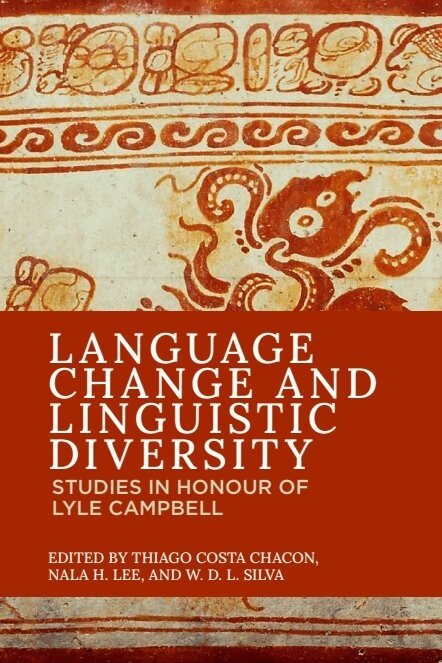
Professor Lyle Campbell has had a long and distinguished career and his extensive work on the languages of Mesoamerica have inspired research and researchers. In this volume, contributors come together to present new data, analyses and theoretical perspectives on how understanding language change raises questions for language documentation, description and even revitalization. Coverage ranges from the linguistic isolates Basque and Mapundungun to large families such as Tupian and Austronesian and spans a range of theoretical issues including ongoing language change, etymological opacity, word order, alignment systems and grammatical relations, language contact, onomastics and the study of pre-history. The book shows that linguistic fieldwork, when carried out and used appropriately, allows for a more consistent understanding of language change, and for a better understanding of the ethnographic record. It also explores the junctures between language change, linguistic diversity and other related fields that draw on primary linguistic fieldwork.
318 kr
Skickas
Professor Lyle Campbell has had a long and distinguished career and his extensive work on the languages of Mesoamerica have inspired research and researchers. In this volume, contributors come together to present new data, analyses and theoretical perspectives on how understanding language change raises questions for language documentation, description and even revitalization. Coverage ranges from the linguistic isolates Basque and Mapundungun to large families such as Tupian and Austronesian and spans a range of theoretical issues including ongoing language change, etymological opacity, word order, alignment systems and grammatical relations, language contact, onomastics and the study of pre-history. The book shows that linguistic fieldwork, when carried out and used appropriately, allows for a more consistent understanding of language change, and for a better understanding of the ethnographic record. It also explores the junctures between language change, linguistic diversity and other related fields that draw on primary linguistic fieldwork.