Thierry J.-L. Courvoisier - Böcker
Visar alla böcker från författaren Thierry J.-L. Courvoisier. Handla med fri frakt och snabb leverans.
4 produkter
4 produkter
534 kr
Skickas inom 10-15 vardagar
The aim of this essay is to understand the relationship between knowledge and society and to reflect on the links between science and political decision making. The text evolved from a number of reflections the author made while president of the European Astronomical Society, president of the Swiss Academy of Sciences and vice-president of the European Academies Science Advisory Council (EASAC). The book starts by using astronomy as a showcase for what science brings to society in terms of intellectual enrichment, of practical tools and of societal inputs. It then turns to looking generally at science as a human endeavour for which pleasure is a prime motivation and it describes the efforts made by researchers to rationalise their findings, thus making them universally acceptable. The author also describes the role of science in shaping our environment and discusses resulting responsibility of the scientists with respect to the evolution of the world. As part of an analysis of the relationship between science and policy the author describes the way in which scientists can (and must) bring knowledge in the political decision making process. The argument is closed with considerations on global governance, while the conclusion puts evidence based decision making processes in relation with the more emotional aspects of our behaviour.The readership of the book is intended to be all scientists involved in “science for policy” activities, as well as those who should become more active in this domain. This includes, but is not limited to, all members of science academies. Astronomers will find specific elements to help them think about their science. The intended readers of the book also include civil servants and policy makers who develop legislation and societal action in domains in which a solid knowledge base is important. The book should furthermore be of interest to citizens following public life and all those worried by the “post evidence” trends in policy.
1 272 kr
Skickas inom 10-15 vardagar
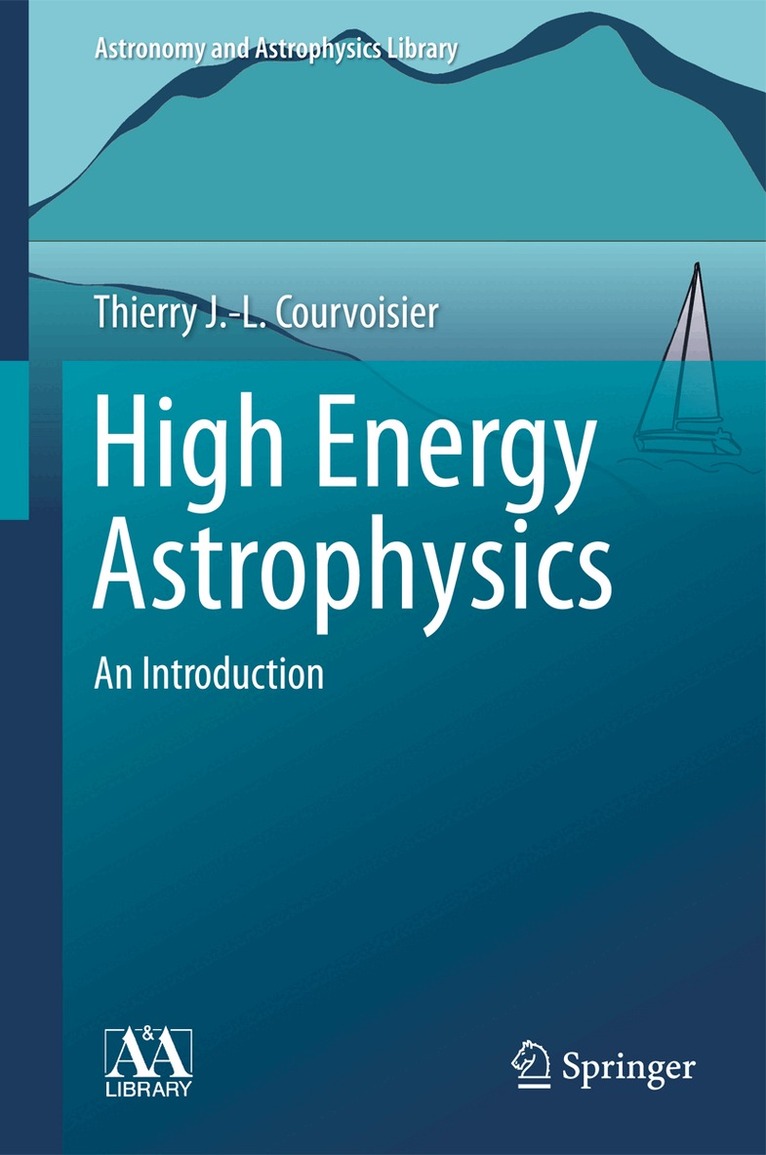
High-energy astrophysics has unveiled a Universe very different from that only known from optical observations. It has revealed many types of objects in which typical variability timescales are as short as years, months, days, and hours (in quasars, X-ray binaries, etc), and even down to milli-seconds in gamma ray bursts. The sources of energy that are encountered are only very seldom nuclear fusion, and most of the time gravitation, a paradox when one thinks that gravitation is, by many orders of magnitude, the weakest of the fundamental interactions. The understanding of these objects' physical conditions and the processes revealed by high-energy astrophysics in the last decades is nowadays part of astrophysicists' culture, even of those active in other domains of astronomy.This book evolved from lectures given to master and PhD students at the University of Geneva since the early 1990s. It aims at providing astronomers and physicists intending to be active in high-energy astrophysics a broad basis on which they should be able to build the more specific knowledge they will need. While in the first part of the book the physical processes are described and derived in detail, the second part studies astrophysical objects in which high-energy astrophysics processes are crucial. This two-pronged approach will help students recognise physical processes by their observational signatures in contexts that may differ widely from those presented here.
903 kr
Skickas inom 10-15 vardagar
High-energy astrophysics has unveiled a Universe very different from that only known from optical observations. It has revealed many types of objects in which typical variability timescales are as short as years, months, days, and hours (in quasars, X-ray binaries, etc), and even down to milli-seconds in gamma ray bursts. The sources of energy that are encountered are only very seldom nuclear fusion, and most of the time gravitation, a paradox when one thinks that gravitation is, by many orders of magnitude, the weakest of the fundamental interactions. The understanding of these objects' physical conditions and the processes revealed by high-energy astrophysics in the last decades is nowadays part of astrophysicists' culture, even of those active in other domains of astronomy.This book evolved from lectures given to master and PhD students at the University of Geneva since the early 1990s. It aims at providing astronomers and physicists intending to be active in high-energy astrophysics a broad basis on which they should be able to build the more specific knowledge they will need. While in the first part of the book the physical processes are described and derived in detail, the second part studies astrophysical objects in which high-energy astrophysics processes are crucial. This two-pronged approach will help students recognise physical processes by their observational signatures in contexts that may differ widely from those presented here.
184 kr
Skickas inom 10-15 vardagar
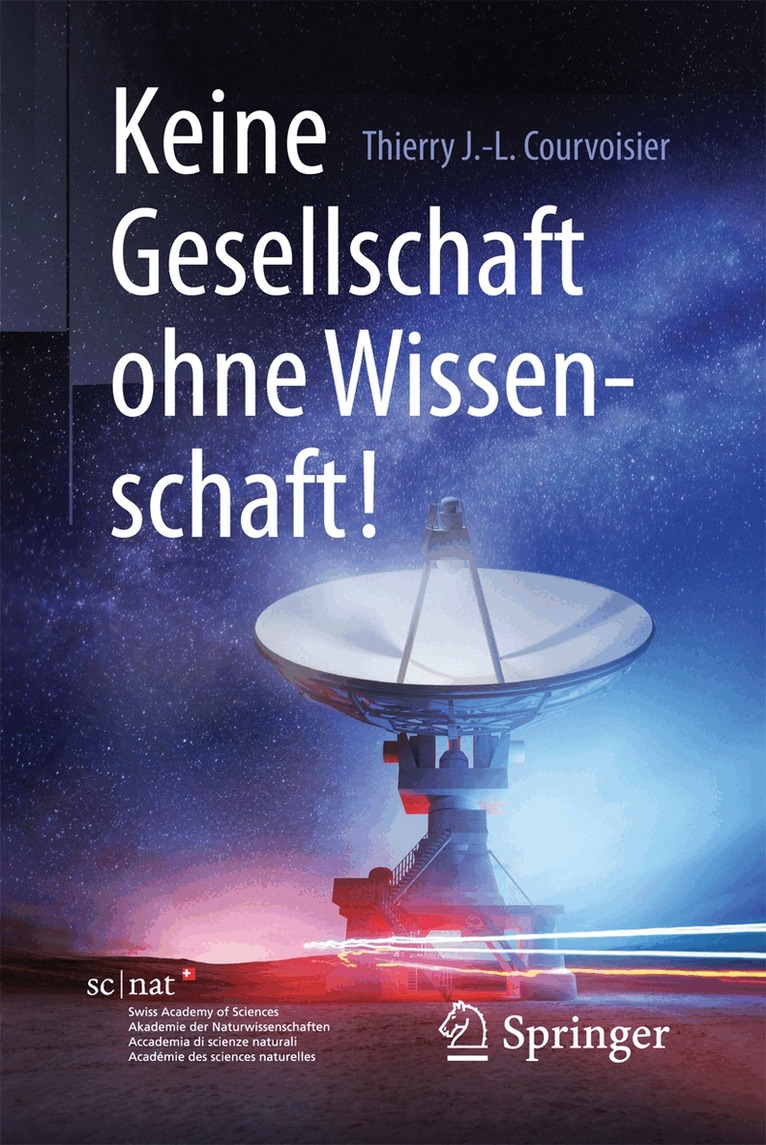
Dieses Buch zeigt, welche wichtige Rolle die Naturwissenschaft in der Gesellschaft und bei der Gestaltung unserer Umwelt hat und diskutiert die daraus resultierende Verantwortung der Wissenschaftler in Bezug auf die Entwicklung der Welt. Im Rahmen einer Analyse des Verhältnisses von Wissenschaft und Politik gibt das Buch Hinweise, wie Wissenschaftler ihre Erkenntnisse in den politischen Entscheidungsprozess einbringen können (und sogar müssen). Es behandelt dabei das Verhältnis von Naturwissenschaften und Gesellschaft und erläutert die Zusammenhänge zwischen Forschung und politischer Entscheidungsfindung. Der Autor verwendet dabei die Astronomie als leuchtendes Beispiel dafür, was uns die Wissenschaft in Bezug auf die intellektuelle Bereicherung, die praktischen Werkzeuge und die gesellschaftlichen Beiträge bringt.Dieses Buch ist ein Muss für alle Wissenschaftler, die an Aktivitäten in der Wissenschaftskommunikation beteiligt sind, sowie für diejenigen, die in diesem Bereichaktiv werden sollten. Es richtet sich an Mitglieder der Wissenschaftsakademien und auch an Beamte und politische Entscheidungsträger, die Gesetze und gesellschaftliches Handeln in Bereichen entwickeln, in denen eine solide Wissensbasis wichtig ist. Angesprochen ist auch jeder Bürger, der sich am öffentlichen Leben beteiligt, und alle, die sich gegen die „postfaktischen“ Trends in der Politik stellen möchten.