Thijs Van de Graaf – författare
Visar alla böcker från författaren Thijs Van de Graaf. Handla med fri frakt och snabb leverans.
10 produkter
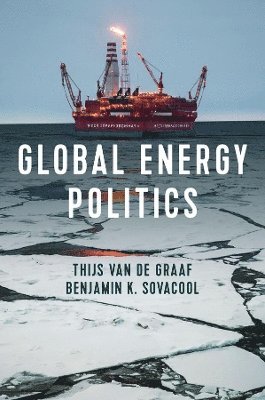
Global Energy Politics
Av Thijs Van de Graaf, Benjamin K. Sovacool
Häftad, 2020
258 kr
Lägg i varukorg
Ever since the Industrial Revolution energy has been a key driver of world politics. From the oil crises of the 1970s to today’s rapid expansion of renewable energy sources, every shift in global energy patterns has important repercussions for international relations. In this new book, Thijs Van de …
Global Energy Governance in a Multipolar World
Av ies Lesage, Thijs Van de Graaf
Inbunden, 2010
2504 kr
Lägg i varukorg
Multipolar governance permits a number of important states to have significantly more economic and political clout than others, but among them there is hardly any hierarchy. The new energy challenge, with its intricate socio-economic, ecological and international-political considerations, is a …
Politics and Institutions of Global Energy Governance
Av Thijs Van de Graaf, Kenneth A. Loparo m. fl.
Inbunden, 2013
551 kr
Lägg i varukorg
From climate change over shale gas to the race for the Arctic, energy makes headlines in international politics almost daily. Thijs Van de Graaf argues that energy is in dire need of global governance. He traces the history of international energy cooperation from the notorious 'Seven Sisters' …
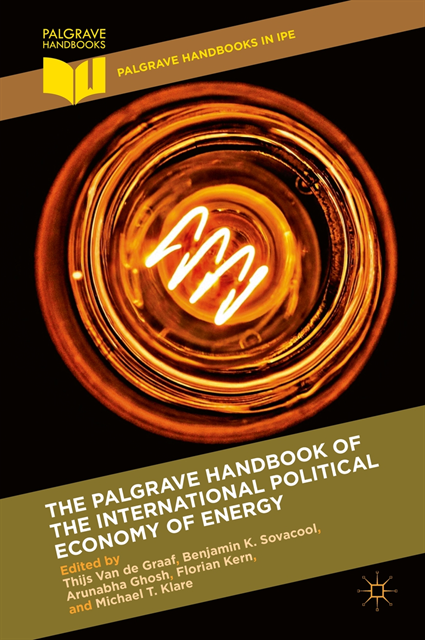
Palgrave Handbook of the International Political Economy of Energy
Av Thijs Van de Graaf, Benjamin K. Sovacool m. fl.
Inbunden, 2016
3272 kr
Lägg i varukorg
This Handbook is the first volume to analyse the International Political Economy, the who-gets-what-when-and-how, of global energy. Divided into five sections, it features 28 contributions that deal with energy institutions, trade, transitions, conflict and justice. The chapters span a wide range …
Palgrave Handbook of the International Political Economy of Energy
Av Michael T. Klare, Florian Kern m. fl.
E-bok, 2016
4320 kr
Lägg i varukorg
This Handbook is the first volume to analyse the International Political Economy, the who-gets-what-when-and-how, of global energy. Divided into five sections, it features 28 contributions that deal with energy institutions, trade, transitions, conflict and justice. The chapters span a wide range …
Global Energy Governance in a Multipolar World
Av Thijs Van de Graaf, Dries Lesage
E-bok, 2016
1022 kr
Lägg i varukorg
Multipolar governance permits a number of important states to have significantly more economic and political clout than others, but among them there is hardly any hierarchy. The new energy challenge, with its intricate socio-economic, ecological and international-political considerations, is a …
Global Energy Governance in a Multipolar World
Av Thijs Van de Graaf, Dries Lesage
E-bok, 2016
1000 kr
Lägg i varukorg
Multipolar governance permits a number of important states to have significantly more economic and political clout than others, but among them there is hardly any hierarchy. The new energy challenge, with its intricate socio-economic, ecological and international-political considerations, is a …
Politics and Institutions of Global Energy Governance
Av Thijs Van de Graaf, Kenneth A. Loparo
Häftad, 2013
551 kr
Lägg i varukorg
From climate change over shale gas to the race for the Arctic, energy makes headlines in international politics almost daily. Thijs Van de Graaf argues that energy is in dire need of global governance. He traces the history of international energy cooperation from the notorious 'Seven Sisters' …
Global Energy Politics
Av Thijs Van de Graaf, Benjamin K. Sovacool
Inbunden, 2020
800 kr
Lägg i varukorg
Ever since the Industrial Revolution energy has been a key driver of world politics. From the oil crises of the 1970s to today’s rapid expansion of renewable energy sources, every shift in global energy patterns has important repercussions for international relations. In this new book, Thijs Van de …
Global Energy Politics
Av Benjamin K. Sovacool, Thijs Van de Graaf
E-bok, 2020
294 kr
Lägg i varukorg
Ever since the Industrial Revolution energy has been a key driver of world politics. From the oil crises of the 1970s to today’s rapid expansion of renewable energy sources, every shift in global energy patterns has important repercussions for international relations. In this new book, Thijs Van de …