Thomas A. Bredehoft – författare
Visar alla böcker från författaren Thomas A. Bredehoft. Handla med fri frakt och snabb leverans.
8 produkter
8 produkter
E-bok
PDF, Engelska, 2014404 kr
Läs direkt efter köp
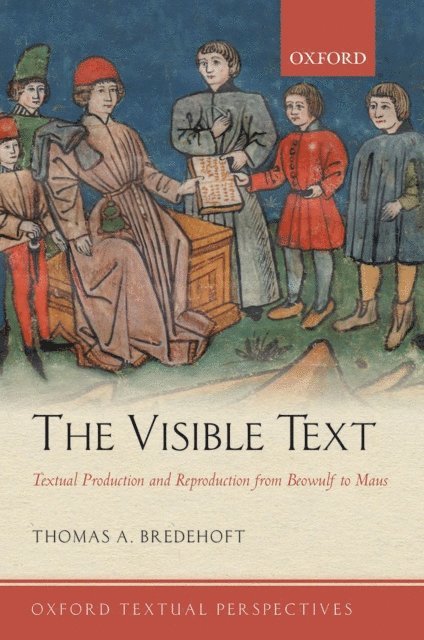
Oxford Textual Perspectives is a new series of informative and provocative studies focused upon literary texts (conceived of in the broadest sense of that term) and the technologies, cultures and communities that produce, inform, and receive them. It provides fresh interpretations of fundamental works and of the vital and challenging issues emerging in English literary studies. By engaging with the materiality of the literary text, its production, and receptionhistory, and frequently testing and exploring the boundaries of the notion of text itself, the volumes in the series question familiar frameworks and provide innovative interpretations of both canonical and less well-known works.Covering materials ranging from Anglo-Saxon manuscripts and inscribed objects to contemporary comics, The Visible Text rewrites the history of textual media and technologies. Arguing that media are not defined by technologies alone, but by a combination of technologies and the ideas that people hold about those technologies, Bredehoft identifies four distinct periods or domains in the history of English literature that correspond to four ways in which media ideologies interacted withthe two basic defining technologies of manuscripts and printed books.Examining two complementary ways of defining texts (as subject to a reproductive medium, on the one hand, and as surrounded and defined by paratexts, on the other), The Visible Text points out how Anglo-Saxon manuscripts and contemporary comics share a remarkable similarity in being structured as productions rather than reproductions.Contrastingly, the late-medieval and print-era periods share a cultural investment in textual reproduction, but they differ both in their characteristic technologies and in how they conceptualize the object of reproduction itself. A final epilogue, briefly considering the nature of electronically-mediated textuality, highlights the importance of understanding the history addressed here, as electonic text both parallels and departs from typographic print in ways that earlier reproductive domainsclarify and complicate.Filled with concrete examples of both books and texts, The Visible Text will be of interest to readers in the fields of literature, book history, literary theory, media studies, and visual culture.
Häftad, Engelska, 2014
497 kr
Skickas inom 7-10 vardagar
Oxford Textual Perspectives is a new series of informative and provocative studies focused upon literary texts (conceived of in the broadest sense of that term) and the technologies, cultures and communities that produce, inform, and receive them. It provides fresh interpretations of fundamental works and of the vital and challenging issues emerging in English literary studies. By engaging with the materiality of the literary text, its production, and reception history, and frequently testing and exploring the boundaries of the notion of text itself, the volumes in the series question familiar frameworks and provide innovative interpretations of both canonical and less well-known works.Covering materials ranging from Anglo-Saxon manuscripts and inscribed objects to contemporary comics, The Visible Text rewrites the history of textual media and technologies. Arguing that media are not defined by technologies alone, but by a combination of technologies and the ideas that people hold about those technologies, Bredehoft identifies four distinct periods or domains in the history of English literature that correspond to four ways in which media ideologies interacted with the two basic defining technologies of manuscripts and printed books. Examining two complementary ways of defining texts (as subject to a reproductive medium, on the one hand, and as surrounded and defined by paratexts, on the other), The Visible Text points out how Anglo-Saxon manuscripts and contemporary comics share a remarkable similarity in being structured as productions rather than reproductions. Contrastingly, the late-medieval and print-era periods share a cultural investment in textual reproduction, but they differ both in their characteristic technologies and in how they conceptualize the object of reproduction itself. A final epilogue, briefly considering the nature of electronically-mediated textuality, highlights the importance of understanding the history addressed here, as electonic text both parallels and departs from typographic print in ways that earlier reproductive domains clarify and complicate. Filled with concrete examples of both books and texts, The Visible Text will be of interest to readers in the fields of literature, book history, literary theory, media studies, and visual culture.
Inbunden, Engelska, 2014
1 577 kr
Skickas inom 7-10 vardagar
Oxford Textual Perspectives is a new series of informative and provocative studies focused upon literary texts (conceived of in the broadest sense of that term) and the technologies, cultures and communities that produce, inform, and receive them. It provides fresh interpretations of fundamental works and of the vital and challenging issues emerging in English literary studies. By engaging with the materiality of the literary text, its production, and reception history, and frequently testing and exploring the boundaries of the notion of text itself, the volumes in the series question familiar frameworks and provide innovative interpretations of both canonical and less well-known works.Covering materials ranging from Anglo-Saxon manuscripts and inscribed objects to contemporary comics, The Visible Text rewrites the history of textual media and technologies. Arguing that media are not defined by technologies alone, but by a combination of technologies and the ideas that people hold about those technologies, Bredehoft identifies four distinct periods or domains in the history of English literature that correspond to four ways in which media ideologies interacted with the two basic defining technologies of manuscripts and printed books. Examining two complementary ways of defining texts (as subject to a reproductive medium, on the one hand, and as surrounded and defined by paratexts, on the other), The Visible Text points out how Anglo-Saxon manuscripts and contemporary comics share a remarkable similarity in being structured as productions rather than reproductions. Contrastingly, the late-medieval and print-era periods share a cultural investment in textual reproduction, but they differ both in their characteristic technologies and in how they conceptualize the object of reproduction itself. A final epilogue, briefly considering the nature of electronically-mediated textuality, highlights the importance of understanding the history addressed here, as electonic text both parallels and departs from typographic print in ways that earlier reproductive domains clarify and complicate. Filled with concrete examples of both books and texts, The Visible Text will be of interest to readers in the fields of literature, book history, literary theory, media studies, and visual culture.
E-bok
PDF, Engelska, 20051 124 kr
Läs direkt efter köp
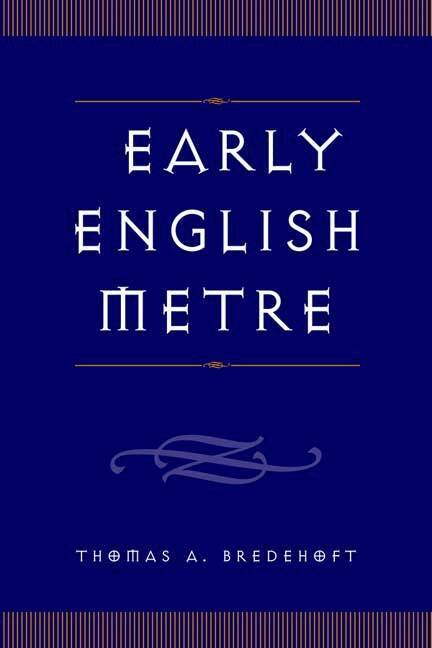
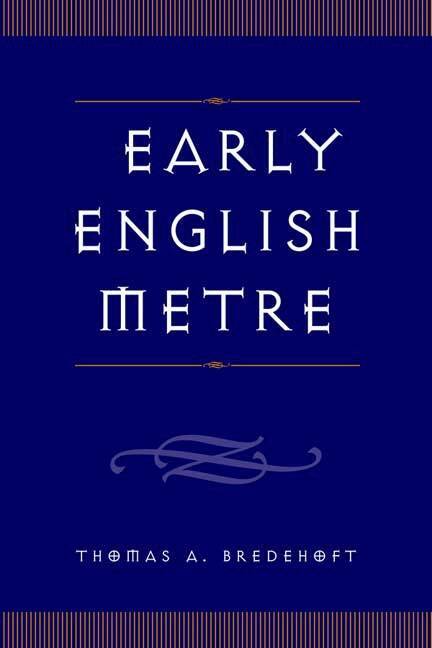
Thomas A. Bredehoft's Early English Metre is a reassessment of the metrical rules for English poetry from Beowulf to Layamon. Bredehoft offers a new account of many of the most puzzling features of Old English poetry – anacrusis, alliteration patterns, rhyme, and hypermetric verses – and further offers a clear account of late Old English verse as it descended from the classical verse as observed in Beowulf. He makes the surprising and controversial discovery that Ælfric’s alliterative works are formally indistinguishable from late verse.Discussing the early Middle English verse-forms of Layamon's Brut, Bredehoft not only demonstrates that they can be understood as developing from late Old English, but that Layamon seems to have known, and quoted from, the poems of the Anglo-Saxon Chronicle. Early English Metre presents a new perspective on early English verse and a new perspective on much of early English literary history. It is an essential addition to the literature on Old and Middle English and will be widely discussed amongst scholars in the field.
E-bok
Engelska, 20051 299 kr
Läs direkt efter köp
Thomas A. Bredehoft's Early English Metre is a reassessment of the metrical rules for English poetry from Beowulf to Layamon. Bredehoft offers a new account of many of the most puzzling features of Old English poetry – anacrusis, alliteration patterns, rhyme, and hypermetric verses – and further offers a clear account of late Old English verse as it descended from the classical verse as observed in Beowulf. He makes the surprising and controversial discovery that Ælfric’s alliterative works are formally indistinguishable from late verse.Discussing the early Middle English verse-forms of Layamon's Brut, Bredehoft not only demonstrates that they can be understood as developing from late Old English, but that Layamon seems to have known, and quoted from, the poems of the Anglo-Saxon Chronicle. Early English Metre presents a new perspective on early English verse and a new perspective on much of early English literary history. It is an essential addition to the literature on Old and Middle English and will be widely discussed amongst scholars in the field.
E-bok
PDF, Engelska, 20011 458 kr
Läs direkt efter köp
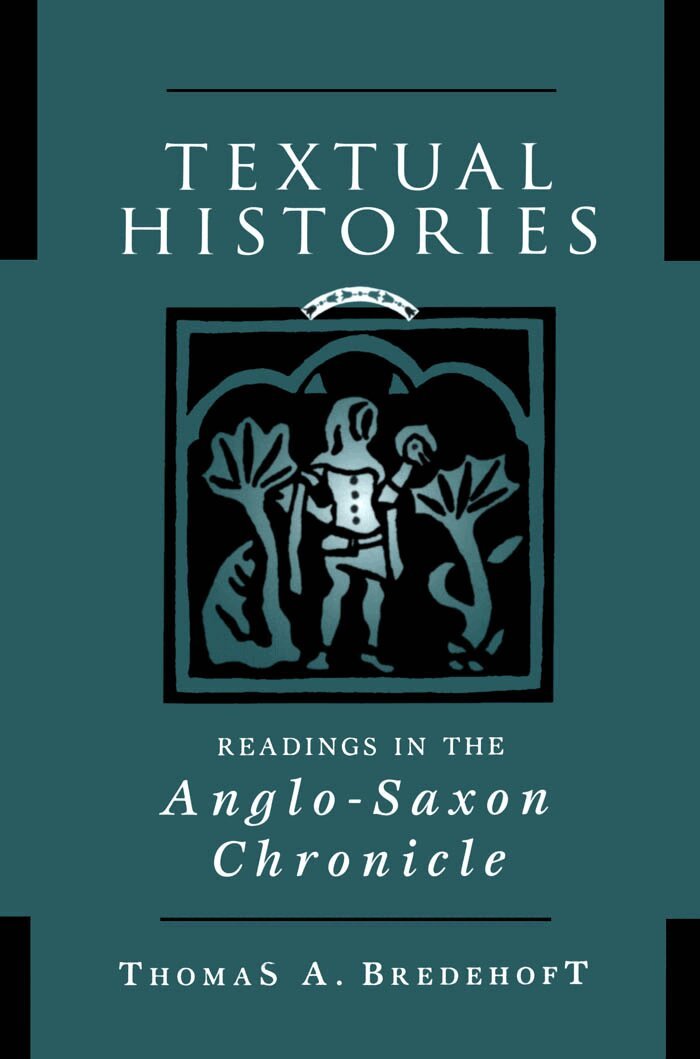
Any scholar determined to provide the academic community with a comprehensive reading of the Anglo-Saxon Chronicles has set themselves a Herculean task. The Chronicles are a recording of historical events in England from the beginning of the Christian Era to 1154. The inspiration to compile and often translate to the vernacular brief entries from church annals, and then progressively longer historical accounts, poems and genealogies, is thought to come from Alfred, King of West Saxons (848-99) as part of his drive to revive learning and literature in England. After Alfred's death, scribes carried on amassing prose narratives, poems and genealogies, as well as transcribing the existing entries. Such a massive historical project leaves us now with a set of documents so complex that a planned edition is likely to consist of over 20 volumes.In this remarkable study Thomas Bredehoft asks: what was the cultural force of such a singular document? Who might have been reading it, who was steering its formation at various periods, and to what end? What modern scholars have been too willing to dismiss as a scattershot collection of unrelated annals, is, Bredehoft convincingly argues, a powerful and consciously driven tool to forge, through linking literature and history, a patriotic Anglo Saxon national identity.
E-bok
PDF, Engelska, 2009984 kr
Läs direkt efter köp
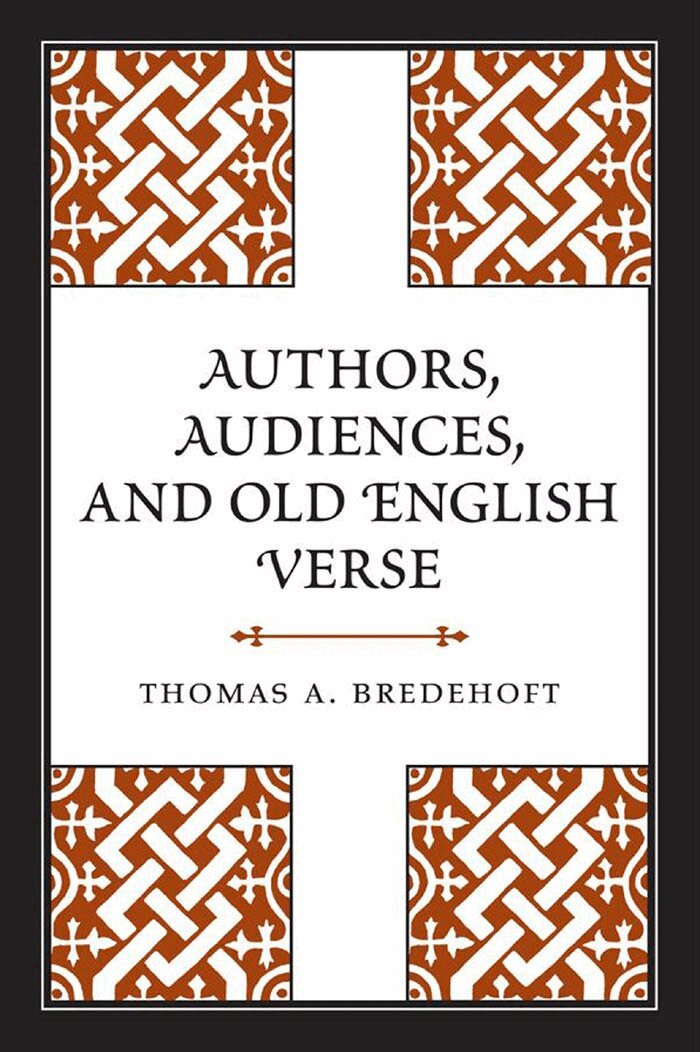
Authors, Audiences, and Old English Verse re-examines the Anglo-Saxon poetic tradition from the eighth to the eleventh centuries and reconsiders the significance of formulaic parallels and the nature of poetic authorship in Old English.Offering a new vision of much of Old English literary history, Thomas A. Bredehoft traces a tradition of 'literate-formulaic' composition in the period and contends that many phrases conventionally considered oral formulas are in fact borrowings or quotations. His identification of previously unrecognized Old English poems and his innovative arguments about the dates, places of composition, influences, and even possible authors for a variety of tenth- and eleventh-century poems illustrate that the failure of scholars to recognize the late Old English verse tradition has seriously hampered our literary understanding of the period. Provocative and bold, Authors, Audiences and Old English Verse has the potential to transform modern understandings of the classical Old English poetic tradition.
E-bok
Engelska, 20091 089 kr
Läs direkt efter köp
Authors, Audiences, and Old English Verse re-examines the Anglo-Saxon poetic tradition from the eighth to the eleventh centuries and reconsiders the significance of formulaic parallels and the nature of poetic authorship in Old English.Offering a new vision of much of Old English literary history, Thomas A. Bredehoft traces a tradition of 'literate-formulaic' composition in the period and contends that many phrases conventionally considered oral formulas are in fact borrowings or quotations. His identification of previously unrecognized Old English poems and his innovative arguments about the dates, places of composition, influences, and even possible authors for a variety of tenth- and eleventh-century poems illustrate that the failure of scholars to recognize the late Old English verse tradition has seriously hampered our literary understanding of the period. Provocative and bold, Authors, Audiences and Old English Verse has the potential to transform modern understandings of the classical Old English poetic tradition.