Thomas B. Deutscher – författare
Visar alla böcker från författaren Thomas B. Deutscher. Handla med fri frakt och snabb leverans.
6 produkter
6 produkter
Inbunden, Engelska, 2013
651 kr
Skickas inom 5-8 vardagar
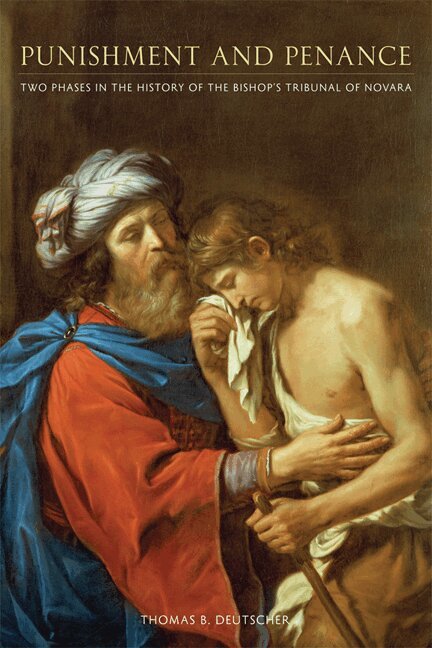
Punishment and Penance provides the first comprehensive study of an Italian bishop’s tribunal in criminal matters, such as violence, forbidden sexual activity, and offenses against the faith. Through numerous case studies, Thomas B. Deutscher investigates the scope and effectiveness of the early modern ecclesiastical legal system.Deutscher examines the records of the bishop’s tribunal of the northern Italian diocese of Novara during two distinct periods: the ambitious decades following the Council of Trent (1563–1615), and the half-century leading up to the French invasions of 1790s. As the state’s power continued to rise during this second time span, the Church was often humbled and the tribunal’s activity was much reduced. Enriched by stories drawn from the files, which often allowed the accused to speak in their own voices, Punishment and Penance provides a window into the workings of a tribunal in this period.
E-bok
PDF, Engelska, 2013809 kr
Läs direkt efter köp
Punishment and Penance provides the first comprehensive study of an Italian bishop’s tribunal in criminal matters, such as violence, forbidden sexual activity, and offenses against the faith. Through numerous case studies, Thomas B. Deutscher investigates the scope and effectiveness of the early modern ecclesiastical legal system.Deutscher examines the records of the bishop’s tribunal of the northern Italian diocese of Novara during two distinct periods: the ambitious decades following the Council of Trent (1563–1615), and the half-century leading up to the French invasions of 1790s. As the state’s power continued to rise during this second time span, the Church was often humbled and the tribunal’s activity was much reduced. Enriched by stories drawn from the files, which often allowed the accused to speak in their own voices, Punishment and Penance provides a window into the workings of a tribunal in this period.
E-bok
Engelska, 2013809 kr
Läs direkt efter köp
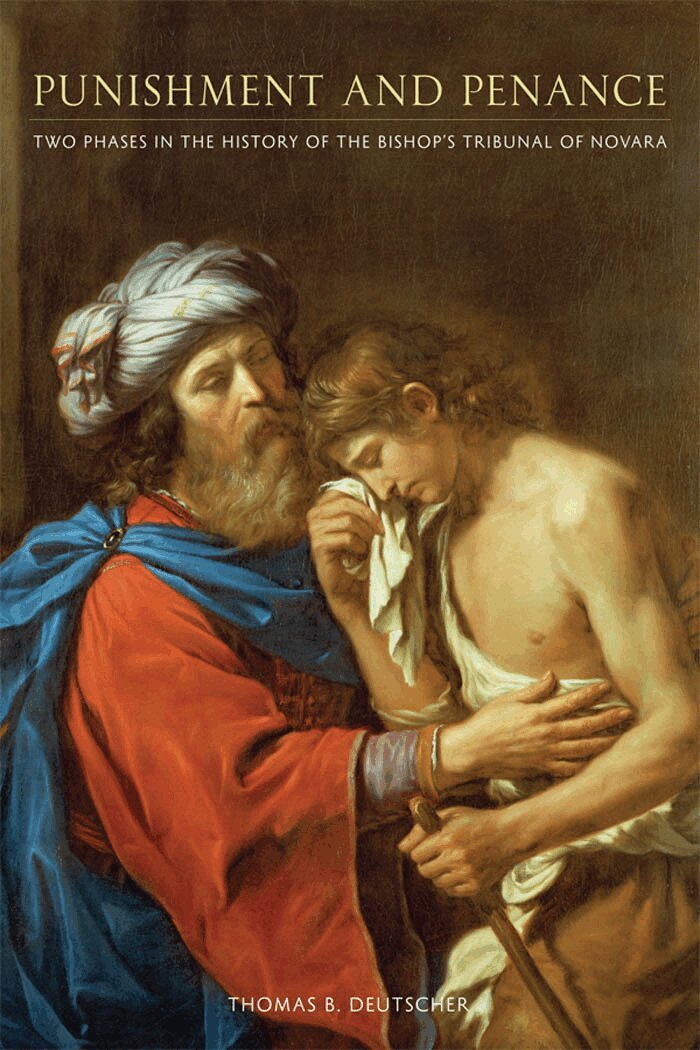
Punishment and Penance provides the first comprehensive study of an Italian bishop’s tribunal in criminal matters, such as violence, forbidden sexual activity, and offenses against the faith. Through numerous case studies, Thomas B. Deutscher investigates the scope and effectiveness of the early modern ecclesiastical legal system.Deutscher examines the records of the bishop’s tribunal of the northern Italian diocese of Novara during two distinct periods: the ambitious decades following the Council of Trent (1563–1615), and the half-century leading up to the French invasions of 1790s. As the state’s power continued to rise during this second time span, the Church was often humbled and the tribunal’s activity was much reduced. Enriched by stories drawn from the files, which often allowed the accused to speak in their own voices, Punishment and Penance provides a window into the workings of a tribunal in this period.
E-bok
PDF, Engelska, 20031 686 kr
Läs direkt efter köp
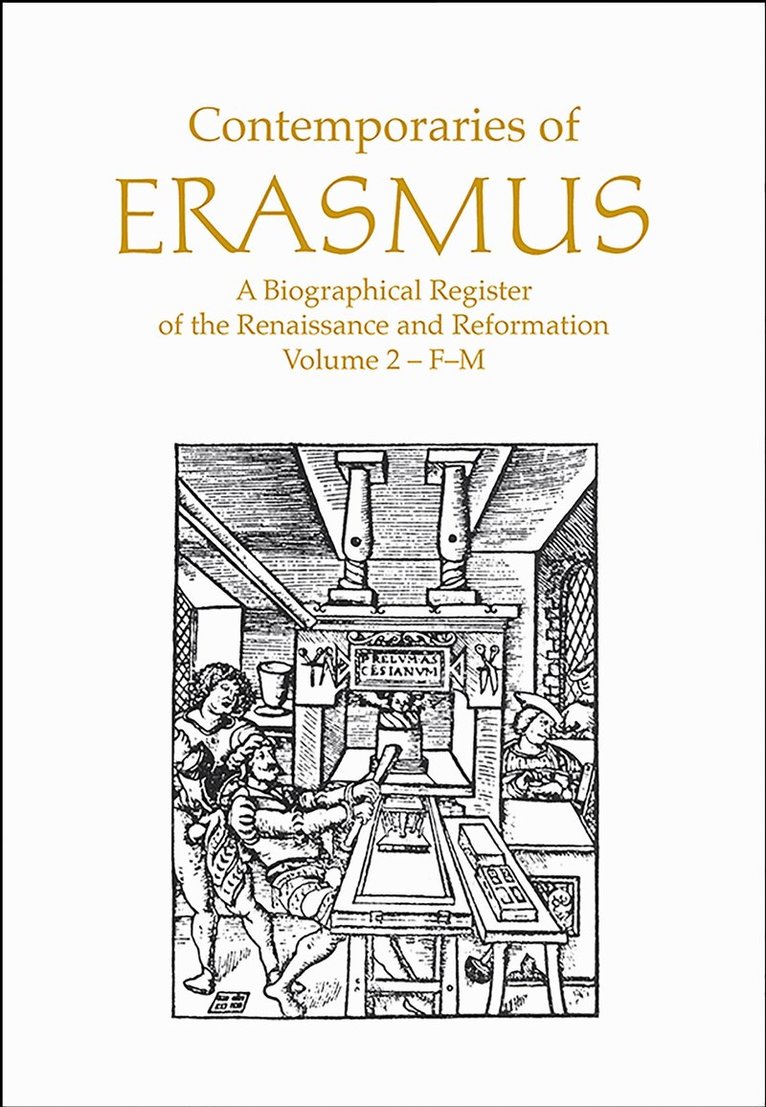
The remarkable breadth of Erasmus' contacts throughout his life is reflected in this unique, informative three-volume biographical dictionary. Together, these fully illustrated volumes will contain information about more than 1900 people mentioned in his correspondence and other writings.Differing substantially from the national biographical dictionaries which restrict themselves to major figures, these volumes combine the famous with the obscure: the Dutch pope, Adrian VI, appears next to Adrianus, a messenger who carried letters between Erasmus in Paris and Jacob Batt, a tutor in Toumehem. A random sampling includes the infamous Pope Alexander VI; Catherine of Aragon and Anne Boleyn; Andrea Alciati, the interpreter of Roman law, whose chief fame rests on the creation of the Renaissance emblem book; Luther's wife, Katharine von Bora; Albrecht Durer, portraitist of Erasmus; Emperor Charles V; and Etienne Dolet, accused of blasphemy and sedition, who was tortured and hanged and his books burned publicly.Biographies of loyal friends of Erasmus, like Pieter Gillis, clerk of the city of Antwerp, are interspersed with those of his critics and enemies, such as Guillaume Farel, whom Erasmus characterized as insane and a seditious liar. The famous and infamous – Henry VIII, Machiavelli, Francis I, Pope Julius II, Isabella of Castille, and many more – appear next to the not so familiar, but no less intriguing. Cassandra Fedele, implicated in a scandal involving counterfeit money, who survived shipwreck in the Mediterranean and ended life as the superintendent of a hospital in Venice.The cast of characters is a Who's Who of the period: painters like Holbein and Metsys; the printer Aldo Manuzio; Bishop John Fisher, martyred for opposition to Henry VIII's divorce; Martin Luther and his parents; the knight Ulrich von Hutten; and dynastic families such as the wealth Fuggers of Bavaria and the Medicis, including Lorenzo the Magnificent (patron of Botticelli and Leonardo da Vinci), the petulant Alessandro, the extravagant Cardinal Ippolito, and Lorenzo II, Duke of Urbino (to whom Machiavelli dedicated The Print. A fascinating array of characters brings this turbulent period of history vividly to life. Contemporaries of Erasmus will not only intrigue the general reader; it will be indispensable for those who have searched in vain for a biographical dictionary covering this period.
E-bok
PDF, Engelska, 19961 808 kr
Läs direkt efter köp
The remarkable breadth of Erasmus' contacts throughout his life is reflected in this unique, informative three-volume biographical dictionary. Together, these fully illustrated volumes will contain information about more than 1900 people mentioned in his correspondence and other writings.Differing substantially from the national biographical dictionaries which restrict themselves to major figures, these volumes combine the famous with the obscure: the Dutch pope, Adrian VI, appears next to Adrianus, a messenger who carried letters between Erasmus in Paris and Jacob Batt, a tutor in Toumehem. A random sampling includes the infamous Pope Alexander VI; Catherine of Aragon and Anne Boleyn; Andrea Alciati, the interpreter of Roman law, whose chief fame rests on the creation of the Renaissance emblem book; Luther's wife, Katharine von Bora; Albrecht Durer, portraitist of Erasmus; Emperor Charles V; and Etienne Dolet, accused of blasphemy and sedition, who was tortured and hanged and his books burned publicly.Biographies of loyal friends of Erasmus, like Pieter Gillis, clerk of the city of Antwerp, are interspersed with those of his critics and enemies, such as Guillaume Farel, whom Erasmus characterized as insane and a seditious liar. The famous and infamous – Henry VIII, Machiavelli, Francis I, Pope Julius II, Isabella of Castille, and many more – appear next to the not so familiar, but no less intriguing. Cassandra Fedele, implicated in a scandal involving counterfeit money, who survived shipwreck in the Mediterranean and ended life as the superintendent of a hospital in Venice.The cast of characters is a Who's Who of the period: painters like Holbein and Metsys; the printer Aldo Manuzio; Bishop John Fisher, martyred for opposition to Henry VIII's divorce; Martin Luther and his parents; the knight Ulrich von Hutten; and dynastic families such as the wealth Fuggers of Bavaria and the Medicis, including Lorenzo the Magnificent (patron of Botticelli and Leonardo da Vinci), the petulant Alessandro, the extravagant Cardinal Ippolito, and Lorenzo II, Duke of Urbino (to whom Machiavelli dedicated The Print. A fascinating array of characters brings this turbulent period of history vividly to life. Contemporaries of Erasmus will not only intrigue the general reader; it will be indispensable for those who have searched in vain for a biographical dictionary covering this period.
E-bok
PDF, Engelska, 19871 808 kr
Läs direkt efter köp
The remarkable breadth of Erasmus' contacts throughout his life is reflected in this unique, informative three-volume biographical dictionary. Together, these fully illustrated volumes will contain information about more than 1900 people mentioned in his correspondence and other writings.Differing substantially from the national biographical dictionaries which restrict themselves to major figures, these volumes combine the famous with the obscure: the Dutch pope, Adrian VI, appears next to Adrianus, a messenger who carried letters between Erasmus in Paris and Jacob Batt, a tutor in Toumehem. A random sampling includes the infamous Pope Alexander VI; Catherine of Aragon and Anne Boleyn; Andrea Alciati, the interpreter of Roman law, whose chief fame rests on the creation of the Renaissance emblem book; Luther's wife, Katharine von Bora; Albrecht Durer, portraitist of Erasmus; Emperor Charles V; and Etienne Dolet, accused of blasphemy and sedition, who was tortured and hanged and his books burned publicly.Biographies of loyal friends of Erasmus, like Pieter Gillis, clerk of the city of Antwerp, are interspersed with those of his critics and enemies, such as Guillaume Farel, whom Erasmus characterized as insane and a seditious liar. The famous and infamous – Henry VIII, Machiavelli, Francis I, Pope Julius II, Isabella of Castille, and many more – appear next to the not so familiar, but no less intriguing. Cassandra Fedele, implicated in a scandal involving counterfeit money, who survived shipwreck in the Mediterranean and ended life as the superintendent of a hospital in Venice.The cast of characters is a Who's Who of the period: painters like Holbein and Metsys; the printer Aldo Manuzio; Bishop John Fisher, martyred for opposition to Henry VIII's divorce; Martin Luther and his parents; the knight Ulrich von Hutten; and dynastic families such as the wealth Fuggers of Bavaria and the Medicis, including Lorenzo the Magnificent (patron of Botticelli and Leonardo da Vinci), the petulant Alessandro, the extravagant Cardinal Ippolito, and Lorenzo II, Duke of Urbino (to whom Machiavelli dedicated The Print. A fascinating array of characters brings this turbulent period of history vividly to life. Contemporaries of Erasmus will not only intrigue the general reader; it will be indispensable for those who have searched in vain for a biographical dictionary covering this period.