Thomas Becon – författare
Visar alla böcker från författaren Thomas Becon. Handla med fri frakt och snabb leverans.
14 produkter
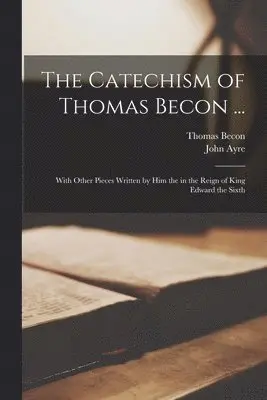
Catechism of Thomas Becon ...
With Other Pieces Written by Him the in the Reign of King Edward the Sixth
Inbunden, 2022
590 kr
Lägg i varukorg
Catechism of Thomas Becon ...
With Other Pieces Written by Him the in the Reign of King Edward the Sixth
Häftad, 2022
459 kr
Lägg i varukorg
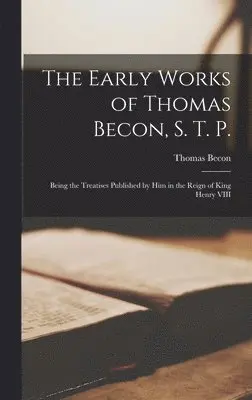
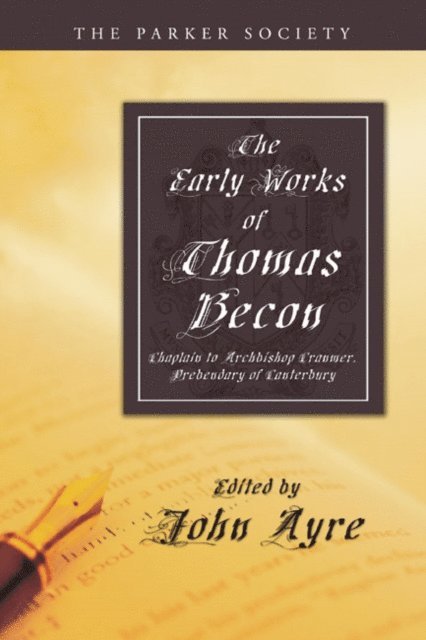
Early Works of Thomas Becon, S. T. P.
Being the Treatises Published by Him in the Reign of King Henry VIII
Av Thomas Becon
Inbunden, 2022
541 kr
Lägg i varukorg
Early Works of Thomas Becon, S. T. P.
Being the Treatises Published by Him in the Reign of King Henry VIII
Av Thomas Becon
Häftad, 2022
401 kr
Lägg i varukorg
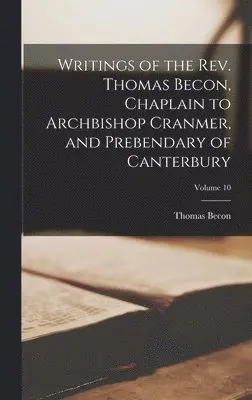
Writings of the Rev. Thomas Becon, Chaplain to Archbishop Cranmer, and Prebendary of Canterbury; Volume 10
Av Thomas Becon
Inbunden, 2022
461 kr
Lägg i varukorg
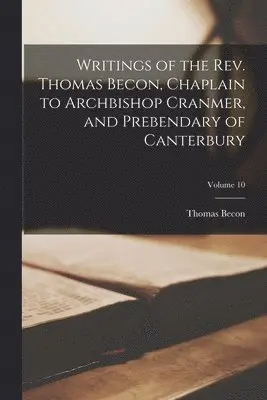
Writings of the Rev. Thomas Becon, Chaplain to Archbishop Cranmer, and Prebendary of Canterbury; Volume 10
Av Thomas Becon
Häftad, 2022
356 kr
Lägg i varukorg
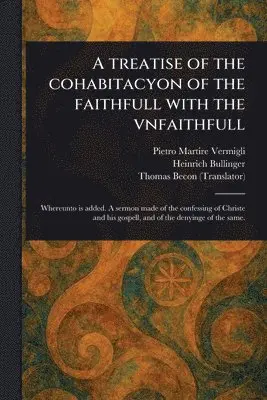
Treatise of the Cohabitacyon of the Faithfull With the Vnfaithfull
Av Pietro Martire Vermigli, Heinrich Bullinger m. fl.
Häftad, 2025
185 kr
Lägg i varukorg
Prayers and Other Pieces of Thomas Becon
Av Thomas Becon, Reverend John Ayre
Häftad
742 kr
Lägg i varukorg
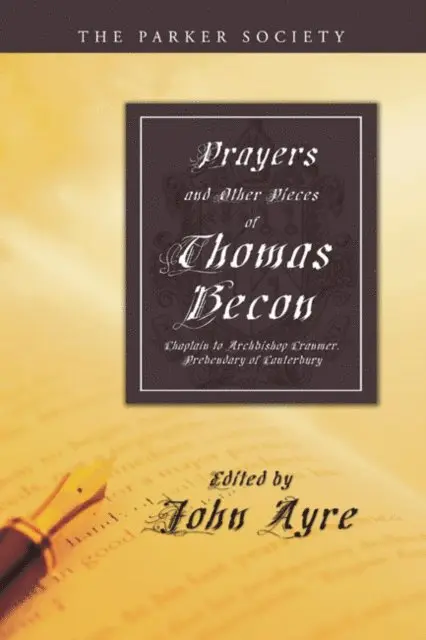
Prayers and Other Pieces of Thomas Becon
E-bok, 2004
814 kr
Lägg i varukorg
The Parker Society was the London-based Anglican society that printed in fifty-four volumes the works of the leading English Reformers of the sixteenth century. It was formed in 1840 and disbanded in 1855 when its work was completed. Named after Matthew Parker -- the first Elizabethan Archbishop of …
Early Works of Thomas Becon
E-bok, 2004
728 kr
Lägg i varukorg
The Parker Society was the London-based Anglican society that printed in fifty-four volumes the works of the leading English Reformers of the sixteenth century. It was formed in 1840 and disbanded in 1855 when its work was completed. Named after Matthew Parker -- the first Elizabethan Archbishop of …