Thomas Borstelmann - Böcker
Visar alla böcker från författaren Thomas Borstelmann. Handla med fri frakt och snabb leverans.
4 produkter
4 produkter
Apartheid's Reluctant Uncle
The United States and Southern Africa in the Early Cold War
Inbunden, Engelska, 1993
1 289 kr
Skickas inom 5-8 vardagar
Borstelmann's book has a controversial thesis that impinges greatly on the nature of USA anti-communist foreign policy in the years after the Second World War. Borstelmann makes a persuasive argument that the United States aided and abetted the establishment of the apartheid regime in South Africa because - despite reservations about Nationalist racial policies - it viewed South Africa as a vital ally in the Cold War. Exceptionally well-written and substantively strong, the book is diplomatic history in a broad context. Eschewing the reductionist, economic-determinist view that characterizes many critical accounts of US policy toward South Africa, and stressing broader strategic and ideological considerations, Borstelmann provides a rich and sophisticated account of American policy-making in that era.
291 kr
Skickas inom 7-10 vardagar
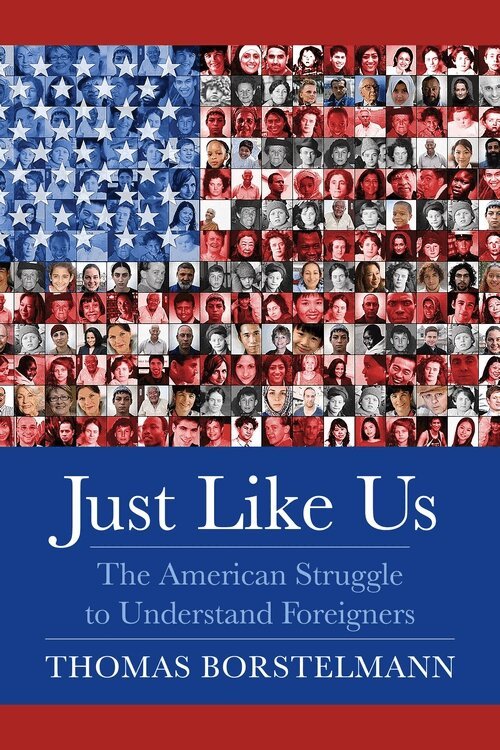
Americans have long considered themselves a people set apart, but American exceptionalism is built on a set of tacit beliefs about other cultures. From the founding exclusion of indigenous peoples and enslaved Africans to the uneasy welcome of waves of immigrants, from republican disavowals of colonialism to Cold War proclamations of freedom, Americans’ ideas of their differences from others have shaped the modern world—and how Americans have viewed foreigners is deeply revealing of their assumptions about themselves.Just Like Us is a pathbreaking exploration of what foreignness has meant across American history. Thomas Borstelmann traces American ambivalence about non-Americans, identifying a paradoxical perception of foreigners as suspiciously different yet fundamentally sharing American values beneath the layers of culture. Considering race and religion, notions of the American way of life, attitudes toward immigrants, competition with communism, Americans abroad, and the subversive power of American culture, he offers a surprisingly optimistic account of the acceptance of difference. Borstelmann contends that increasing contact with peoples around the globe during the Cold War encouraged mainstream society to grow steadily more inclusive. In a time of resurgent nativism and xenophobia, Just Like Us provides a reflective, urgent examination of how Americans have conceived of foreignness and their own exceptionalism throughout the nation’s history.
307 kr
Skickas inom 7-10 vardagar
After World War II the United States faced two preeminent challenges: how to administer its responsibilities abroad as the world’s strongest power, and how to manage the rising movement at home for racial justice and civil rights. The effort to contain the growing influence of the Soviet Union resulted in the Cold War, a conflict that emphasized the American commitment to freedom. The absence of that freedom for nonwhite American citizens confronted the nation’s leaders with an embarrassing contradiction.Racial discrimination after 1945 was a foreign as well as a domestic problem. World War II opened the door to both the U.S. civil rights movement and the struggle of Asians and Africans abroad for independence from colonial rule. America’s closest allies against the Soviet Union, however, were colonial powers whose interests had to be balanced against those of the emerging independent Third World in a multiracial, anticommunist alliance. At the same time, U.S. racial reform was essential to preserve the domestic consensus needed to sustain the Cold War struggle.The Cold War and the Color Line is the first comprehensive examination of how the Cold War intersected with the final destruction of global white supremacy. Thomas Borstelmann pays close attention to the two Souths—Southern Africa and the American South—as the primary sites of white authority’s last stand. He reveals America’s efforts to contain the racial polarization that threatened to unravel the anticommunist western alliance. In so doing, he recasts the history of American race relations in its true international context, one that is meaningful and relevant for our own era of globalization.
258 kr
Skickas inom 7-10 vardagar
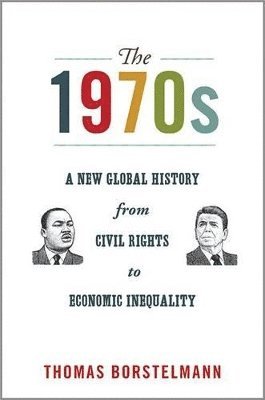
The 1970s looks at an iconic decade when the cultural left and economic right came to the fore in American society and the world at large. While many have seen the 1970s as simply a period of failures epitomized by Watergate, inflation, the oil crisis, global unrest, and disillusionment with military efforts in Vietnam, Thomas Borstelmann creates a new framework for understanding the period and its legacy. He demonstrates how the 1970s increased social inclusiveness and, at the same time, encouraged commitments to the free market and wariness of government. As a result, American culture and much of the rest of the world became more--and less--equal. Borstelmann explores how the 1970s forged the contours of contemporary America. Military, political, and economic crises undercut citizens' confidence in government. Free market enthusiasm led to lower taxes, a volunteer army, individual 401(k) retirement plans, free agency in sports, deregulated airlines, and expansions in gambling and pornography. At the same time, the movement for civil rights grew, promoting changes for women, gays, immigrants, and the disabled. And developments were not limited to the United States.Many countries gave up colonial and racial hierarchies to develop a new formal commitment to human rights, while economic deregulation spread to other parts of the world, from Chile and the United Kingdom to China. Placing a tempestuous political culture within a global perspective, The 1970s shows that the decade wrought irrevocable transformations upon American society and the broader world that continue to resonate today.