Thomas Brady – författare
Visar alla böcker från författaren Thomas Brady. Handla med fri frakt och snabb leverans.
6 produkter
6 produkter
Häftad, Engelska, 2011
259 kr
Skickas inom 5-8 vardagar
Inbunden, Engelska, 1995
1 751 kr
Skickas inom 5-8 vardagar
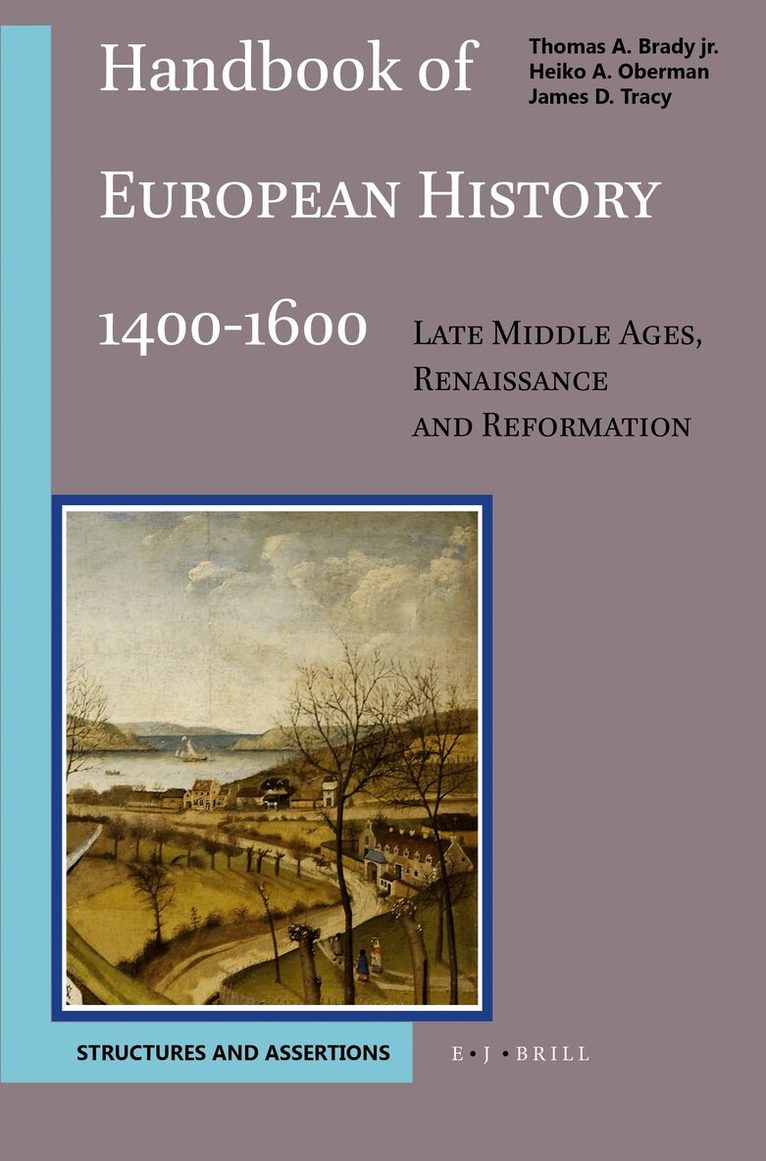
This is volume two of a two-volume set which brings together leading scholars to present current knowledge and thinking about European history between 1400 and 1600: in the late Middle Ages, Renaissance and Reformation. The work should be of value to students, specialists and non-specialists alike. 40 scholars in the field present the state of knowledge about the major themes, main controversies and fruitful directions for research of European history in this era. This volume covers the early stages of the process by which newly-established confessional structures began to work their way among the populace.
E-bok
PDF, Engelska, 20182 105 kr
Läs direkt efter köp
The Handbook of European History 1400-1600 brings together the best scholarship into an array of topical chapters that present current knowledge and thinking in ways useful to the specialist and accessible to students and to the educated non-specialist. Forty-one leading scholars in this field of history present the state of knowledge about the grand themes, main controversies and fruitful directions for research of European history in this era. Volume 1 (Structures and Assertions) described the people, lands, religions and political structures which define the setting for this historical period. Volume 2 (Visions, Programs, Outcomes) covers the early stages of the process by which newly established confessional structures began to work their way among the populace.
E-bok
PDF, Engelska, 20182 105 kr
Läs direkt efter köp
E-bok
PDF, Engelska, 20222 005 kr
Läs direkt efter köp
E-bok
PDF, Engelska, 20212 312 kr
Läs direkt efter köp
The studies united in this volume explore themes of community, politics, religion, gender, and social conflict and accommodation during the first decades of the Reformation movement. Other chapters investigate historiographical themes, especially the interpretation of early modern German history. Two longer chapters address European themes: the historical sociology of early modern societies in terms of legal definitions of status and modern conceptions of economic class; and the difference between central and western European development in a global context. Taken together, the studies explore the transition zone between medieval and modern history in both microhistorical, especially urban and regional, and broadly comparative contexts. Some of the studies are supplementary to the author's books on the sixteenth-century Protestant Reformation at Strasbourg, in southern Germany, and in the Holy Roman Empire.