Thomas D Schoonover – författare
430 kr
Skickas inom 3-6 vardagar
639 kr
Skickas inom 3-6 vardagar
368 kr
Läs direkt efter köp
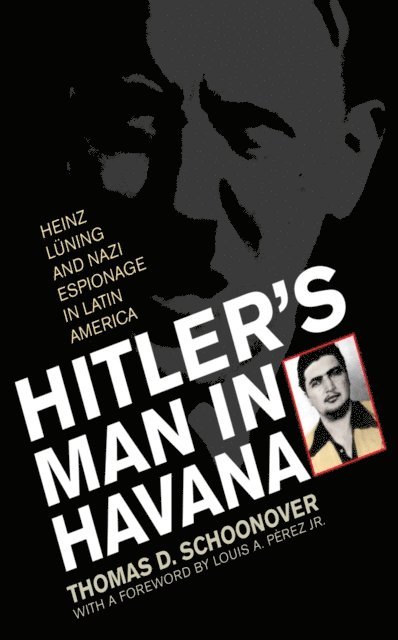
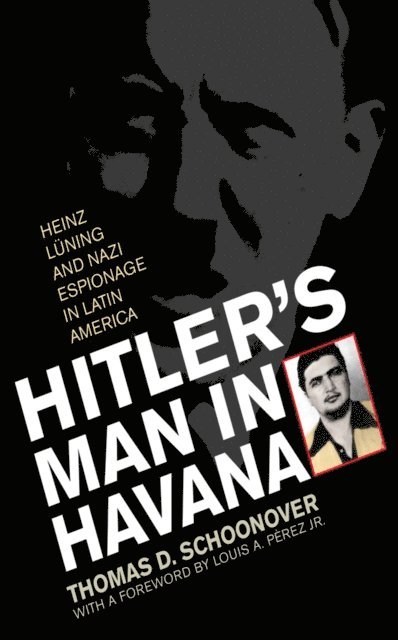
When Heinz Lüning posed as a Jewish refugee to spy for Hitler''s Abwehr espionage agency, he thought he had discovered the perfect solution to his most pressing problem: how to avoid being drafted into Hitler''s army. Lüning was unsympathetic to Fascist ideology, but the Nazis'' tight control over exit visas gave him no chance to escape Germany. He could enter Hitler''s army either as a soldier... or a spy. In 1941, he entered the Abwehr academy for spy training and was given the code name "Lumann." Soon after, Lüning began the service in Cuba that led to his ultimate fate of being the only German spy executed in Latin America during World War II. Lüning was not the only spy operating in Cuba at the time. Various Allied spies labored in Havana; the FBI controlled eighteen Special Intelligence Service operatives, and the British counterintelligence section subchief Graham Greene supervised Secret Intelligence Service agents; and Ernest Hemingway''s private agents supplied inflated and inaccurate information about submarines and spies to the U.S. ambassador, Spruille Braden. Lüning stumbled into this milieu of heightened suspicion and intrigue. Poorly trained and awkward at his work, he gathered little information worth reporting, was unable to build a working radio and improperly mixed the formulas for his secret inks. Lüning eventually was discovered by British postal censors and unwittingly provided the inspiration for Graham Greene''s Our Man in Havana. In chronicling Lüning''s unlikely trajectory from a troubled life in Germany to a Caribbean firing squad, Thomas D. Schoonover makes brilliant use of untapped documentary sources to reveal the workings of the famed Abwehr and the technical and social aspects of Lüning''s spycraft. Using archival sources from three continents, Schoonover offers a narrative rich in atmospheric details to reveal the political upheavals of the time, not only tracking Lüning''s activities but also explaining the broader trends in the region and in local counterespionage. Schoonover argues that ambitious Cuban and U.S. officials turned Lüning''s capture into a grand victory. For at least five months after Lüning''s arrest, U.S. and Cuban leaders -- J. Edgar Hoover, Fulgencio Batista, Nelson Rockefeller, General Manuel Benítez, Ambassador Spruille Braden, and others -- treated Lüning as a dangerous, key figure for a Nazi espionage network in the Gulf-Caribbean. They reworked his image from low-level bumbler to master spy, using his capture for their own political gain. In the sixty years since Lüning''s execution, very little has been written about Nazi espionage in Latin America, partly due to the reticence of the U.S. government. Revealing these new historical sources for the first time, Schoonover tells a gripping story of Lüning''s life and capture, suggesting that Lüning was everyone''s man in Havana but his own.
531 kr
Läs direkt efter köp
The roots of American globalization can be found in the War of 1898. Then, as today, the United States actively engaged in globalizing its economic order, itspolitical institutions, and its values. Thomas Schoonover argues that this drive to expand political and cultural reach -- the quest for wealth, missionary fulfillment, security, power, and prestige -- was inherited by the United States from Europe, especially Spain and Great Britain. Uncle Sam''s War of 1898 and the Origins of Globalization is a pathbreaking work of history that examines U.S. growth from its early nationhood to its first major military conflict on the world stage, also known as the Spanish-American War. As the new nation''s military, industrial, and economic strength developed, the United States created policies designed to protect itself from challenges beyond its borders. According to Schoonover, a surge in U.S. activity in the Gulf-Caribbean and in Central America in the late nineteenth and early twentieth centuries was catalyzed by the same avarice and competitiveness that motivated the European adventurers to seek a route to Asia centuries earlier. Addressing the basic chronology and themes of the first century of the nation''s expansion, Schoonover locates the origins of the U.S. goal of globalization. U.S. involvement in the War of 1898 reflects many of the fundamental patterns in our national history -- exploration and discovery, labor exploitation, violence, racism, class conflict, and concern for security -- that many believe shaped America''s course in the twentieth and twenty-first century.
295 kr
Läs direkt efter köp
The roots of American globalization can be found in the War of 1898. Then, as today, the United States actively engaged in globalizing its economic order, itspolitical institutions, and its values. Thomas Schoonover argues that this drive to expand political and cultural reach -- the quest for wealth, missionary fulfillment, security, power, and prestige -- was inherited by the United States from Europe, especially Spain and Great Britain. Uncle Sam''s War of 1898 and the Origins of Globalization is a pathbreaking work of history that examines U.S. growth from its early nationhood to its first major military conflict on the world stage, also known as the Spanish-American War. As the new nation''s military, industrial, and economic strength developed, the United States created policies designed to protect itself from challenges beyond its borders. According to Schoonover, a surge in U.S. activity in the Gulf-Caribbean and in Central America in the late nineteenth and early twentieth centuries was catalyzed by the same avarice and competitiveness that motivated the European adventurers to seek a route to Asia centuries earlier. Addressing the basic chronology and themes of the first century of the nation''s expansion, Schoonover locates the origins of the U.S. goal of globalization. U.S. involvement in the War of 1898 reflects many of the fundamental patterns in our national history -- exploration and discovery, labor exploitation, violence, racism, class conflict, and concern for security -- that many believe shaped America''s course in the twentieth and twenty-first century.
361 kr
Skickas inom 3-6 vardagar
479 kr
Läs direkt efter köp
332 kr
Läs direkt efter köp
When Heinz Lüning posed as a Jewish refugee to spy for Hitler''s Abwehr espionage agency, he thought he had discovered the perfect solution to his most pressing problem: how to avoid being drafted into Hitler''s army. Lüning was unsympathetic to Fascist ideology, but the Nazis'' tight control over exit visas gave him no chance to escape Germany. He could enter Hitler''s army either as a soldier... or a spy. In 1941, he entered the Abwehr academy for spy training and was given the code name "Lumann." Soon after, Lüning began the service in Cuba that led to his ultimate fate of being the only German spy executed in Latin America during World War II. Lüning was not the only spy operating in Cuba at the time. Various Allied spies labored in Havana; the FBI controlled eighteen Special Intelligence Service operatives, and the British counterintelligence section subchief Graham Greene supervised Secret Intelligence Service agents; and Ernest Hemingway''s private agents supplied inflated and inaccurate information about submarines and spies to the U.S. ambassador, Spruille Braden. Lüning stumbled into this milieu of heightened suspicion and intrigue. Poorly trained and awkward at his work, he gathered little information worth reporting, was unable to build a working radio and improperly mixed the formulas for his secret inks. Lüning eventually was discovered by British postal censors and unwittingly provided the inspiration for Graham Greene''s Our Man in Havana. In chronicling Lüning''s unlikely trajectory from a troubled life in Germany to a Caribbean firing squad, Thomas D. Schoonover makes brilliant use of untapped documentary sources to reveal the workings of the famed Abwehr and the technical and social aspects of Lüning''s spycraft. Using archival sources from three continents, Schoonover offers a narrative rich in atmospheric details to reveal the political upheavals of the time, not only tracking Lüning''s activities but also explaining the broader trends in the region and in local counterespionage. Schoonover argues that ambitious Cuban and U.S. officials turned Lüning''s capture into a grand victory. For at least five months after Lüning''s arrest, U.S. and Cuban leaders -- J. Edgar Hoover, Fulgencio Batista, Nelson Rockefeller, General Manuel Benítez, Ambassador Spruille Braden, and others -- treated Lüning as a dangerous, key figure for a Nazi espionage network in the Gulf-Caribbean. They reworked his image from low-level bumbler to master spy, using his capture for their own political gain. In the sixty years since Lüning''s execution, very little has been written about Nazi espionage in Latin America, partly due to the reticence of the U.S. government. Revealing these new historical sources for the first time, Schoonover tells a gripping story of Lüning''s life and capture, suggesting that Lüning was everyone''s man in Havana but his own.
361 kr
Skickas inom 3-6 vardagar
375 kr
Skickas inom 5-8 vardagar