Thomas F. Scanlon – författare
Visar alla böcker från författaren Thomas F. Scanlon. Handla med fri frakt och snabb leverans.
12 produkter
12 produkter
E-bok
Engelska, 2002554 kr
Läs direkt efter köp
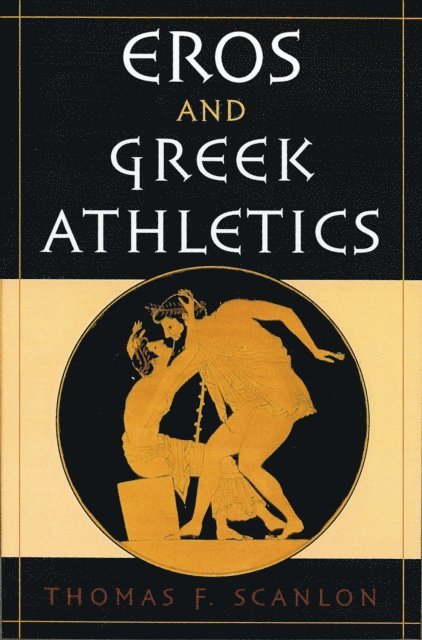
Ancient Greek athletics offer us a clear window on many important aspects of ancient culture, some of which have distinct parallels with modern sports and their place in our society. Ancient athletics were closely connected with religion, the formation of young men and women in their gender roles, and the construction of sexuality. Eros was, from one perspective, a major god of the gymnasium where homoerotic liaisons reinforced the traditional hierarchies of Greek culture. But Eros in the athletic sphere was also a symbol of life-affirming friendship and even of political freedom in the face of tyranny. Greek athletic culture was not so much a field of dreams as a field of desire, where fervent competition for honor was balanced by cooperation for common social goals. Eros and Greek Athletics is the first in-depth study of Greek body culture as manifest in its athletics, sexuality, and gender formation. In this comprehensive overview, Thomas F. Scanlon explores when and how athletics was linked with religion, upbringing, gender, sexuality, and social values in an evolution from Homer until the Roman period. Scanlon shows that males and females made different uses of the same contests, that pederasty and athletic nudity were fostered by an athletic revolution beginning in the late seventh century B.C., and that public athletic festivals may be seen as quasi-dramatic performances of the human tension between desire and death. Accessibly written and full of insights that will challenge long-held assumptions about ancient sport, Eros and Greek Athletics will appeal to readers interested in ancient and modern sports, religion, sexuality, and gender studies.
E-bok
PDF, Engelska, 20211 822 kr
Läs direkt efter köp
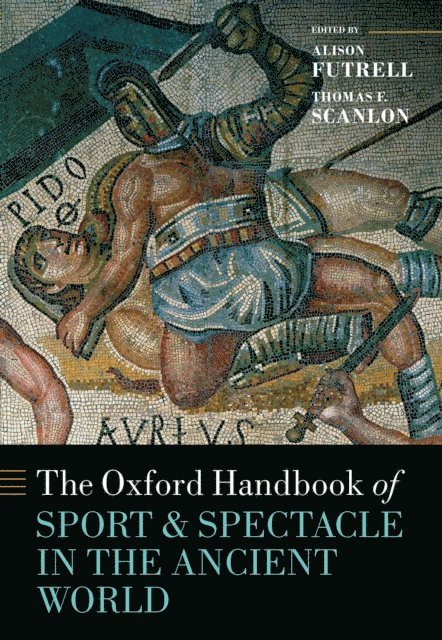
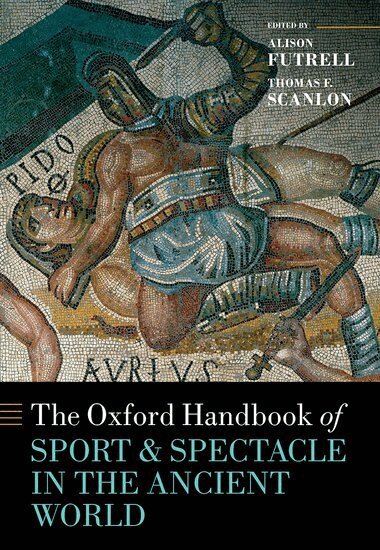
Sport and spectacle in the ancient world has become a vital area of broad new exploration over the last few decades. This Handbook brings together the latest research on Greek and Roman manifestations of these pastimes to explore current approaches and open exciting new avenues of inquiry. It discusses historical perspectives, contest forms, contest-related texts, civic and social aspects, and use and meaning of the individual body. Greek and Roman topics are interwoven to simulate contest-like tensions and complementarities, juxtaposing, for example, violence in Greek athletics and Roman gladiatorial events, Greek and Roman chariot events, architectural frameworks for contests and games in the two cultures, and contrasting views of religion, bodily regimens, and judicial classification related to both cultures. It examines the social contexts of games, namely the evolution of sport and spectacle across cultural and political boundaries, and how games are adapted to multiple contexts and multiple purposes, reinforcing social hierarchies, performing shared values, and playing out deep cultural tensions. The volume also considers other directing forces in the ancient Mediterranean, such as Bronze Age Egypt and the Near East, Etruria, and early Christianity. It addresses important themes common to both antiquity and modern society, such as issues of class, gender, and health, as well as the popular culture of the modern Olympics and gladiators in cinema. With innovative perspectives from authoratative scholars on a wide range of topics, this Handbook will appeal to both students and researchers interested in ancient history, literature, sports, and games.
E-bok
Engelska, 20211 822 kr
Läs direkt efter köp
Sport and spectacle in the ancient world has become a vital area of broad new exploration over the last few decades. This Handbook brings together the latest research on Greek and Roman manifestations of these pastimes to explore current approaches and open exciting new avenues of inquiry. It discusses historical perspectives, contest forms, contest-related texts, civic and social aspects, and use and meaning of the individual body. Greek and Roman topics are interwoven to simulate contest-like tensions and complementarities, juxtaposing, for example, violence in Greek athletics and Roman gladiatorial events, Greek and Roman chariot events, architectural frameworks for contests and games in the two cultures, and contrasting views of religion, bodily regimens, and judicial classification related to both cultures. It examines the social contexts of games, namely the evolution of sport and spectacle across cultural and political boundaries, and how games are adapted to multiple contexts and multiple purposes, reinforcing social hierarchies, performing shared values, and playing out deep cultural tensions. The volume also considers other directing forces in the ancient Mediterranean, such as Bronze Age Egypt and the Near East, Etruria, and early Christianity. It addresses important themes common to both antiquity and modern society, such as issues of class, gender, and health, as well as the popular culture of the modern Olympics and gladiators in cinema. With innovative perspectives from authoratative scholars on a wide range of topics, this Handbook will appeal to both students and researchers interested in ancient history, literature, sports, and games.
E-bok
PDF, Engelska, 2002623 kr
Läs direkt efter köp
Ancient Greek athletics offer us a clear window on many important aspects of ancient culture, some of which have distinct parallels with modern sports and their place in our society. Ancient athletics were closely connected with religion, the formation of young men and women in their gender roles, and the construction of sexuality. Eros was, from one perspective, a major god of the gymnasium where homoerotic liaisons reinforced the traditional hierarchies of Greek culture. But Eros in the athletic sphere was also a symbol of life-affirming friendship and even of political freedom in the face of tyranny. Greek athletic culture was not so much a field of dreams as a field of desire, where fervent competition for honor was balanced by cooperation for common social goals. Eros and Greek Athletics is the first in-depth study of Greek body culture as manifest in its athletics, sexuality, and gender formation. In this comprehensive overview, Thomas F. Scanlon explores when and how athletics was linked with religion, upbringing, gender, sexuality, and social values in an evolution from Homer until the Roman period. Scanlon shows that males and females made different uses of the same contests, that pederasty and athletic nudity were fostered by an athletic revolution beginning in the late seventh century B.C., and that public athletic festivals may be seen as quasi-dramatic performances of the human tension between desire and death. Accessibly written and full of insights that will challenge long-held assumptions about ancient sport, Eros and Greek Athletics will appeal to readers interested in ancient and modern sports, religion, sexuality, and gender studies.
Inbunden, Engelska, 2014
2 585 kr
Skickas inom 7-10 vardagar
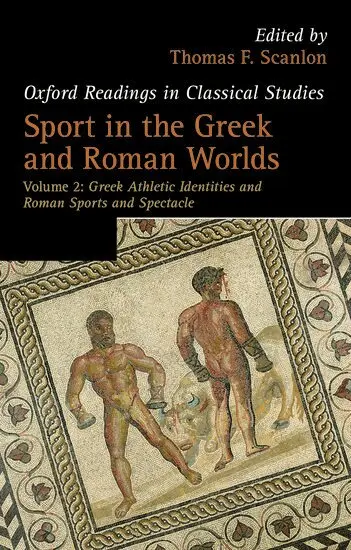
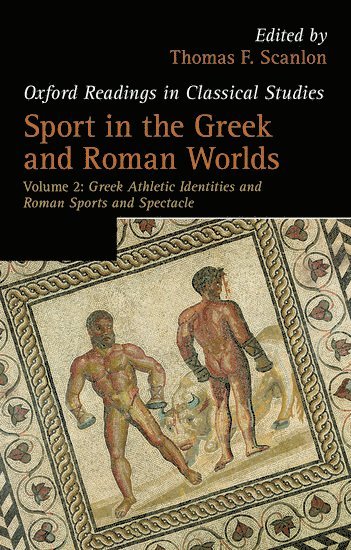
From the identity of Greek athletes and the place of Greek games in the Roman era to forms, functions, and venues of Roman spectacles, this second volume of Sport in the Greek and Roman Worlds contains eleven articles and chapters of enduring importance to the study of ancient Greek and Roman sport, a field located at a crucial intersection of social history, archaeology, literature, and other aspects of those cultures.The studies have been updated with addenda by the original authors, and four of the articles that were originally published in German have been translated into English here for the first time. The studies, selected for breadth and importance of historical topics, include: the economics, status, gender, and training of ancient athletes; the place of Greek athletes in the Roman era; the evolution of Roman games from Etruscan customs and of the Roman arena from earlier traditions; the monetary prices of gladiators; the role of animal games in Rome; and the Roman team sport of chariot racing.A companion first volume complements this one with studies on Greek sport in its epic, heroic, and Bronze Age origins; the ancient Olympics in its relation to religion, politics, and diversity of competitors; Greek events in track and field and equestrian events. The articles in both volumes offer an excellent starting point to inspire newcomers to the study of ancient sport, and to give students and scholars an informative set of models for present knowledge and future research.
Häftad, Engelska, 2014
1 025 kr
Skickas inom 7-10 vardagar
From the identity of Greek athletes and the place of Greek games in the Roman era to forms, functions, and venues of Roman spectacles, this second volume of Sport in the Greek and Roman Worlds contains eleven articles and chapters of enduring importance to the study of ancient Greek and Roman sport, a field located at a crucial intersection of social history, archaeology, literature, and other aspects of those cultures.The studies have been updated with addenda by the original authors, and four of the articles that were originally published in German have been translated into English here for the first time. The studies, selected for breadth and importance of historical topics, include: the economics, status, gender, and training of ancient athletes; the place of Greek athletes in the Roman era; the evolution of Roman games from Etruscan customs and of the Roman arena from earlier traditions; the monetary prices of gladiators; the role of animal games in Rome; and the Roman team sport of chariot racing.A companion first volume complements this one with studies on Greek sport in its epic, heroic, and Bronze Age origins; the ancient Olympics in its relation to religion, politics, and diversity of competitors; Greek events in track and field and equestrian events. The articles in both volumes offer an excellent starting point to inspire newcomers to the study of ancient sport, and to give students and scholars an informative set of models for present knowledge and future research.
Inbunden, Engelska, 2014
2 395 kr
Skickas inom 7-10 vardagar
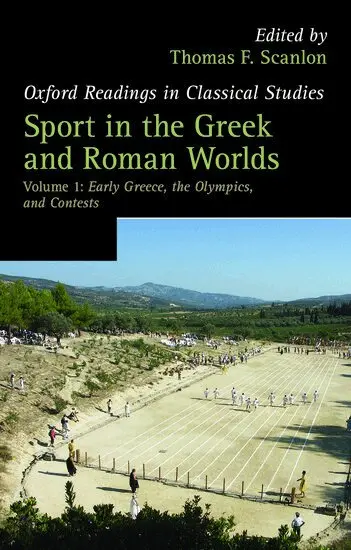
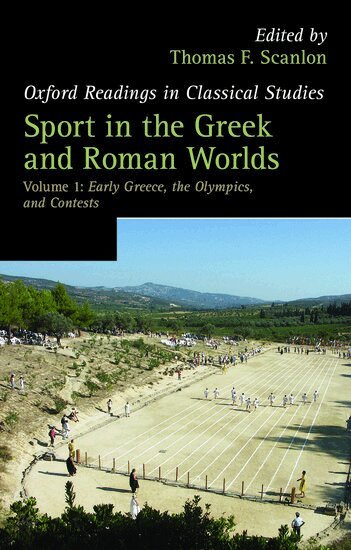
From the Minoan bull-leaping to the ancient Olympics and the enigmas of their contests, this first volume of Sport in the Greek and Roman Worlds contains nine articles and chapters of enduring importance to the study of sport in ancient Greece, a field located at a crucial intersection of social history, archaeology, literature, and other aspects of Greek culture.The studies have been updated with addenda by the original authors, and two of the articles that were originally published in German or French have been translated into English here for the first time. The studies, selected for breadth and importance of historical topics, include: Greek sport in its epic, heroic, and Bronze Age origins; the ancient Olympics in its relation to religion, politics, and diversity of competitors; Greek events in track and field and equestrian events. A companion second volume complements this one with studies on the social and economic aspects of Greek sport, the role of Greek sport in the Roman era, and forms, functions and venues of Roman spectacles. The articles in both volumes offer an excellent starting point to inspire newcomers to the study of ancient sport, and to give students and scholars an informative set of models for present knowledge and future research.
Häftad, Engelska, 2014
591 kr
Skickas inom 7-10 vardagar
From the Minoan bull-leaping to the ancient Olympics and the enigmas of their contests, this first volume of Sport in the Greek and Roman Worlds contains nine articles and chapters of enduring importance to the study of sport in ancient Greece, a field located at a crucial intersection of social history, archaeology, literature, and other aspects of Greek culture.The studies have been updated with addenda by the original authors, and two of the articles that were originally published in German or French have been translated into English here for the first time. The studies, selected for breadth and importance of historical topics, include: Greek sport in its epic, heroic, and Bronze Age origins; the ancient Olympics in its relation to religion, politics, and diversity of competitors; Greek events in track and field and equestrian events. A companion second volume complements this one with studies on the social and economic aspects of Greek sport, the role of Greek sport in the Roman era, and forms, functions and venues of Roman spectacles. The articles in both volumes offer an excellent starting point to inspire newcomers to the study of ancient sport, and to give students and scholars an informative set of models for present knowledge and future research.
Inbunden, Engelska, 2021
2 483 kr
Skickas inom 7-10 vardagar
Sport and spectacle in the ancient world has become a vital area of broad new exploration over the last few decades. This Handbook brings together the latest research on Greek and Roman manifestations of these pastimes to explore current approaches and open exciting new avenues of inquiry. It discusses historical perspectives, contest forms, contest-related texts, civic and social aspects, and use and meaning of the individual body. Greek and Roman topics are interwoven to simulate contest-like tensions and complementarities, juxtaposing, for example, violence in Greek athletics and Roman gladiatorial events, Greek and Roman chariot events, architectural frameworks for contests and games in the two cultures, and contrasting views of religion, bodily regimens, and judicial classification related to both cultures. It examines the social contexts of games, namely the evolution of sport and spectacle across cultural and political boundaries, and how games are adapted to multiple contexts and multiple purposes, reinforcing social hierarchies, performing shared values, and playing out deep cultural tensions. The volume also considers other directing forces in the ancient Mediterranean, such as Bronze Age Egypt and the Near East, Etruria, and early Christianity. It addresses important themes common to both antiquity and modern society, such as issues of class, gender, and health, as well as the popular culture of the modern Olympics and gladiators in cinema. With innovative perspectives from authoratative scholars on a wide range of topics, this Handbook will appeal to both students and researchers interested in ancient history, literature, sports, and games.
E-bok
PDF, Engelska, 2015817 kr
Läs direkt efter köp
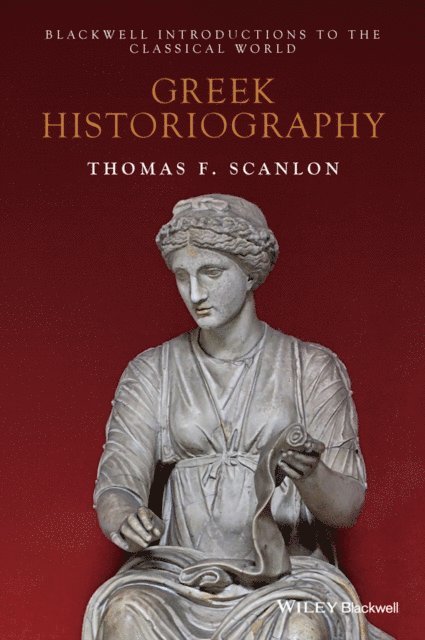
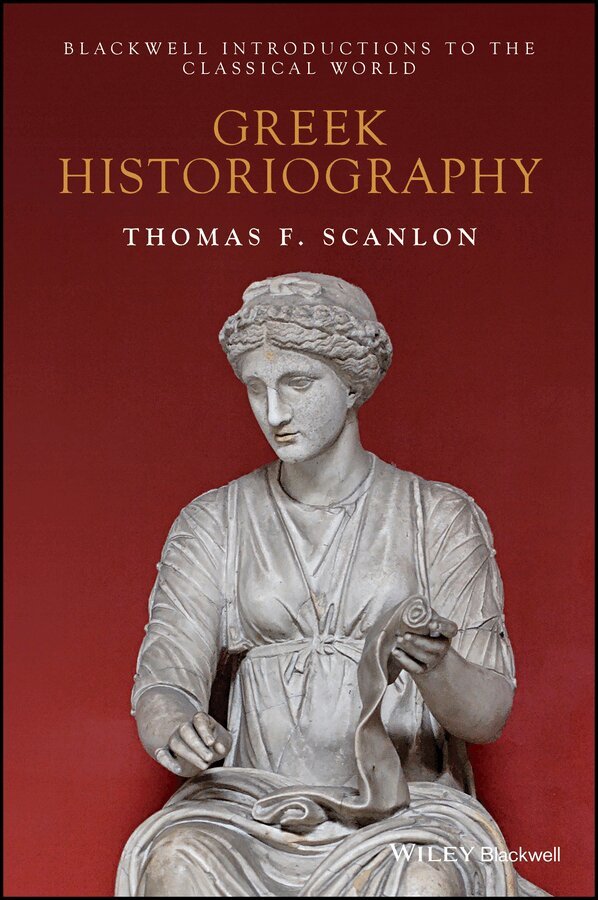
This volume provides an accessible, comprehensive, and up-to-date survey of the ancient Greek genre of historical writing from its origins before Herodotus to the Greek historians of the Roman imperial era, seven centuries later. Focuses on the themes of power and human nature, causation, divine justice, leadership, civilization versus barbarism, legacy, and literary reception Includes thorough summaries alongside textual analysis that signpost key passages and highlight thematic connections, helping readers navigate their way through the original texts Situates historical writing among the forms of epic and lyric poetry, drama, philosophy, and science Uses the best current translations and includes a detailed list of further reading that includes important new scholarship
E-bok
Engelska, 2015831 kr
Läs direkt efter köp
This volume provides an accessible, comprehensive, and up-to-date survey of the ancient Greek genre of historical writing from its origins before Herodotus to the Greek historians of the Roman imperial era, seven centuries later. Focuses on the themes of power and human nature, causation, divine justice, leadership, civilization versus barbarism, legacy, and literary reception Includes thorough summaries alongside textual analysis that signpost key passages and highlight thematic connections, helping readers navigate their way through the original texts Situates historical writing among the forms of epic and lyric poetry, drama, philosophy, and science Uses the best current translations and includes a detailed list of further reading that includes important new scholarship
Inbunden, Engelska, 2015
716 kr
Skickas inom 5-8 vardagar
This volume provides an accessible, comprehensive, and up-to-date survey of the ancient Greek genre of historical writing from its origins before Herodotus to the Greek historians of the Roman imperial era, seven centuries later. Focuses on the themes of power and human nature, causation, divine justice, leadership, civilization versus barbarism, legacy, and literary receptionIncludes thorough summaries alongside textual analysis that signpost key passages and highlight thematic connections, helping readers navigate their way through the original textsSituates historical writing among the forms of epic and lyric poetry, drama, philosophy, and scienceUses the best current translations and includes a detailed list of further reading that includes important new scholarship