Thomas Foerster – författare
Visar alla böcker från författaren Thomas Foerster. Handla med fri frakt och snabb leverans.
15 produkter
15 produkter
Häftad, Engelska, 2019
749 kr
Skickas inom 10-15 vardagar
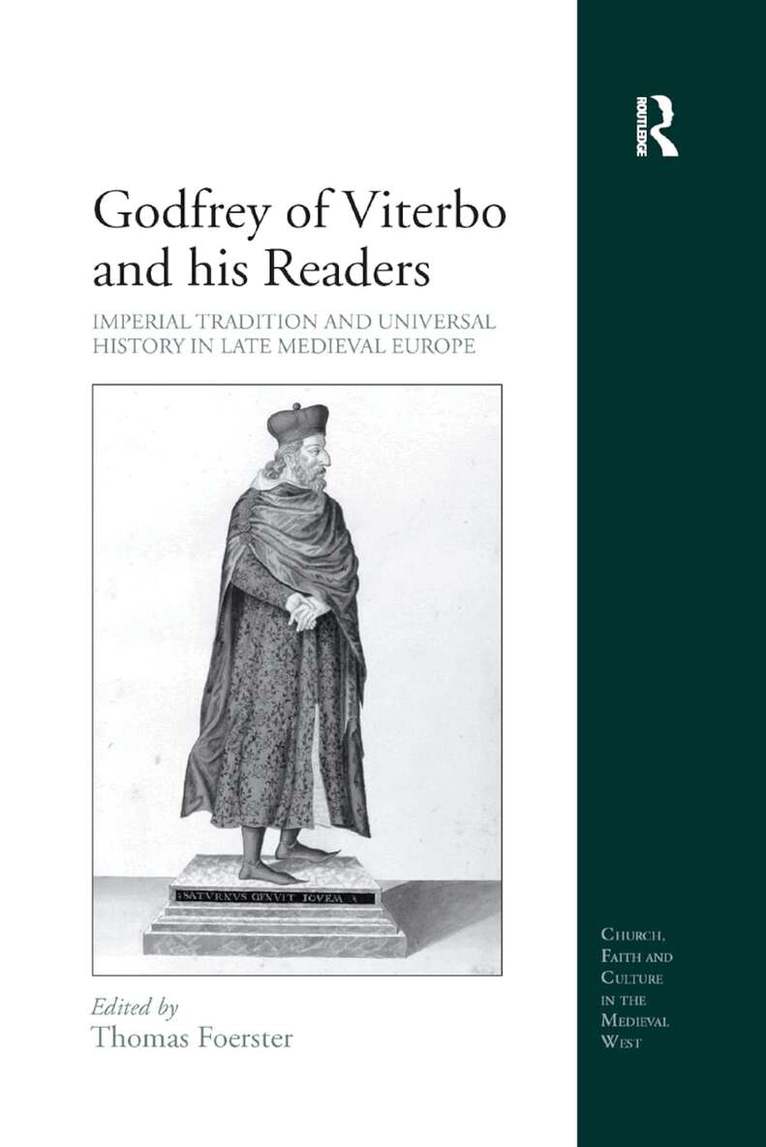
This collection provides a systematic survey of the wide readership the works of Godfrey of Viterbo enjoyed in the late Middle Ages. In the last years of the twelfth century this chronicler and imperial notary wrote a series of historical collections that gained considerable and lasting popularity: between the thirteenth and fifteenth centuries, his works were copied in elaborate manuscripts in almost all of Latin Europe. This wide distribution is particularly surprising for an author like Godfrey whom modern historians have never credited with any importance at all, as they considered his works chaotic and historically unreliable. Yet Godfrey was certainly one of the most daring historiographers of his time. In his works, the lineage of the Hohenstaufen emperors Frederick Barbarossa and Henry VI is traced directly to Charlemagne and Augustus, to the kings of Troy and of the Old Testament, and to Jupiter and everyone who, in his view, wielded imperial power in the past. Godfrey was a herald of the new political ideas the Hohenstaufen developed after the years of defeat against the papacy and the Italian communes, but also a universal chronicler whose interests reached far beyond the political issues of his day. Bringing together a group of specialists on manuscripts and historical writing in late medieval England, Spain, Italy, Germany, Bohemia and Poland, this volume aims to revive Godfrey’s reputation by demonstrating how his works were understood by medieval readers.
Häftad, Engelska, 2024
613 kr
Skickas inom 10-15 vardagar
The Normans have long been recognised as one of the most dynamic forces within medieval western Europe. With a reputation for aggression and conquest, they rapidly expanded their powerbase from Normandy, and by the end of the twelfth century had established themselves in positions of strength from England to Sicily, Antioch to Dublin. Yet, despite this success recent scholarship has begun to question the ’Norman Achievement’ and look again at the degree to which a single Norman cultural identity existed across so diverse a territory. To explore this idea further, all the essays in this volume look at questions of Norman traditions in some of the peripheral Norman dominions. In response to recent developments in cultural studies the volume uses the concepts of ’tradition’ and ’heritage’ to question the notion of a stable pan-European Norman culture or identity, and instead reveals the degrees to which Normans adopted and adapted to local conditions, customs and requirements in order to form their own localised cultural heritage. Divided into two sections, the volume begins with eight chapters focusing on Norman Sicily. These essays demonstrate both the degree of cultural intermingling that made this kingdom an extraordinary paradigm in this regard, and how the Normans began to develop their own distinct origin myths that diverged from those of Norman France and England. The second section of the volume provides four essays that explore Norman ethnicity and identity more broadly, including two looking at Norman communities on the opposite side of Europe to the Kingdom of Sicily: Ireland and the Scandinavian settlements in the Kievan Rus. Taken as a whole the volume provides a fascinating assessment of the construction and malleability of Norman identities in transcultural settings. By exploring these issues through the tradition and heritage of the Norman’s ’peripheral’ dominions, a much more sophisticated understanding can be gained, not only of th
E-bok
Engelska, 2016702 kr
Läs direkt efter köp
The Normans have long been recognised as one of the most dynamic forces within medieval western Europe. With a reputation for aggression and conquest, they rapidly expanded their powerbase from Normandy, and by the end of the twelfth century had established themselves in positions of strength from England to Sicily, Antioch to Dublin. Yet, despite this success recent scholarship has begun to question the ’Norman Achievement’ and look again at the degree to which a single Norman cultural identity existed across so diverse a territory. To explore this idea further, all the essays in this volume look at questions of Norman traditions in some of the peripheral Norman dominions. In response to recent developments in cultural studies the volume uses the concepts of ’tradition’ and ’heritage’ to question the notion of a stable pan-European Norman culture or identity, and instead reveals the degrees to which Normans adopted and adapted to local conditions, customs and requirements in order to form their own localised cultural heritage. Divided into two sections, the volume begins with eight chapters focusing on Norman Sicily. These essays demonstrate both the degree of cultural intermingling that made this kingdom an extraordinary paradigm in this regard, and how the Normans began to develop their own distinct origin myths that diverged from those of Norman France and England. The second section of the volume provides four essays that explore Norman ethnicity and identity more broadly, including two looking at Norman communities on the opposite side of Europe to the Kingdom of Sicily: Ireland and the Scandinavian settlements in the Kievan Rus. Taken as a whole the volume provides a fascinating assessment of the construction and malleability of Norman identities in transcultural settings. By exploring these issues through the tradition and heritage of the Norman’s ’peripheral’ dominions, a much more sophisticated understanding can be gained, not only of th
E-bok
PDF, Engelska, 2016702 kr
Läs direkt efter köp
The Normans have long been recognised as one of the most dynamic forces within medieval western Europe. With a reputation for aggression and conquest, they rapidly expanded their powerbase from Normandy, and by the end of the twelfth century had established themselves in positions of strength from England to Sicily, Antioch to Dublin. Yet, despite this success recent scholarship has begun to question the ’Norman Achievement’ and look again at the degree to which a single Norman cultural identity existed across so diverse a territory. To explore this idea further, all the essays in this volume look at questions of Norman traditions in some of the peripheral Norman dominions. In response to recent developments in cultural studies the volume uses the concepts of ’tradition’ and ’heritage’ to question the notion of a stable pan-European Norman culture or identity, and instead reveals the degrees to which Normans adopted and adapted to local conditions, customs and requirements in order to form their own localised cultural heritage. Divided into two sections, the volume begins with eight chapters focusing on Norman Sicily. These essays demonstrate both the degree of cultural intermingling that made this kingdom an extraordinary paradigm in this regard, and how the Normans began to develop their own distinct origin myths that diverged from those of Norman France and England. The second section of the volume provides four essays that explore Norman ethnicity and identity more broadly, including two looking at Norman communities on the opposite side of Europe to the Kingdom of Sicily: Ireland and the Scandinavian settlements in the Kievan Rus. Taken as a whole the volume provides a fascinating assessment of the construction and malleability of Norman identities in transcultural settings. By exploring these issues through the tradition and heritage of the Norman’s ’peripheral’ dominions, a much more sophisticated understanding can be gained, not only of th
E-bok
Engelska, 2016858 kr
Läs direkt efter köp
This collection provides a systematic survey of the wide readership the works of Godfrey of Viterbo enjoyed in the late Middle Ages. In the last years of the twelfth century this chronicler and imperial notary wrote a series of historical collections that gained considerable and lasting popularity: between the thirteenth and fifteenth centuries, his works were copied in elaborate manuscripts in almost all of Latin Europe. This wide distribution is particularly surprising for an author like Godfrey whom modern historians have never credited with any importance at all, as they considered his works chaotic and historically unreliable. Yet Godfrey was certainly one of the most daring historiographers of his time. In his works, the lineage of the Hohenstaufen emperors Frederick Barbarossa and Henry VI is traced directly to Charlemagne and Augustus, to the kings of Troy and of the Old Testament, and to Jupiter and everyone who, in his view, wielded imperial power in the past. Godfrey was a herald of the new political ideas the Hohenstaufen developed after the years of defeat against the papacy and the Italian communes, but also a universal chronicler whose interests reached far beyond the political issues of his day. Bringing together a group of specialists on manuscripts and historical writing in late medieval England, Spain, Italy, Germany, Bohemia and Poland, this volume aims to revive Godfrey’s reputation by demonstrating how his works were understood by medieval readers.
E-bok
PDF, Engelska, 2016858 kr
Läs direkt efter köp
This collection provides a systematic survey of the wide readership the works of Godfrey of Viterbo enjoyed in the late Middle Ages. In the last years of the twelfth century this chronicler and imperial notary wrote a series of historical collections that gained considerable and lasting popularity: between the thirteenth and fifteenth centuries, his works were copied in elaborate manuscripts in almost all of Latin Europe. This wide distribution is particularly surprising for an author like Godfrey whom modern historians have never credited with any importance at all, as they considered his works chaotic and historically unreliable. Yet Godfrey was certainly one of the most daring historiographers of his time. In his works, the lineage of the Hohenstaufen emperors Frederick Barbarossa and Henry VI is traced directly to Charlemagne and Augustus, to the kings of Troy and of the Old Testament, and to Jupiter and everyone who, in his view, wielded imperial power in the past. Godfrey was a herald of the new political ideas the Hohenstaufen developed after the years of defeat against the papacy and the Italian communes, but also a universal chronicler whose interests reached far beyond the political issues of his day. Bringing together a group of specialists on manuscripts and historical writing in late medieval England, Spain, Italy, Germany, Bohemia and Poland, this volume aims to revive Godfrey’s reputation by demonstrating how his works were understood by medieval readers.
Inbunden, Engelska, 2013
2 316 kr
Skickas inom 10-15 vardagar
The Normans have long been recognised as one of the most dynamic forces within medieval western Europe. With a reputation for aggression and conquest, they rapidly expanded their powerbase from Normandy, and by the end of the twelfth century had established themselves in positions of strength from England to Sicily, Antioch to Dublin. Yet, despite this success recent scholarship has begun to question the ’Norman Achievement’ and look again at the degree to which a single Norman cultural identity existed across so diverse a territory. To explore this idea further, all the essays in this volume look at questions of Norman traditions in some of the peripheral Norman dominions. In response to recent developments in cultural studies the volume uses the concepts of ’tradition’ and ’heritage’ to question the notion of a stable pan-European Norman culture or identity, and instead reveals the degrees to which Normans adopted and adapted to local conditions, customs and requirements in order to form their own localised cultural heritage. Divided into two sections, the volume begins with eight chapters focusing on Norman Sicily. These essays demonstrate both the degree of cultural intermingling that made this kingdom an extraordinary paradigm in this regard, and how the Normans began to develop their own distinct origin myths that diverged from those of Norman France and England. The second section of the volume provides four essays that explore Norman ethnicity and identity more broadly, including two looking at Norman communities on the opposite side of Europe to the Kingdom of Sicily: Ireland and the Scandinavian settlements in the Kievan Rus. Taken as a whole the volume provides a fascinating assessment of the construction and malleability of Norman identities in transcultural settings. By exploring these issues through the tradition and heritage of the Norman’s ’peripheral’ dominions, a much more sophisticated understanding can be gained, not only of th
Inbunden, Engelska, 2015
2 179 kr
Skickas inom 10-15 vardagar
This collection provides a systematic survey of the wide readership the works of Godfrey of Viterbo enjoyed in the late Middle Ages. In the last years of the twelfth century this chronicler and imperial notary wrote a series of historical collections that gained considerable and lasting popularity: between the thirteenth and fifteenth centuries, his works were copied in elaborate manuscripts in almost all of Latin Europe. This wide distribution is particularly surprising for an author like Godfrey whom modern historians have never credited with any importance at all, as they considered his works chaotic and historically unreliable. Yet Godfrey was certainly one of the most daring historiographers of his time. In his works, the lineage of the Hohenstaufen emperors Frederick Barbarossa and Henry VI is traced directly to Charlemagne and Augustus, to the kings of Troy and of the Old Testament, and to Jupiter and everyone who, in his view, wielded imperial power in the past. Godfrey was a herald of the new political ideas the Hohenstaufen developed after the years of defeat against the papacy and the Italian communes, but also a universal chronicler whose interests reached far beyond the political issues of his day. Bringing together a group of specialists on manuscripts and historical writing in late medieval England, Spain, Italy, Germany, Bohemia and Poland, this volume aims to revive Godfrey’s reputation by demonstrating how his works were understood by medieval readers.
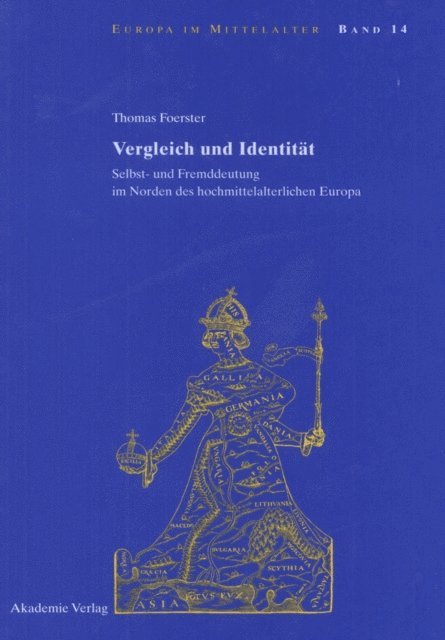
Del 14 - Europa Im Mittelalter
Vergleich Und Identitat
Selbst- Und Fremddeutung Im Norden Des Hochmittelalterlichen Europa
Inbunden, Tyska, 2009
1 061 kr
Skickas inom 5-8 vardagar
E-bok
PDF, Tyska, 20091 218 kr
Läs direkt efter köp
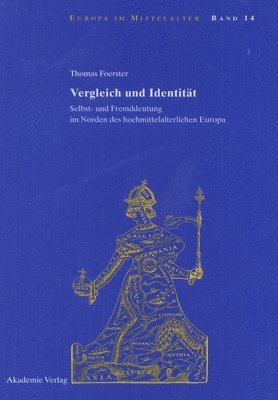
Durch die Christianisierung Skandinaviens veränderte Europa vom 9. bis zum 13. Jahrhundert sein Gesicht. Der aquilo blieb nicht mehr wie in der biblischen Tradition das kalte Jenseits, sondern ergriff seinen Platz im politischen und kulturellen Gefüge der europäischen Völker. Diese Integrationsleistung brachte auf beiden Seiten, der gebenden wie der nehmenden, neue Formen der Selbst- und Fremddeutung hervor. Das Buch vergleicht die unterschiedlichen Perspektiven in der lateinischen und volkssprachlichen Geschichtsschreibung des 11. bis 13. Jahrhunderts – sowohl in der Historiographie im Reich und in England als auch und vor allem im Norden. Gerade dort entfaltete sich eine große Spannbreite zwischen den Mustern kontinentaleuropäischer Darstellung und der überaus eigenständigen Welt der Sagas. Der Vergleich wird hierbei als wesentliches Instrument der Identitätskonstruktion hervorgehoben.
Inbunden, Tyska
221 kr
Skickas inom 3-6 vardagar
Häftad, Tyska, 2007
828 kr
Skickas inom 3-6 vardagar
Häftad, Tyska, 2013
516 kr
Skickas inom 3-6 vardagar
Häftad, Tyska, 2013
352 kr
Skickas inom 3-6 vardagar
Häftad, Tyska, 2004
1 363 kr
Skickas inom 5-8 vardagar