Thomas G. Lum – författare
Visar alla böcker från författaren Thomas G. Lum. Handla med fri frakt och snabb leverans.
4 produkter
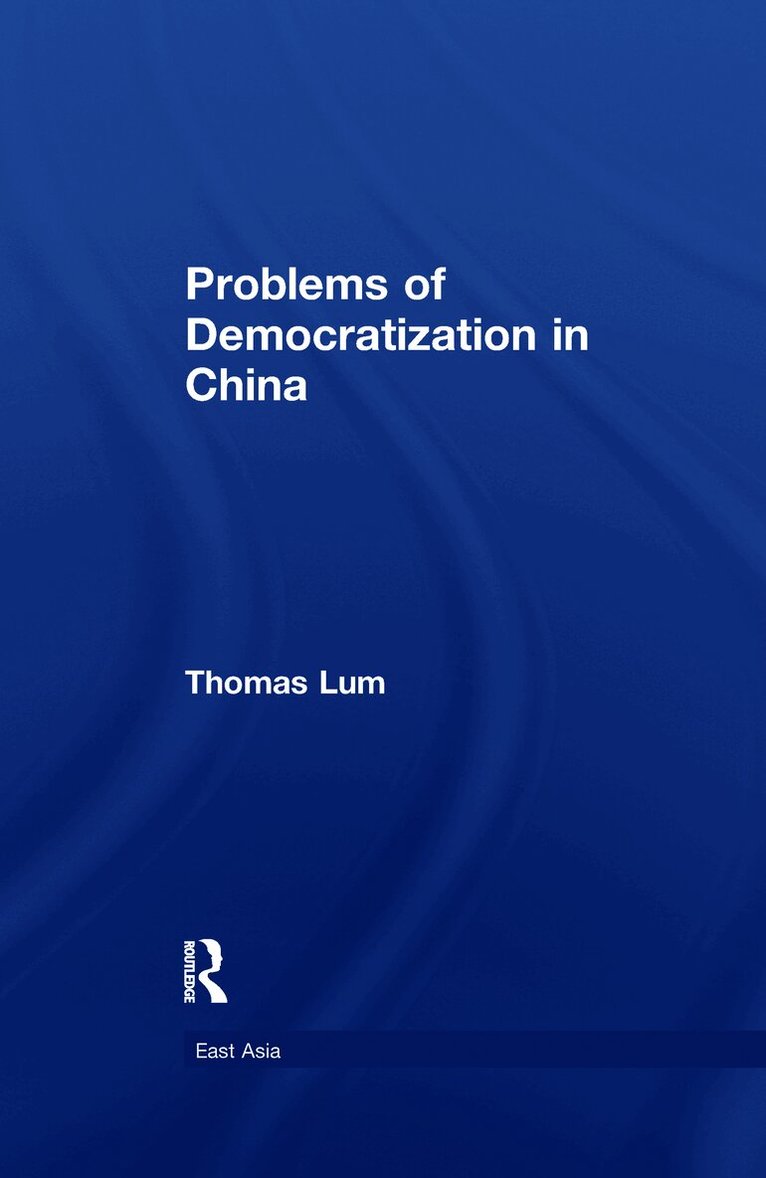
Problems of Democratization in China
Inbunden, 2000
3168 kr
Lägg i varukorg
While evaluating competing theories of why countries become democratic, this study argues why China has not democratized. Also discusses are the Communist Party's methods of social control and examines four groups-Party and government cadres, intellectuals, workers and peasants.
Problems of Democratization in China
Häftad, 2016
823 kr
Lägg i varukorg
While evaluating competing theories of why countries become democratic, this study argues why China has not democratized. Also discusses are the Communist Party's methods of social control and examines four groups-Party and government cadres, intellectuals, workers and peasants.
Problems of Democratization in China
E-bok, 2015
956 kr
Lägg i varukorg
While evaluating competing theories of why countries become democratic, this study argues why China has not democratized. Also discusses are the Communist Party''s methods of social control and examines four groups-Party and government cadres, intellectuals, workers and peasants.
Problems of Democratization in China
E-bok, 2015
970 kr
Lägg i varukorg
While evaluating competing theories of why countries become democratic, this study argues why China has not democratized. Also discusses are the Communist Party''s methods of social control and examines four groups-Party and government cadres, intellectuals, workers and peasants.