Thomas G. Pavel – författare
Visar alla böcker från författaren Thomas G. Pavel. Handla med fri frakt och snabb leverans.
4 produkter
4 produkter
Häftad, Engelska, 2001
266 kr
Skickas inom 5-8 vardagar
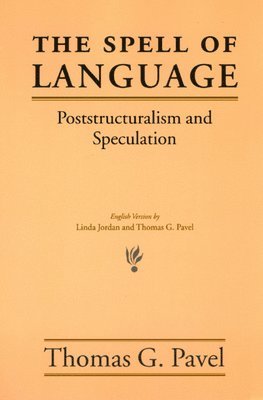
Originally published as "Le Mirage Linguistique", this test studies the role of linguistics in structuralism and poststructuralism. Thomas G. Pavel examines French thought through the work of luminaries such as Levi-Struss, Lacan, Foucault, and Derrida. The "spell of language" for Pavel consists of three things: the promise that linguistics seemed to represent for the humanites and social sciences; the distortions, misunderstandings, and wilful neglect incumberant upon the "linguistic turn"; and above all, the break with traditional humanism. He isolates three modes of thought - moderate structuralism, scientific structuralism and speculative structuralism - and shows how even as they diverge from each other, they all advocate an antihumanist point of view. In this book, Thomas Pavel shows that structuralism's flawed use of linguistic theory has rendered hollow the philosophical core of a whole generation of work in the human sciences.
Häftad, Engelska, 1989
396 kr
Skickas inom 10-15 vardagar
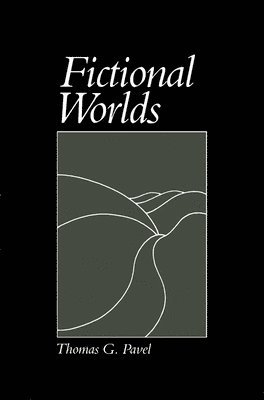
Creators of fiction demand that we venture into alien spaces, into the worlds of Antigone, Don Quixote, Faust, Sherlock Holmes. Created worlds may resemble the actual world, but they can just as easily be deemed incomplete, precarious, or irrelevant. Why, then, does fiction continue to pull us in and, more interesting perhaps, how? In this beautiful book Thomas Pavel provides a poetics of the imaginary worlds of fiction, their properties, and their reason for being.Pavel is a noted literary theorist and a novelist as well. His genial, graceful book has a polemical edge: he notes that structuralism started as a project to infuse new life into literary studies through the devices of linguistics. That project undercut referential issues, however, and is now obsolete. Pavel argues that what matters about fiction is its relation to the human capacity of invention and the complex requirements of imagination. He moves decisively beyond the constraints of formalism and textualism toward a diverse theory of fiction that is sensitive to both literary and philosophical concerns. Along the way he takes us through special landscapes that reveal the inextricability of art, religion, and myth. This is a venturesome book of the first order.
Inbunden, Engelska, 2013
441 kr
Skickas inom 5-8 vardagar
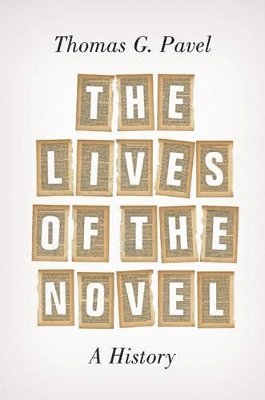
This is a bold and original original history of the novel from ancient Greece to the vibrant world of contemporary fiction. In this wide-ranging survey, Thomas Pavel argues that the driving force behind the novel's evolution has been a rivalry between stories that idealize human behavior and those that ridicule and condemn it. Impelled by this conflict, the novel moved from depicting strong souls to sensitive hearts and, finally, to enigmatic psyches. Pavel analyzes more than a hundred novels from Europe, North and South America, Asia, and beyond, resulting in a provocative reinterpretation of its development. According to Pavel, the earliest novels were implausible because their characters were either perfect or villainous. In the eighteenth and nineteenth centuries, novelists strove for greater credibility by describing the inner lives of ideal characters in minute detail (as in Samuel Richardson's case), or by closely examining the historical and social environment (as Walter Scott and Balzac did).Yet the earlier rivalry continued: Henry Fielding held the line against idealism, defending the comic tradition with its flawed characters, while Charlotte Bronte and George Eliot offered a rejoinder to social realism with their idealized vision of strong, generous, and sensitive women. In the twentieth century, modernists like Proust and Joyce sought to move beyond this conflict and capture the enigmatic workings of the psyche. Pavel concludes his compelling account by showing how the old tensions persist even within today's pluralism, as popular novels about heroes coexist with a wealth of other kinds of works, from satire to social and psychological realism.
Häftad, Engelska, 2015
294 kr
Skickas inom 5-8 vardagar
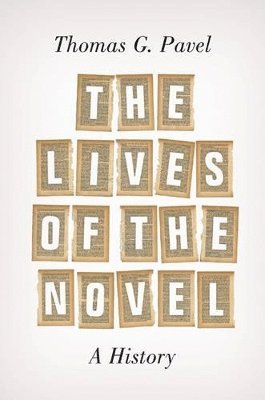
This is a bold and original original history of the novel from ancient Greece to the vibrant world of contemporary fiction. In this wide-ranging survey, Thomas Pavel argues that the driving force behind the novel's evolution has been a rivalry between stories that idealize human behavior and those that ridicule and condemn it. Impelled by this conflict, the novel moved from depicting strong souls to sensitive hearts and, finally, to enigmatic psyches. Pavel analyzes more than a hundred novels from Europe, North and South America, Asia, and beyond, resulting in a provocative reinterpretation of its development. According to Pavel, the earliest novels were implausible because their characters were either perfect or villainous. In the eighteenth and nineteenth centuries, novelists strove for greater credibility by describing the inner lives of ideal characters in minute detail (as in Samuel Richardson's case), or by closely examining the historical and social environment (as Walter Scott and Balzac did).Yet the earlier rivalry continued: Henry Fielding held the line against idealism, defending the comic tradition with its flawed characters, while Charlotte Bronte and George Eliot offered a rejoinder to social realism with their idealized vision of strong, generous, and sensitive women. In the twentieth century, modernists like Proust and Joyce sought to move beyond this conflict and capture the enigmatic workings of the psyche. Pavel concludes his compelling account by showing how the old tensions persist even within today's pluralism, as popular novels about heroes coexist with a wealth of other kinds of works, from satire to social and psychological realism.