Thomas G. Pretlow – författare
Visar alla böcker från författaren Thomas G. Pretlow. Handla med fri frakt och snabb leverans.
6 produkter
6 produkter
E-bok
PDF, Engelska, 2014783 kr
Läs direkt efter köp
Cell Separation: Methods and Selected Applications is a compendium of articles on the design and/or application of methods for the separation of cells. This volume presents contributions on relatively finite subjects on cell separation. It covers topics on cell separation such as methods for obtaining cells in suspension from animal tissues; some of the kinds of data that are helpful in the description of cell purifications; and separation of host cells infiltrating tumors and allografts by velocity sedimentation at unit gravity. The separation of different kinds of nucleated cells from blood by centrifugal elutriation; a new approach to the separation of cells at unit gravity; and the isolation and culture of homogeneous populations of glomerular cell types are elucidated as well. Experimental oncologists, hematologists, immunologists, cell biologists, endocrinologists, and others who are not already expert in the use of methods for cell separation will find the book highly useful.
E-bok
PDF, Engelska, 2014783 kr
Läs direkt efter köp
Cell Separation: Methods and Selected Applications, Volume 2 provides information pertinent to the design and application of methods for the separation of cells. This book covers a variety of topics, including thyroid structure and function, procurement of eosinophils, elutriation, stromal cells, isolation of epithelial cells, and separation of cells. Organized into 15 chapters, this volume begins with an overview of the structure of thyroid parenchyma and the properties of endocrine parafollicular cells. This text then summarizes the various aspects of the separation methodology to assist investigators with the use of elutriation. Other chapters describe the methods that are useful for the separation of stromal cells from tumors. This book discusses as well the types of methods that are available for the purification of cells from tumors. The final chapter deals with the biological significance of the erythroblastic nest. This book is a valuable resource for cell biologists, experimental oncologists, hematologists, immunologists, and endocrinologists.
E-bok
PDF, Engelska, 2014783 kr
Läs direkt efter köp
Cell Separation: Methods and Selected Application, Volume 3 provides information pertinent to the design and application of methods for the separation of cells. This book covers a variety of topics, including lymphoma cells, lectins, purification of cells from lung tumors, macrophage electrophoretic migration test, tissue heterogeneity, and characteristics of cultured cells. Organized into 13 chapters, this volume begins with an overview of the approaches in examining particular cell-surface properties and their role in the metastatic process. This text then examines lectins as important tools for identification and separation of cells, particularly of lymphocyte subpopulations. Other chapters consider the various methods that have been used to disperse rat pituitary tissue into single cells. This book discusses as well the different methods for isolating type II cells. The final chapter deals with the significance of having cell cultures homogeneous for a given cell type. This book is a valuable resource for cell biologists, experimental oncologists, hematologists, immunologists, and endocrinologists.
E-bok
PDF, Engelska, 2014783 kr
Läs direkt efter köp
Cell Separation: Methods and Selected Applications, Volume 4 provides information pertinent to the design and application of methods for the separation of cells. This book covers a variety of topics, including liver cells, epidermal Langerhans cells, isolation of oval cells, clonal analysis, and the purification of polymorphonuclear leukocytes. Organized into 17 chapters, this volume begins with an overview of the central role of the liver in the metabolism of the body. This text then provides the analysis of Langerhans cells that allow modulation of their function and provide approaches to the treatment of skin disease. Other chapters consider the biological significance of oval cells. This book discusses as well the elucidation of the mechanisms of cellular proliferation, function, and differentiation in living tissues. The final chapter deals with the important applications of cell culture that involve continuous cell lines. This book is a valuable resource for cell biologists, experimental oncologists, hematologists, immunologists, and endocrinologists.
E-bok
PDF, Engelska, 2014783 kr
Läs direkt efter köp
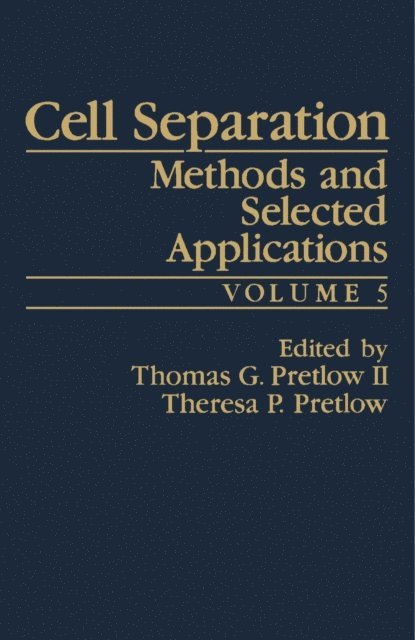
Cell Separation: Methods and Selected Applications, Volume 5 provides information pertinent to the design and application of methods for the separation of cells. This book covers a variety of topics, including endothelial cells, separation of lymphoid cells, separation of T lymphocytes, and methods of epidermal separation. Organized into 16 chapters, this volume begins with an overview of the role of endothelium in wound healing and neovascularization as well as in the pathogenesis of many disease states. This text then examines a method of cell separation, isokinetic sedimentation, which can be employed to concentrate and purify one type of cell from a single-cell suspension of disaggregated tissues or organs. Other chapters consider the nature of tumor cell heterogeneity. This book discusses as well the cellular properties essential in malignant tumor behavior. The final chapter deals with transplantable pancreatic acinar cell carcinoma. This book is a valuable resource for cell biologists, experimental oncologists, hematologists, immunologists, and endocrinologists.
E-bok
PDF, Engelska, 2014807 kr
Läs direkt efter köp
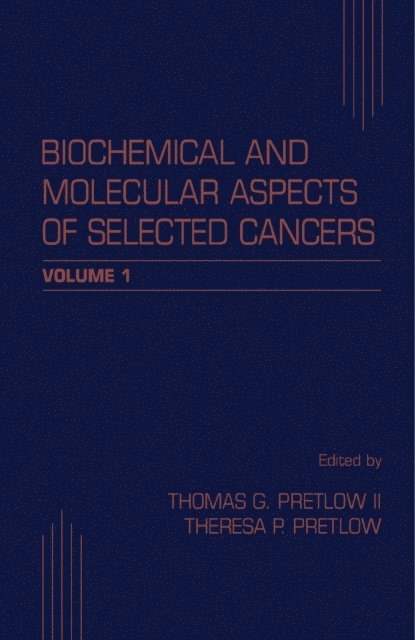
Biochemical and Molecular Aspects of Selected Cancers, Volume I provides an overview of important topics and prototypes in cancer research. The book consists of papers provided by outstanding investigators in diverse disciplines in different areas of cancer research. This volume focuses on topics relevant to cancers in humans. It covers such topics as tumor-suppressor genes and human neoplasia; protein kinase C in neoplastic cells; and extracellular matrix interactions with tumor-progressing cells: tumor versus cell type-specific mechanisms. Structural and functional characteristics of human melanoma; steroid hormones and hormone receptors in neoplastic diseases; and patterns and significance of genetic changes in neuroblastomas are expounded as well. Oncologists, biochemists, cytologists, and other researchers in allied fields will find the book invaluable.