Thomas Hunter II – författare
627 kr
Läs direkt efter köp
Traditionally, JavaScript has been a single-threaded language. Nearly all online forum posts, books, online documentation, and libraries refer to the language as single threaded. Thanks to recent advancements in the language--such as the Atomics and SharedArrayBuffers objects and Web Workers in the browser--JavaScript is now a multi-threaded language. These features will go down as being the biggest paradigm shift for the world''s most popular programming language.
Multithreaded JavaScript explores the various features that JavaScript runtimes have at their disposal for implementing multithreaded programming, providing both practical real-world examples, as well as reference material.
Learn what multithreaded programming is and how you can benefit from itUnderstand the differences between a web worker, a service worker, and a worker threadKnow when and when not to use threads in an applicationOrchestrate communication between threads by leveraging the Atomics objectBuild high-performance applications using the knowledge you gain from this bookBenchmark performance to learn if you''ll benefit from multithreading627 kr
Läs direkt efter köp
Traditionally, JavaScript has been a single-threaded language. Nearly all online forum posts, books, online documentation, and libraries refer to the language as single threaded. Thanks to recent advancements in the language--such as the Atomics and SharedArrayBuffers objects and Web Workers in the browser--JavaScript is now a multi-threaded language. These features will go down as being the biggest paradigm shift for the world''s most popular programming language.
Multithreaded JavaScript explores the various features that JavaScript runtimes have at their disposal for implementing multithreaded programming, providing both practical real-world examples, as well as reference material.
Learn what multithreaded programming is and how you can benefit from itUnderstand the differences between a web worker, a service worker, and a worker threadKnow when and when not to use threads in an applicationOrchestrate communication between threads by leveraging the Atomics objectBuild high-performance applications using the knowledge you gain from this bookBenchmark performance to learn if you''ll benefit from multithreading502 kr
Skickas inom 5-8 vardagar
397 kr
Skickas inom 10-15 vardagar
489 kr
Läs direkt efter köp
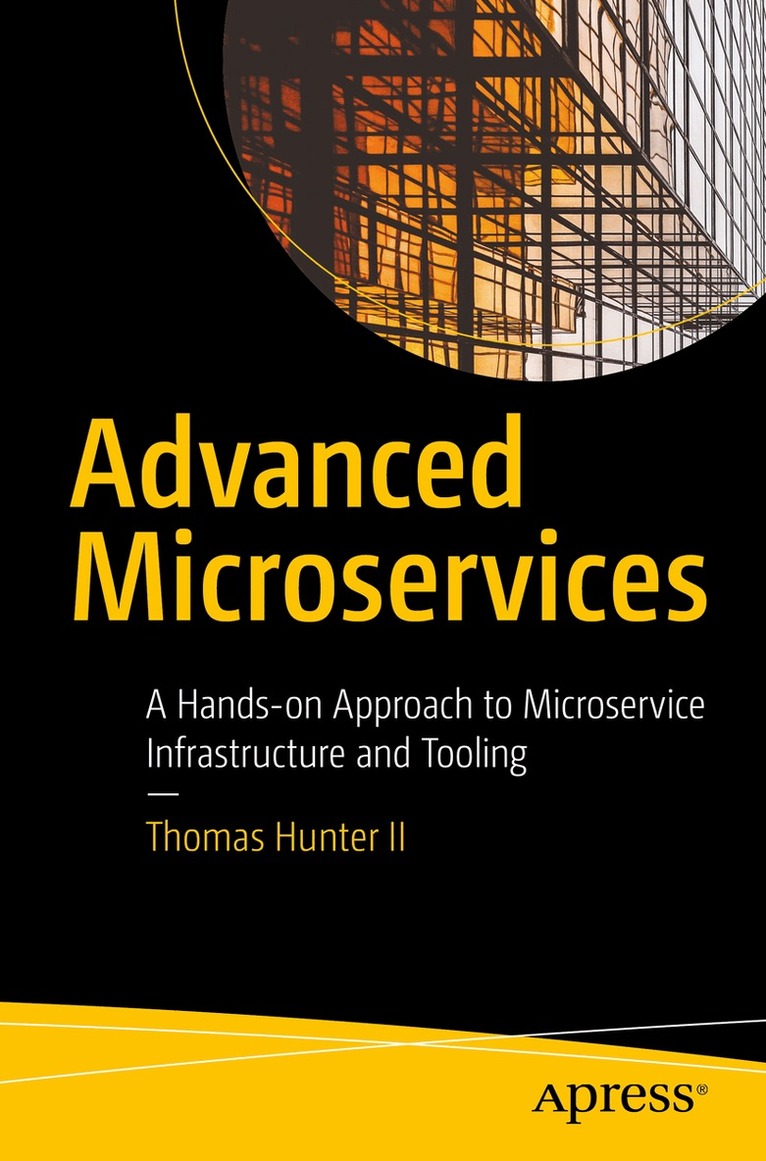
Use the many types of tools required to navigate and maintain a microservice ecosystem. This book examines what is normally a complex system of interconnected services and clarifies them one at a time, first examining theoretical requirements then looking at concrete tools, configuration, and workflows.
Building out these systems includes many concerns such as containerization, container orchestration, build pipelines and continuous integration solutions, automated testing, service discovery, logging and analytics. You will examine each of these tools and understand how they can be combined within an organization. You will design an automated build pipeline from Pull Request to container deployment, understand how to achieve High Availability and monitor application health with Service Discovery, and learn how to collaborate with other teams, write documentation, and describe bugs.
Covering use of Jenkins, Docker, Kubernetes, the ELK stack (Elasticsearch, Logstash, and Kibana), and StatsD and Grafana for analytics, you will build on your existing knowledge of Service-Oriented Architecture and gain an advanced, practical understanding of everything from infrastructure development to team collaboration.
What You''ll Learn
Design an API to be convenient for developers to consume. Deploy dynamic instances of Microservices and allow then to discover each other. Track the health of a Microservice and be notified in case of degraded performance. Write effective documentation and communicate efficiently with other teams.Who This Book Is For
Those who would like a better understanding of System Oriented Architecture. Those who would like to break a monolith into smaller Microservices. Those who are familiar with Microservices and would like a better understanding of peripheral technologies.
527 kr
Läs direkt efter köp
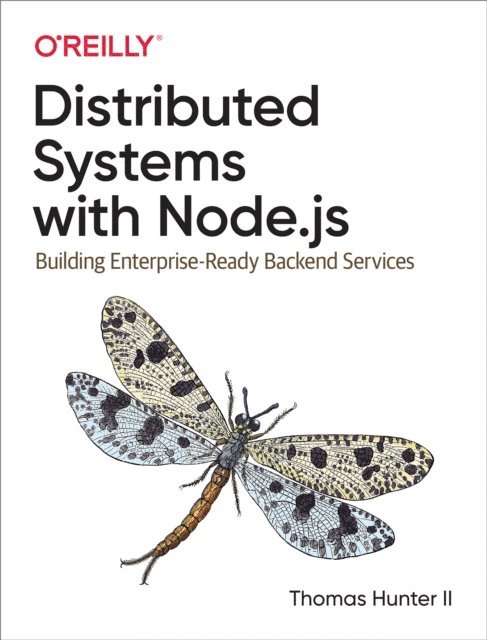
Many companies, from startups to Fortune 500 companies alike, use Node.js to build performant backend services. And engineers love Node.js for its approachable API and familiar syntax. Backed by the world''s largest package repository, Node''s enterprise foothold is only expected to grow.
In this hands-on guide, author Thomas Hunter II proves that Node.js is just as capable as traditional enterprise platforms for building services that are observable, scalable, and resilient. Intermediate to advanced Node.js developers will find themselves integrating application code with a breadth of tooling from each layer of a modern service stack.
Learn why running redundant copies of the same Node.js service is necessaryKnow which protocol to choose, depending on the situationFine-tune your application containers for use in productionTrack down errors in a distributed setting to determine which service is at faultSimplify app code and increase performance by offloading work to a reverse proxyBuild dashboards to monitor service health and throughputFind out why so many different tools are required when operating in an enterprise environment527 kr
Läs direkt efter köp
Many companies, from startups to Fortune 500 companies alike, use Node.js to build performant backend services. And engineers love Node.js for its approachable API and familiar syntax. Backed by the world''s largest package repository, Node''s enterprise foothold is only expected to grow.
In this hands-on guide, author Thomas Hunter II proves that Node.js is just as capable as traditional enterprise platforms for building services that are observable, scalable, and resilient. Intermediate to advanced Node.js developers will find themselves integrating application code with a breadth of tooling from each layer of a modern service stack.
Learn why running redundant copies of the same Node.js service is necessaryKnow which protocol to choose, depending on the situationFine-tune your application containers for use in productionTrack down errors in a distributed setting to determine which service is at faultSimplify app code and increase performance by offloading work to a reverse proxyBuild dashboards to monitor service health and throughputFind out why so many different tools are required when operating in an enterprise environment