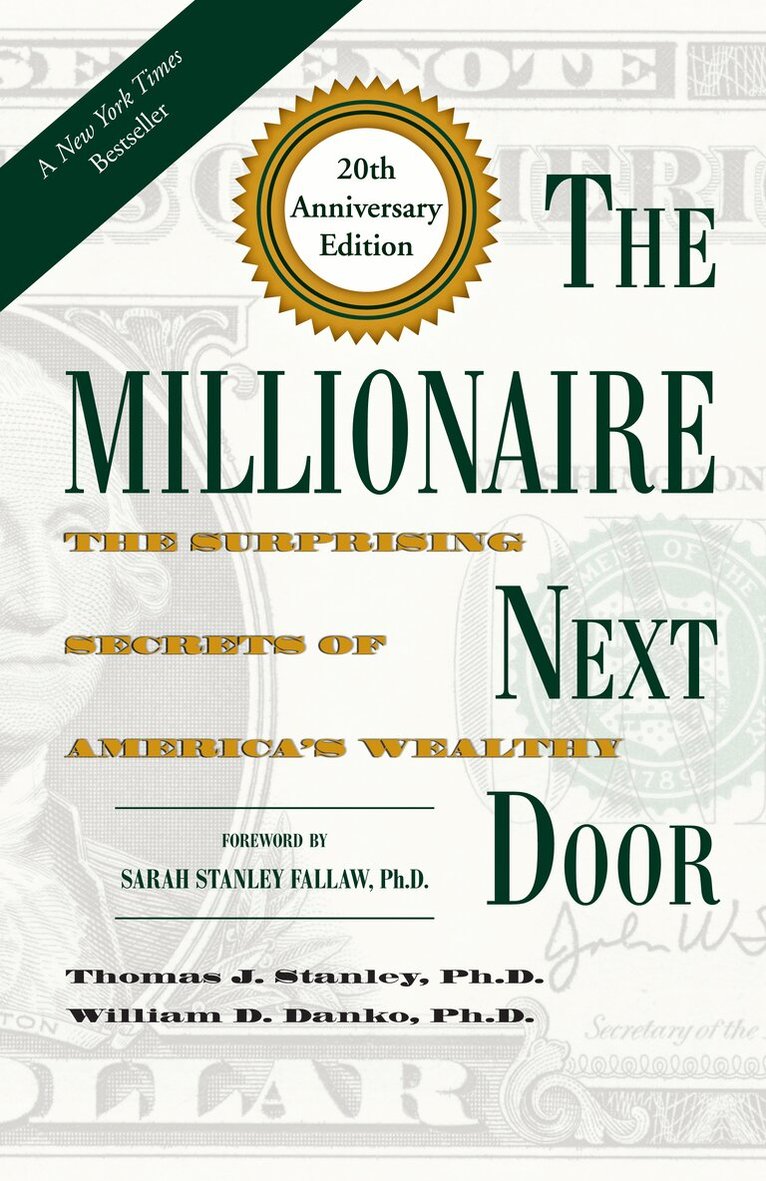
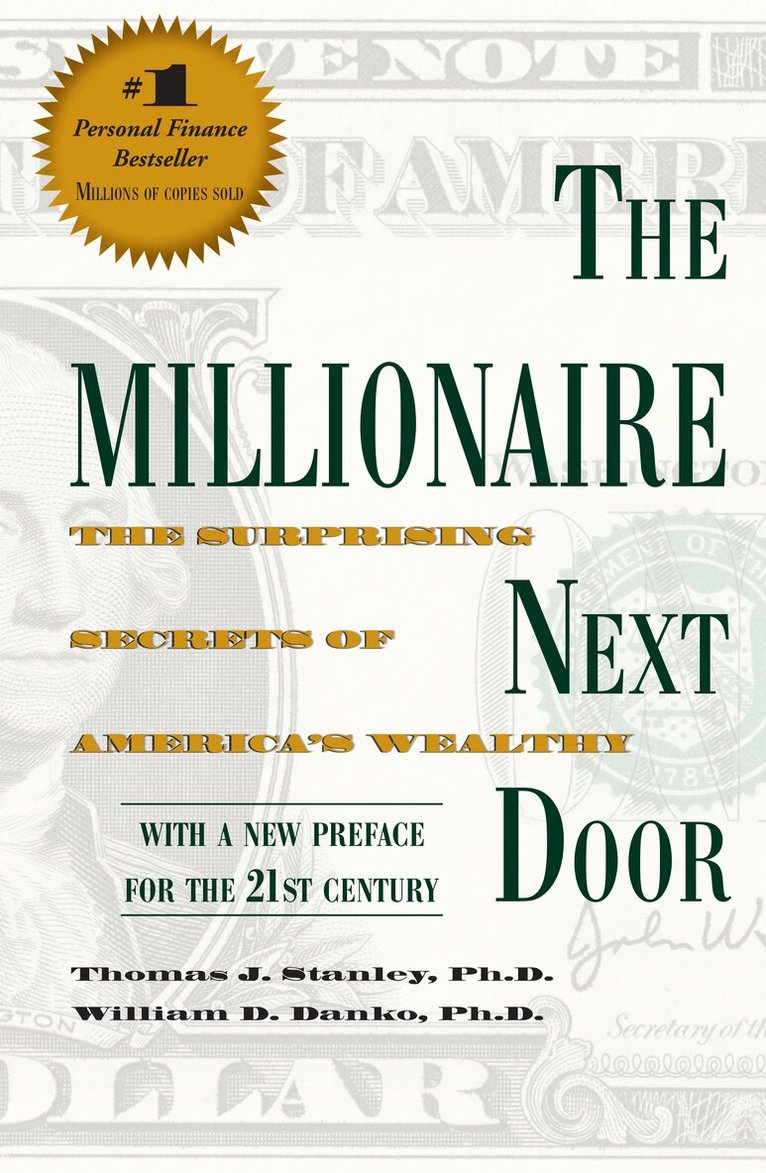
"Why aren't I as wealthy as I should be?" Many people ask this question of themselves all the time. Often they are hard-working, well educated middle- to high-income people. Why, then, are so few affluent. For nearly two decades the answer has been found in the bestselling The Millionaire Next Door: The Surprising Secrets of America's Wealthy, reissued with a new foreword for the twenty-first century. According to the authors, most people have it all wrong about how you become wealthy in America. Wealth in America is more often the result of hard work, diligent savings, and living below your means than it is about inheritance, advance degrees, and even intelligence. The Millionaire Next Door identifies seven common traits that show up again and again among those who have accumulated wealth. You will learn, for example, that millionaires bargain shop for used cars, pay a tiny fraction of their wealth in income tax, raise children who are often unaware of their family's wealth until they are adults, and, above all, reject the big-spending lifestyles most of us associate with rich people. In fact, you will learn that the flashy millionaires glamorized in the media represent only a tiny minority of America's rich. Most of the truly wealthy in this country don't live in Beverly Hills or on Park Avenue-they live next door.
The bestselling The Millionaire Next Door identifies seven common traits that show up again and again among those who have accumulated wealth. Most of the truly wealthy in this country don't live in Beverly Hills or on Park Avenue-they live next door. This new edition, the first since 1998, includes a new foreword for the twenty-first century by Dr. Thomas J. Stanley.
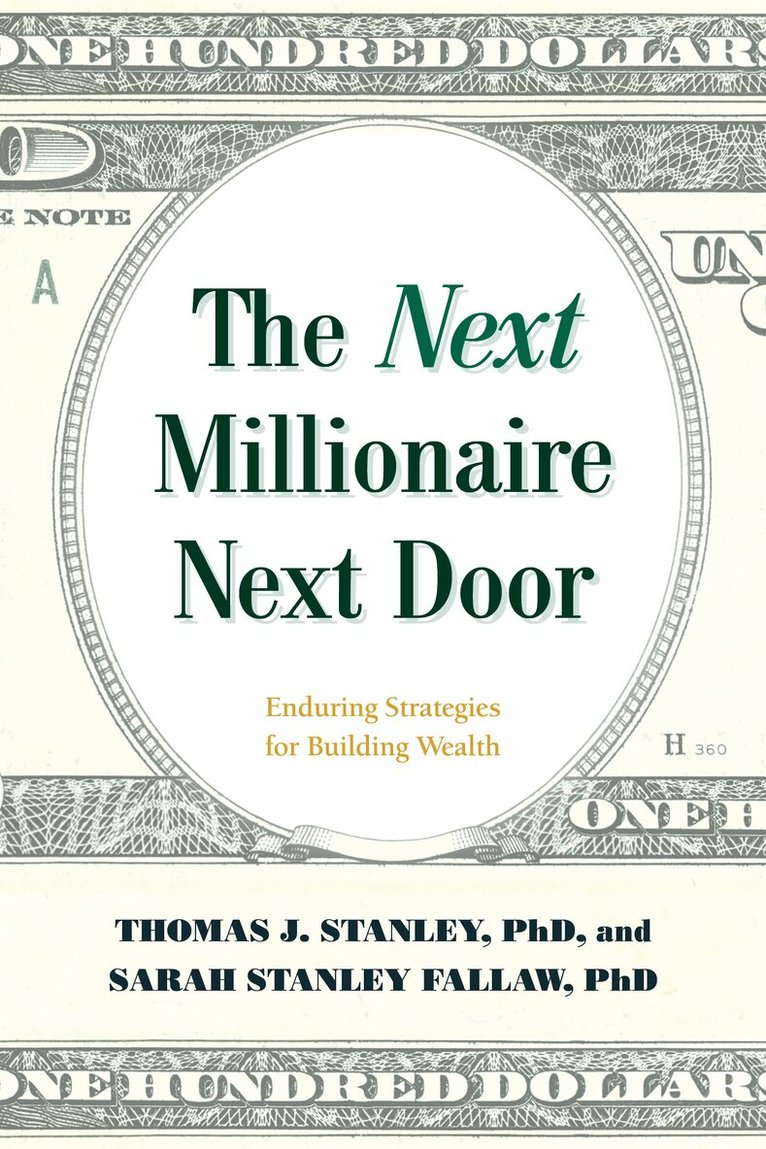
Is the millionaire next door still out there today? The latest research from Dr. Thomas J. Stanley and his daughter, Dr. Sarah Stanley Fallaw, confirms that, yes, the millionaire next door is alive and well. And he’s achieving his financial objectives much the same way he always has: by living below his means, being a contrarian in a maelstrom of hyper-consumption, and being disciplined in reaching his financial goals. The book examines wealth in America 20 years after Dr. Stanley’s groundbreaking work on self-made affluence. While a new generation of household financial managers are being inundated with the proliferation financial advice, The Next Millionaire Next Door provides readers with an analysis of what it takes to achieve wealth with data-based conclusions and evidence from those who have built wealth on their own over the last two decades. In this current work, the authors detail how specific decisions, behaviors, and characteristics align with the discipline of wealth building, covering areas such as consumption, budgeting, careers, investing, and financial management in general. Through case studies, survey research, and a careful examination of quantitative studies of wealth, the authors illustrate what it takes to achieve financial success today, regardless of market conditions or rising costs.
Over the past 40 years, Tom Stanley and his daughter Sarah Stanley Fallaw have been involved in research examining how self-made, economically successful Americans became that way. Despite the publication of The Millionaire Next Door, The Millionaire Mind, and others, myths aboutwealth in American still abound. Government officials, journalists, and many American still tend toconfuse income with wealth. A new generation of household financial managers are hearing from so-called experts in personal financial management due to the proliferation of the cottage industry of financial blogs, podcasts, and the like. In many cases, these outlets are simply experiences shared without science, case studies without data based on broader populations. Therefore, the authors decided to take another look at millionaires in the United States to examine what changes could be seen 20 years after the original publication of The Millionaire Next Door. In this book the authors highlight how specific decisions, behaviors, and characteristics align with the discipline of wealth building, covering areas such as consumption, budgeting, careers, investing, and financial management in general. They include results from quantitative studies of wealth as well as case studies of individuals who have been successful in building wealth. They discuss general paths to building wealth on your own, focusing specifically on careers and lifestyles associated with each path, and what it takes to be successful in each.
"Why aren't I as wealthy as I should be?" Many people ask this question of themselves all the time. Often they are hard-working, well educated middle- to high-income people. Why, then, are so few affluent. For nearly two decades the answer has been found in the bestselling The Millionaire Next Door: The Surprising Secrets of America's Wealthy, reissued with a new foreword for the twenty-first century. According to the authors, most people have it all wrong about how you become wealthy in America. Wealth in America is more often the result of hard work, diligent savings, and living below your means than it is about inheritance, advance degrees, and even intelligence. The Millionaire Next Door identifies seven common traits that show up again and again among those who have accumulated wealth. You will learn, for example, that millionaires bargain shop for used cars, pay a tiny fraction of their wealth in income tax, raise children who are often unaware of their family's wealth until they are adults, and, above all, reject the big-spending lifestyles most of us associate with rich people. In fact, you will learn that the flashy millionaires glamorized in the media represent only a tiny minority of America's rich. Most of the truly wealthy in this country don't live in Beverly Hills or on Park Avenue-they live next door.
The bestselling The Millionaire Next Door identifies seven common traits that show up again and again among those who have accumulated wealth. Most of the truly wealthy in this country don't live in Beverly Hills or on Park Avenue-they live next door. This new edition, the first since 1998, includes a new foreword for the twenty-first century by Dr. Thomas J. Stanley.
Is the millionaire next door still out there today? The latest research from Dr. Thomas J. Stanley and his daughter, Dr. Sarah Stanley Fallaw, confirms that, yes, the millionaire next door is alive and well. And he’s achieving his financial objectives much the same way he always has: by living below his means, being a contrarian in a maelstrom of hyper-consumption, and being disciplined in reaching his financial goals. The book examines wealth in America 20 years after Dr. Stanley’s groundbreaking work on self-made affluence. While a new generation of household financial managers are being inundated with the proliferation financial advice, The Next Millionaire Next Door provides readers with an analysis of what it takes to achieve wealth with data-based conclusions and evidence from those who have built wealth on their own over the last two decades. In this current work, the authors detail how specific decisions, behaviors, and characteristics align with the discipline of wealth building, covering areas such as consumption, budgeting, careers, investing, and financial management in general. Through case studies, survey research, and a careful examination of quantitative studies of wealth, the authors illustrate what it takes to achieve financial success today, regardless of market conditions or rising costs.
Over the past 40 years, Tom Stanley and his daughter Sarah Stanley Fallaw have been involved in research examining how self-made, economically successful Americans became that way. Despite the publication of The Millionaire Next Door, The Millionaire Mind, and others, myths aboutwealth in American still abound. Government officials, journalists, and many American still tend toconfuse income with wealth. A new generation of household financial managers are hearing from so-called experts in personal financial management due to the proliferation of the cottage industry of financial blogs, podcasts, and the like. In many cases, these outlets are simply experiences shared without science, case studies without data based on broader populations. Therefore, the authors decided to take another look at millionaires in the United States to examine what changes could be seen 20 years after the original publication of The Millionaire Next Door. In this book the authors highlight how specific decisions, behaviors, and characteristics align with the discipline of wealth building, covering areas such as consumption, budgeting, careers, investing, and financial management in general. They include results from quantitative studies of wealth as well as case studies of individuals who have been successful in building wealth. They discuss general paths to building wealth on your own, focusing specifically on careers and lifestyles associated with each path, and what it takes to be successful in each.