Thomas Kalinowski – författare
Visar alla böcker från författaren Thomas Kalinowski. Handla med fri frakt och snabb leverans.
4 produkter
4 produkter
Why International Cooperation Is Failing
How the Clash of Capitalisms Undermines the Regulation of Finance
Häftad, Engelska, 2022
418 kr
Skickas inom 5-8 vardagar
Ten years after the global financial crisis of 2008/09 there is widespread scepticism about the ability to curb volatile financial markets and achieve true international cooperation. Changes in the global rules of finance discussed in the G20 during the last decade remain limited, and it is uncertain whether they are suitable to help mitigate and manage future crises to come. This book offers an alternative to the popular notion that this failure is the result of the 'nature' of international relations, the clash of national egoisms, or ineffective national leadership. It instead provides an understanding of recent lapses in international cooperation by revealing their deeper structural origins in the competing models of capitalism operating across the globe.US finance-led, EU integration-led, and East Asian state-led capitalism complement each other globally yet have conflicting preferences on how to complement their distinct domestic regulations at the international level. This interdependence of capitalist models is relatively stable but also prone to crises caused by volatile financial flows, global economic imbalances, and 'currency wars'. To understand international economic cooperation, we must understand the diverse dynamics of the different models of capitalism on a domestic level, not only in financial markets but also in areas of corporate structure, labour markets, and welfare regimes.By establishing a deeper integration of approaches from International Political Economy and Comparative Capitalism, this book shows that regulating international finance is not a technocratic exercise of fine-tuning the machinery of international institutions, but rather a political process dependent on the dynamic of institutional change on a national and regional level.
Why International Cooperation is Failing
How the Clash of Capitalisms Undermines the Regulation of Finance
Inbunden, Engelska, 2019
1 403 kr
Skickas
Since the global financial crisis of 2008/09, international cooperation has failed to curb volatile financial markets. Changes in the global rules of finance discussed in the G20 during the last decade remain limited, and it is uncertain whether they are suitable to help mitigate and manage future crises to come. This book offers an alternative to the popular notion that this failure is the result of the 'nature' of the international system, the clash of national egoisms, or lack of leadership. It instead investigates problems of international cooperation by looking at their deeper structural origins in the competition of different models of capitalism.US finance-led, EU integration-led, and East Asian state-led capitalism complement each other globally but have conflicting preferences on how to regulate international finance. This interdependence of capitalist models is relatively stable but also prone to crises caused by volatile financial flows, global economic imbalances, and 'currency wars'. By bringing together approaches from International Political Economy and Comparative Capitalism, this book shows that regulating international finance is not a technocratic exercise of fine-tuning the machinery of international institutions, but rather a political process. International cooperation can only be successful if it goes hand in hand with deep domestic changes in each of these capitalist models.
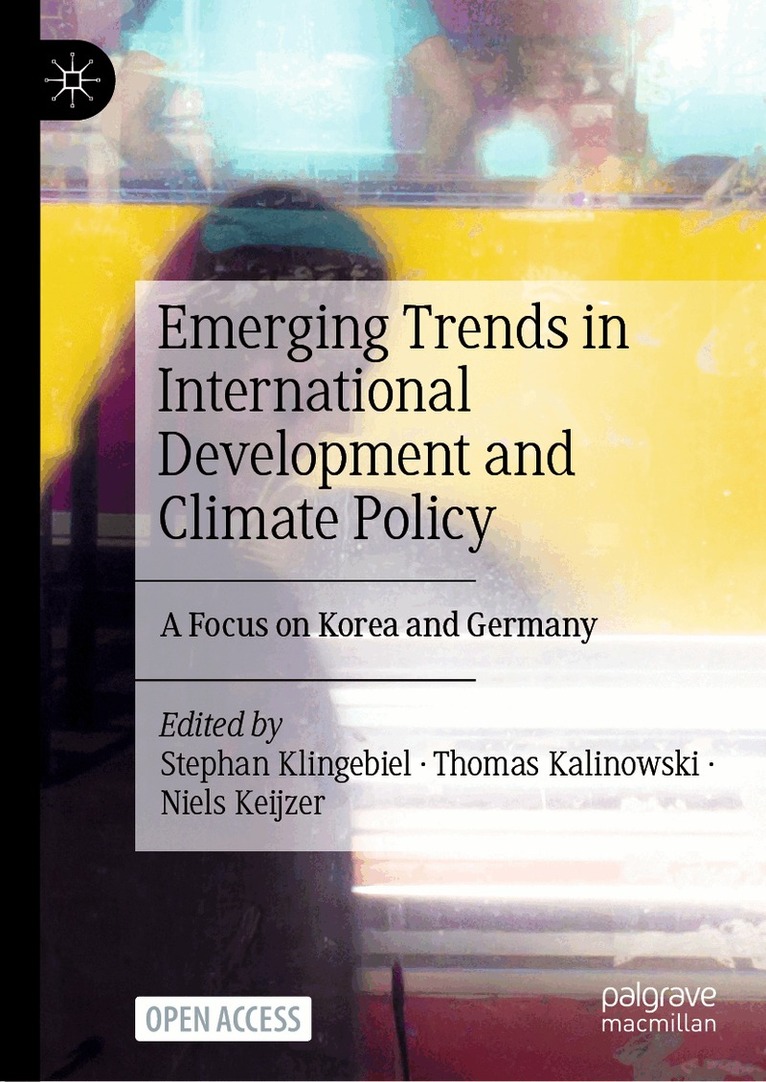
Emerging Trends in International Development and Climate Policy
A Focus on Korea and Germany
Inbunden, Engelska, 2024
534 kr
Skickas inom 10-15 vardagar
This open access book delves into the considerable alignment of global sustainable development priorities between Germany and the Republic of Korea (hereafter referred to as Korea), despite their geographical separation. Notably, both nations share a common commitment to development policy and international climate action, an alignment that holds immense potential for enhanced cooperation in today’s evolving global landscape.Germany’s historical role as a founding member of the international development cooperation system juxtaposes with Korea’s more recent entry into the Organisation for Economic Co-operation and Development (OECD) and its Development Assistance Committee (DAC) in 2010. Korea has transformed from a significant development assistance recipient to an active provider, a transition mirrored in its engagement in international climate finance.Within this dynamic context, the book thoroughly examines key aspects such as the evolving development policy profiles of Germany and Korea, their roles in international organizations, and their shared commitment to international climate policies. It also explores avenues for deeper collaboration between these like-minded partners, all against the backdrop of an evolving geopolitical focus, including the new Indo-Pacific emphasis.
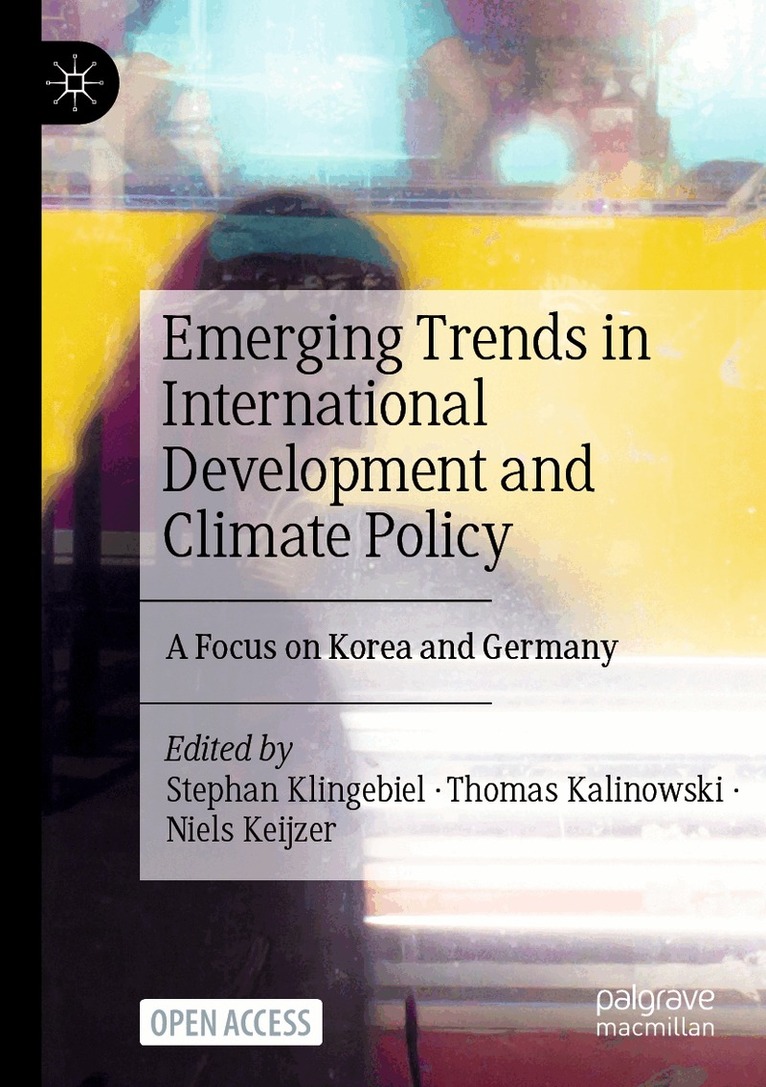
Emerging Trends in International Development and Climate Policy
A Focus on Korea and Germany
Häftad, Engelska, 2025
429 kr
Skickas inom 10-15 vardagar
This open access book delves into the considerable alignment of global sustainable development priorities between Germany and the Republic of Korea (hereafter referred to as Korea), despite their geographical separation. Notably, both nations share a common commitment to development policy and international climate action, an alignment that holds immense potential for enhanced cooperation in today’s evolving global landscape.Germany’s historical role as a founding member of the international development cooperation system juxtaposes with Korea’s more recent entry into the Organisation for Economic Co-operation and Development (OECD) and its Development Assistance Committee (DAC) in 2010. Korea has transformed from a significant development assistance recipient to an active provider, a transition mirrored in its engagement in international climate finance.Within this dynamic context, the book thoroughly examines key aspects such as the evolving development policy profiles of Germany and Korea, their roles in international organizations, and their shared commitment to international climate policies. It also explores avenues for deeper collaboration between these like-minded partners, all against the backdrop of an evolving geopolitical focus, including the new Indo-Pacific emphasis.