Thomas M. Blake – författare
Visar alla böcker från författaren . Handla med fri frakt och snabb leverans.
6 produkter
6 produkter
Häftad, Engelska, 1994
561 kr
Skickas inom 10-15 vardagar
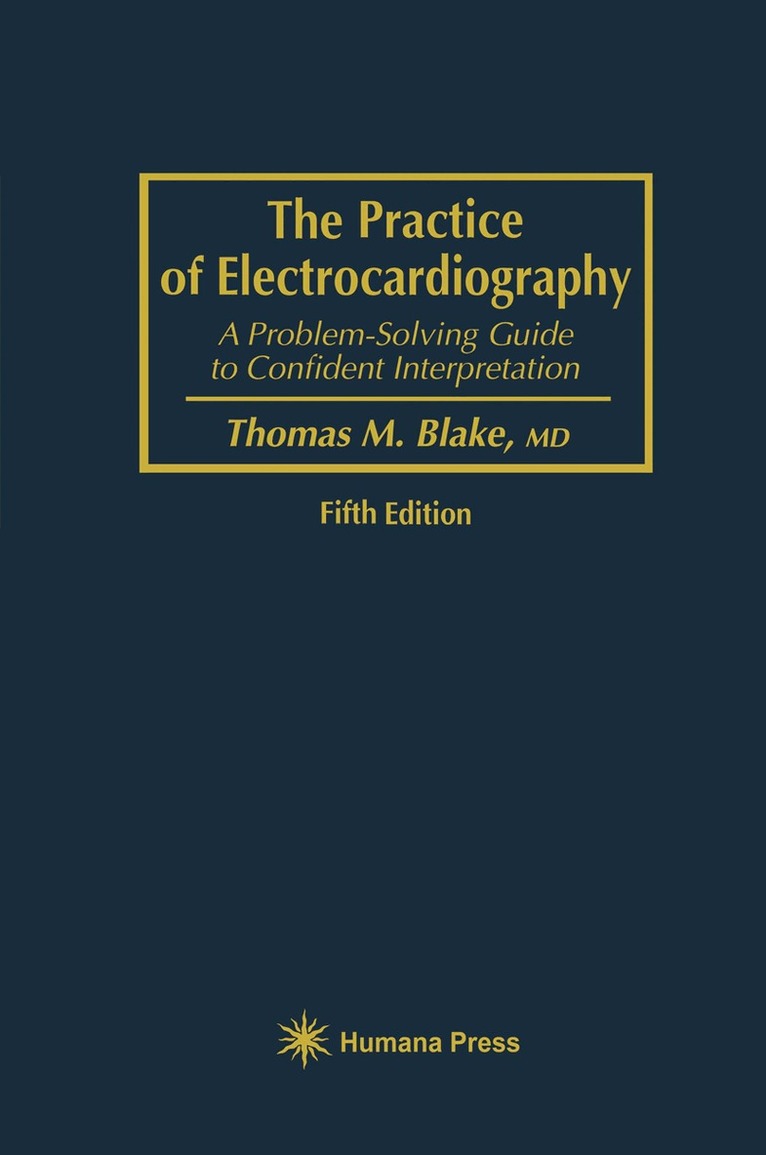
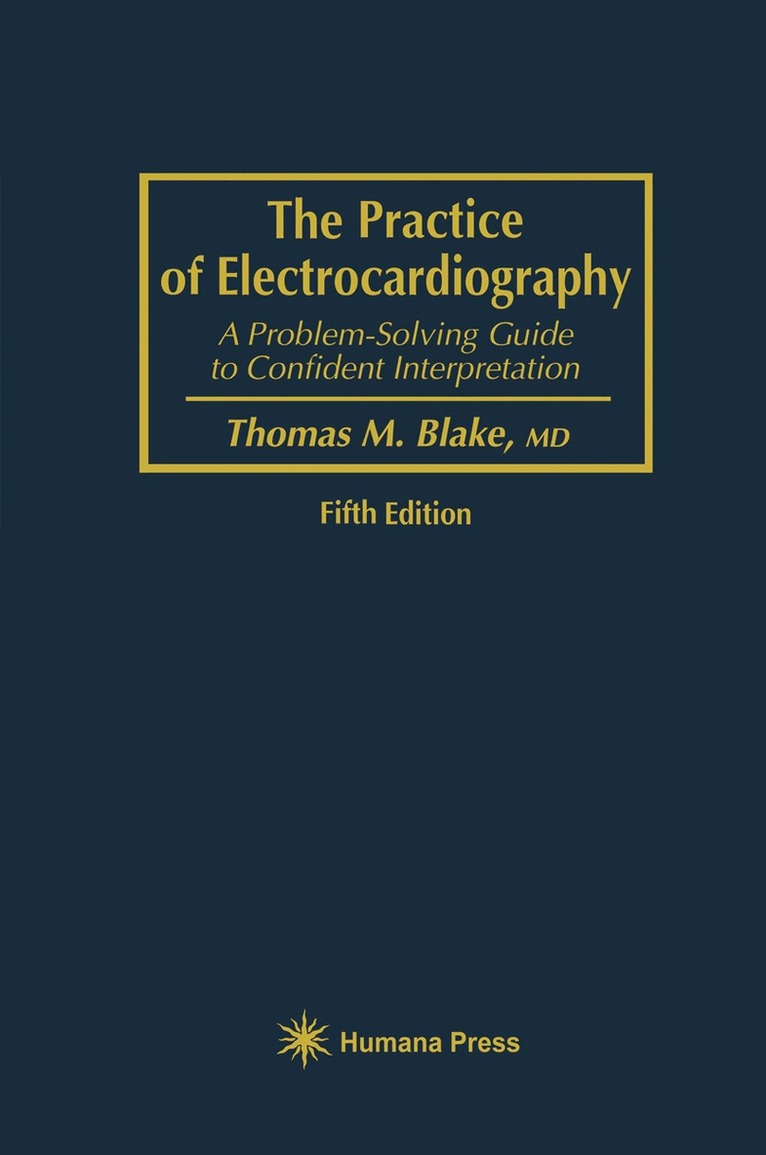
Electrocardiography is a mature discipline, so familiar to both doctors and patients that it's hardly noticed, one of those tests that have always been there, like the white count and hemoglobin, not something one has to think about much, or question. To some extent this view is valid, but it overlooks some important points. Like the white count and hemoglobin, electrocardiograms are produced by technicians using mechanical devices that turn out numbers, but there is a difference. The white count and hemoglobin are reported as single values to be interpreted by the doctor who knows the patient and ordered the test, but the graph produced by an EKG machine represents millions of numbers displayed as XY plots, a message written in a language different from one's own. It requires transla tion, and this means that the translator must not only know the lan guage, but also be able to assess the effects on it of the many factors that may have modified its meaning between origin and delivery. There is potential for harm to the patient, as well as for help, in every facet of the process, and to lose sight of this, to see the tracing as a single whole, would be like seeing words as units without con sidering the letters that compose them. When we read, we do recog nize whole words, patterns, but, having learned the letters first, revert to this base intuitively when we encounter a new word, or one that is misspelled.
Inbunden, Engelska, 1994
1 115 kr
Skickas inom 10-15 vardagar
Electrocardiography is a mature discipline, so familiar to both doctors and patients that it's hardly noticed, one of those tests that have always been there, like the white count and hemoglobin, not something one has to think about much, or question. To some extent this view is valid, but it overlooks some important points. Like the white count and hemoglobin, electrocardiograms are produced by technicians using mechanical devices that turn out numbers, but there is a difference. The white count and hemoglobin are reported as single values to be interpreted by the doctor who knows the patient and ordered the test, but the graph produced by an EKG machine represents millions of numbers displayed as XY plots, a message written in a language different from one's own. It requires transla tion, and this means that the translator must not only know the lan guage, but also be able to assess the effects on it of the many factors that may have modified its meaning between origin and delivery. There is potential for harm to the patient, as well as for help, in every facet of the process, and to lose sight of this, to see the tracing as a single whole, would be like seeing words as units without con sidering the letters that compose them. When we read, we do recog nize whole words, patterns, but, having learned the letters first, revert to this base intuitively when we encounter a new word, or one that is misspelled.
Inbunden, Engelska, 1998
1 115 kr
Skickas inom 10-15 vardagar
A master practitioner illustrates with 185 electrocardiograms a new scientific approach to the art of EKG intrepretation. Moving beyond the traditional practice of many books that stress technical skill and pattern recognition, Dr. Blake demonstrates in detail how tracings may be interpeted with consistency and medical rigor to distinguish normal and abnormal EKG patterns. Each tracing is illuminated by a full description of its findings and a detailed clinical explanation of how to intrepet it. Published in both hardcover and paperback this book will be used by medical students in preparation for their exams as well as by practicing physicians who want to develop a scientifically-based approach to reading EKGs.
Häftad, Engelska, 1998
1 115 kr
Skickas inom 10-15 vardagar
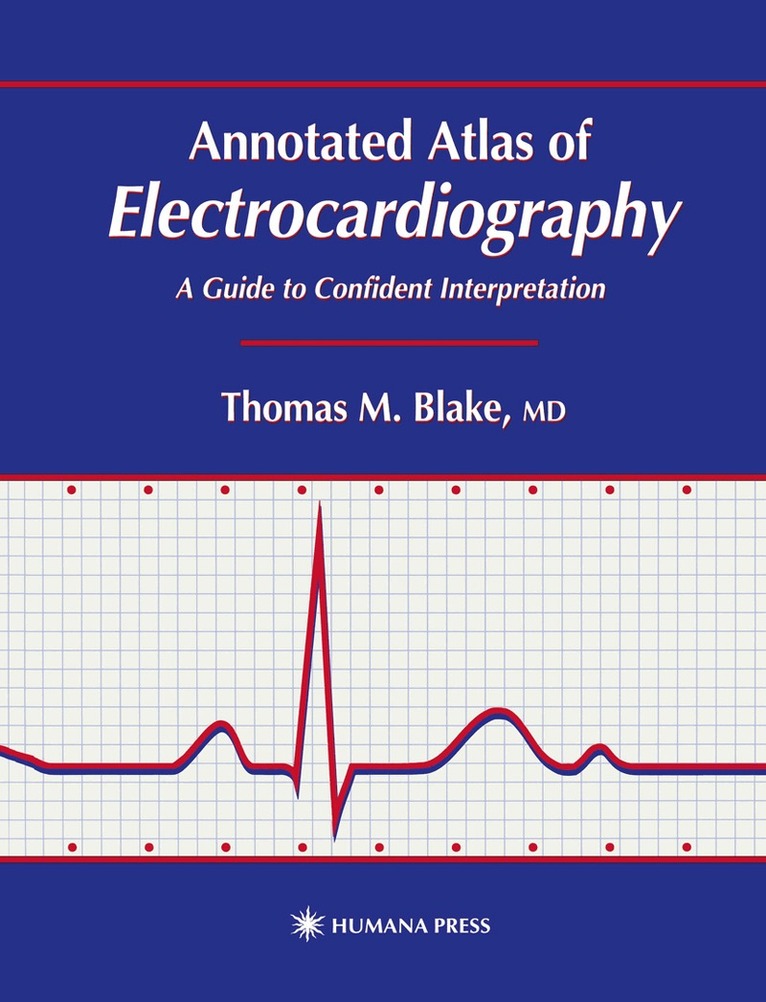
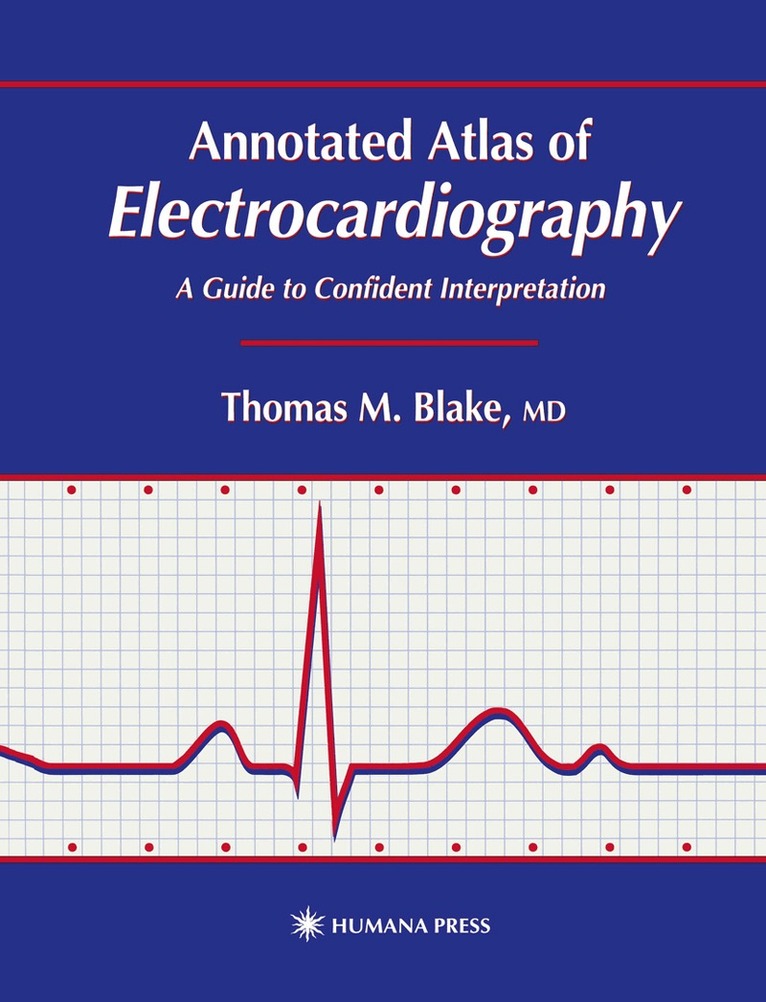
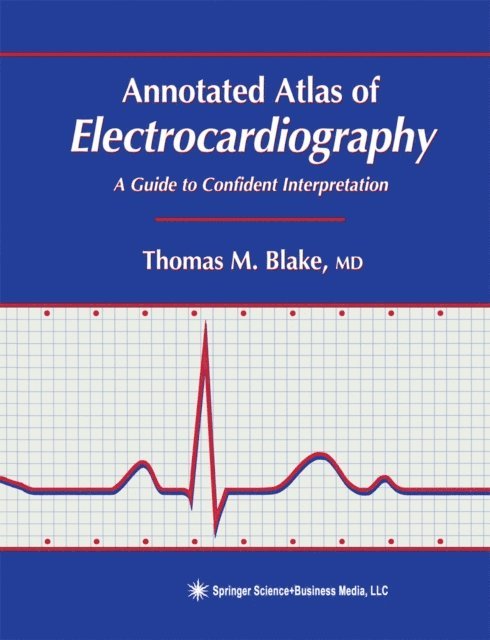
A master practitioner teaches, with 200 sample electrocardiograms, a simple but powerfully enlightening scientific approach to the art of EKG interpretation. Moving beyond the traditional practice of many books that stress technical skill and pattern recognition, Dr. Blake demonstrates in detail how tracings may be interpreted with consistency and confidence. By examining each tracing much like a patient in a physical examination, the author provides a full description of its findings and a detailed clinical explanation of how to interpret it. Drawing on a lifetime of teaching and practicing EKG interpretation, Dr. Blake demonstrates in An Annotated Atlas of Electrocardiography: A Guide to Confident Interpretation an orderly, confidence-inspiring method for arriving at a clinically useful interpretation.
E-bok
PDF, Engelska, 2012734 kr
Läs direkt efter köp
Electrocardiography is a mature discipline, so familiar to both doctors and patients that it''s hardly noticed, one of those tests that have always been there, like the white count and hemoglobin, not something one has to think about much, or question. To some extent this view is valid, but it overlooks some important points. Like the white count and hemoglobin, electrocardiograms are produced by technicians using mechanical devices that turn out numbers, but there is a difference. The white count and hemoglobin are reported as single values to be interpreted by the doctor who knows the patient and ordered the test, but the graph produced by an EKG machine represents millions of numbers displayed as XY plots, a message written in a language different from one''s own. It requires transla tion, and this means that the translator must not only know the lan guage, but also be able to assess the effects on it of the many factors that may have modified its meaning between origin and delivery. There is potential for harm to the patient, as well as for help, in every facet of the process, and to lose sight of this, to see the tracing as a single whole, would be like seeing words as units without con sidering the letters that compose them. When we read, we do recog nize whole words, patterns, but, having learned the letters first, revert to this base intuitively when we encounter a new word, or one that is misspelled.
E-bok
PDF, Engelska, 20121 459 kr
Läs direkt efter köp
A master practitioner teaches, with 200 sample electrocardiograms, a simple but powerfully enlightening scientific approach to the art of EKG interpretation. Moving beyond the traditional practice of many books that stress technical skill and pattern recognition, Dr. Blake demonstrates in detail how tracings may be interpreted with consistency and confidence. By examining each tracing much like a patient in a physical examination, the author provides a full description of its findings and a detailed clinical explanation of how to interpret it. Drawing on a lifetime of teaching and practicing EKG interpretation, Dr. Blake demonstrates in An Annotated Atlas of Electrocardiography: A Guide to Confident Interpretation an orderly, confidence-inspiring method for arriving at a clinically useful interpretation.