Thomas Maak - Böcker
Visar alla böcker från författaren Thomas Maak. Handla med fri frakt och snabb leverans.
8 produkter
8 produkter
2 374 kr
Skickas inom 10-15 vardagar
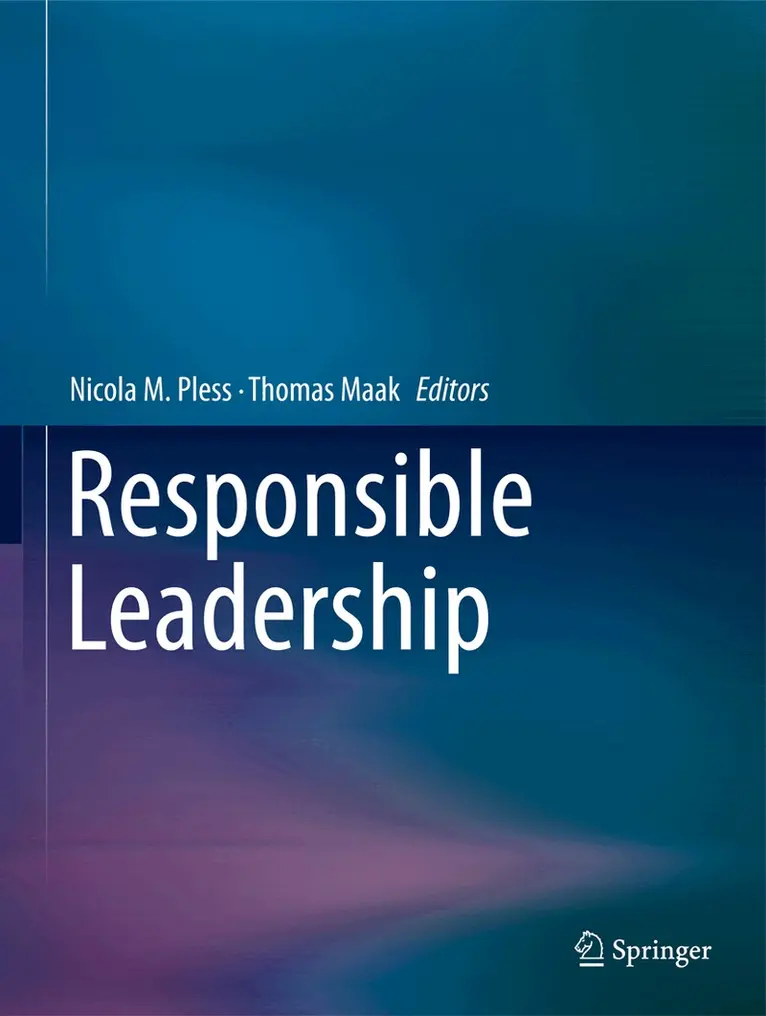
The second edition of Responsible Leadership offers orienting knowledge on how to lead in a world of contested values—a world where leadership work extends beyond leaders and direct reports to a whole range of stakeholders inside and outside an organization. The new edition comes at a time where leaders face growing expectations to do better, and more, and where leadership challenges such as the ethical tragedy of climate change and global pandemics highlight the urgency of collective action. Updated and significantly extended, the second edition of this much acclaimed volume assembles leading scholars and practitioners in the field. It includes new chapters on inclusive leadership, the study of responsible leadership, the purpose of organizations, authenticity and values, virtuous leadership, irresponsible leadership, the paradoxical nature of responsible leadership, responsible leadership in context and in Asia, artistic expression to enable responsible leadership, responsible leadership measurement, and new directions for responsible leadership.This volume offers rich and functional insights into the concept and practice of responsible leadership. It will appeal to academics and practitioners alike with a wide array of perspectives grounded in pioneering scholarship and best practice.
794 kr
Skickas inom 10-15 vardagar
The second edition of Responsible Leadership offers orienting knowledge on how to lead in a world of contested values—a world where leadership work extends beyond leaders and direct reports to a whole range of stakeholders inside and outside an organization. The new edition comes at a time where leaders face growing expectations to do better, and more, and where leadership challenges such as the ethical tragedy of climate change and global pandemics highlight the urgency of collective action. Updated and significantly extended, the second edition of this much acclaimed volume assembles leading scholars and practitioners in the field. It includes new chapters on inclusive leadership, the study of responsible leadership, the purpose of organizations, authenticity and values, virtuous leadership, irresponsible leadership, the paradoxical nature of responsible leadership, responsible leadership in context and in Asia, artistic expression to enable responsible leadership, responsible leadership measurement, and new directions for responsible leadership.This volume offers rich and functional insights into the concept and practice of responsible leadership. It will appeal to academics and practitioners alike with a wide array of perspectives grounded in pioneering scholarship and best practice.
668 kr
Skickas inom 10-15 vardagar
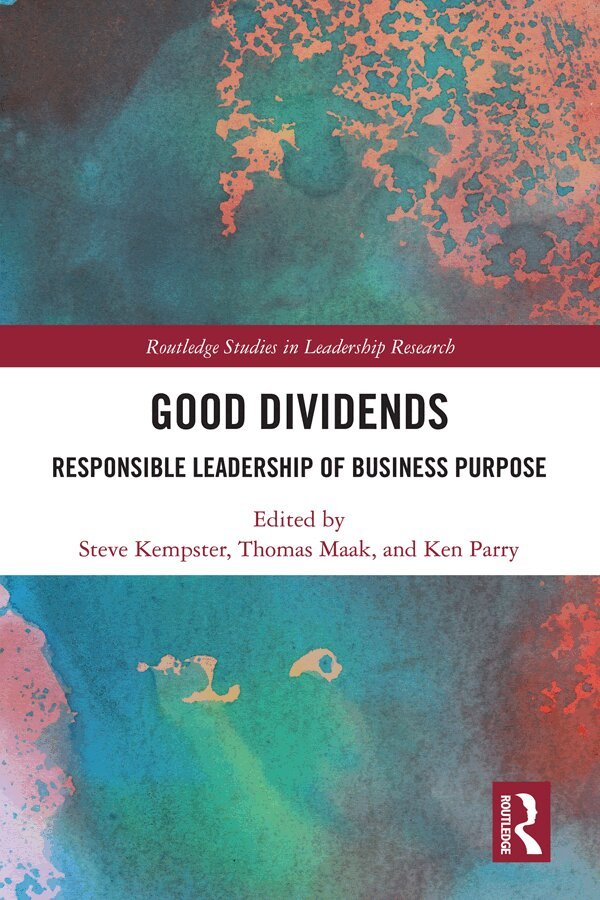
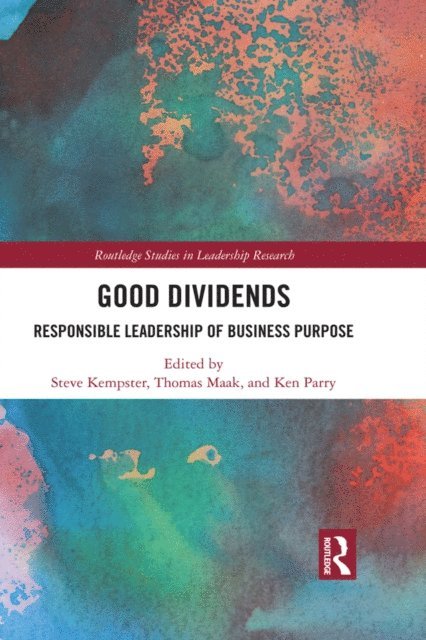
This book seeks to answer the question of ‘leadership for what?’. We shall outline an answer by focusing on responsible leadership of purpose through an inter-disciplinary perspective. Responsible leadership moves the axis of leadership from leader-followers to leader-stakeholders; away from looking at leadership as person-centric – the qualities, abilities, and effectiveness of the leader, to a focus on the purposes, responsibilities and activities of leadership. Leadership orientation is about realising value for a range of constituencies, not just the shareholders of the business. In this way this book offers up an alternative business model to that of dominant neo-liberal approaches to capitalism and its flow-on effect to the leadership project. This is a model that draws on a most obvious assumption – if leaders maximise the use of all the capitals of their business they will maximise their dividends, and thus deliver their responsibility to the shareholders as well as other relevant stakeholders. This book explores how five dividends (based on five capitals) can be developed through attention to a sixth dividend (and sixth capital) – the dividend from our planet and communities. The planetary dividend is the flourishing of humanity – but it is also a significant dividend to the business. For example, by engaging the business in a purpose-led orientation to enhance the planetary dividend, the dividend from human resourcefulness becomes manifest – employee sense of purpose, commitment, passion and energy. The realisation of such can also connect with dividends from innovation, operations and brands. For example, the business benefits from a purpose-driven brand. In short, responsible leadership of purpose outlines a case for leadership to focus on a connected portfolio of ‘good’ dividends as an answer to the question ‘leadership for what?’ The book is written by academics and organisational leaders. It draws on a range of research with leaders from a variety of contexts to illustrate the challenges but also the benefits of this argument. It is an ambitious book: ambitious, in terms of moving leadership towards realising purpose; ambitious by seeking to align a range of business disciplines around responsible leadership; and ambitious because it challenges the dominant assumptions that shape business leadership. However, it is based on a simple question: why would a business not wish to generate good dividends for all its stakeholders?
2 868 kr
Skickas inom 10-15 vardagar
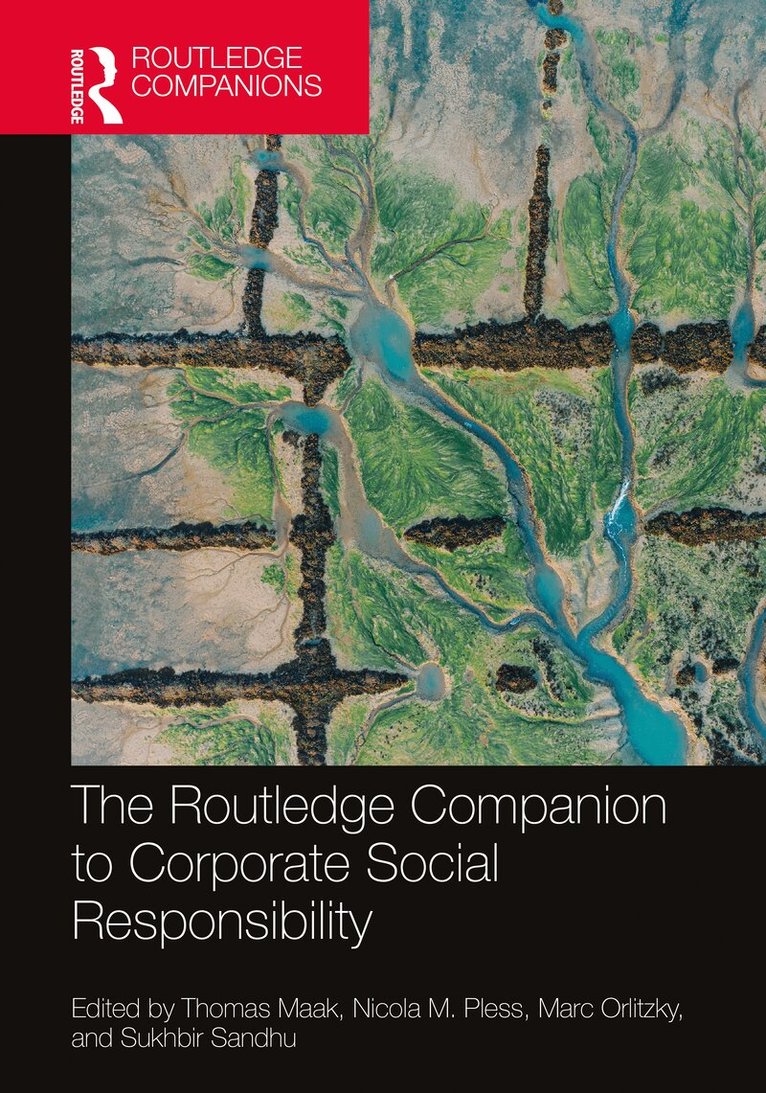
While the concept and domain of Corporate Social Responsibility (CSR) are not new—its beginnings can be tracked back to the 1960s—its scope, urgency, and relevance have shifted dramatically in recent years. CEO responses show that the majority of business leaders understand that they operate in an environment of contested values and that stakeholders expect companies to do better and more. However, many corporate incentive systems are not in sync with societal norms and expectations. Moreover, "grand challenges" such as climate change and global pandemics and growing interconnectedness shed light on the fault lines of value creation through complex supply chain systems, exposing unacceptable working conditions, modern slavery, and the environmental consequences of highly distributed production at any cost. As a consequence, corporate social responsibility has become a widely accepted common denominator of the role and responsibilities of business in society, ranging from core functions such as health, safety, and environment standards, to governance and recognition of stakeholders, supply chain design, and corporations’ stand on climate change and its responsibility to future generations. This volume assembles state-of-the-art scholarship from leading scholars in the field and enables a "full range view" of CSR, from its roots, normative foundations, and institutional perspectives to matters of stakeholding, the global value chain, social innovation, and future directions.The Routledge Companion to Corporate Social Responsibility represents a prestige reference work providing an overview of the subject area of CSR for academics, researchers, postgraduate students, as well as reflective practitioners.
597 kr
Skickas inom 10-15 vardagar
While the concept and domain of Corporate Social Responsibility (CSR) are not new—its beginnings can be tracked back to the 1960s—its scope, urgency, and relevance have shifted dramatically in recent years. CEO responses show that the majority of business leaders understand that they operate in an environment of contested values and that stakeholders expect companies to do better and more. However, many corporate incentive systems are not in sync with societal norms and expectations. Moreover, "grand challenges" such as climate change and global pandemics and growing interconnectedness shed light on the fault lines of value creation through complex supply chain systems, exposing unacceptable working conditions, modern slavery, and the environmental consequences of highly distributed production at any cost. As a consequence, corporate social responsibility has become a widely accepted common denominator of the role and responsibilities of business in society, ranging from core functions such as health, safety, and environment standards, to governance and recognition of stakeholders, supply chain design, and corporations’ stand on climate change and its responsibility to future generations. This volume assembles state-of-the-art scholarship from leading scholars in the field and enables a "full range view" of CSR, from its roots, normative foundations, and institutional perspectives to matters of stakeholding, the global value chain, social innovation, and future directions.The Routledge Companion to Corporate Social Responsibility represents a prestige reference work providing an overview of the subject area of CSR for academics, researchers, postgraduate students, as well as reflective practitioners.
2 166 kr
Skickas inom 10-15 vardagar
This book seeks to answer the question of ‘leadership for what?’. We shall outline an answer by focusing on responsible leadership of purpose through an inter-disciplinary perspective. Responsible leadership moves the axis of leadership from leader-followers to leader-stakeholders; away from looking at leadership as person-centric – the qualities, abilities, and effectiveness of the leader, to a focus on the purposes, responsibilities and activities of leadership. Leadership orientation is about realising value for a range of constituencies, not just the shareholders of the business. In this way this book offers up an alternative business model to that of dominant neo-liberal approaches to capitalism and its flow-on effect to the leadership project. This is a model that draws on a most obvious assumption – if leaders maximise the use of all the capitals of their business they will maximise their dividends, and thus deliver their responsibility to the shareholders as well as other relevant stakeholders. This book explores how five dividends (based on five capitals) can be developed through attention to a sixth dividend (and sixth capital) – the dividend from our planet and communities. The planetary dividend is the flourishing of humanity – but it is also a significant dividend to the business. For example, by engaging the business in a purpose-led orientation to enhance the planetary dividend, the dividend from human resourcefulness becomes manifest – employee sense of purpose, commitment, passion and energy. The realisation of such can also connect with dividends from innovation, operations and brands. For example, the business benefits from a purpose-driven brand. In short, responsible leadership of purpose outlines a case for leadership to focus on a connected portfolio of ‘good’ dividends as an answer to the question ‘leadership for what?’ The book is written by academics and organisational leaders. It draws on a range of research with leaders from a variety of contexts to illustrate the challenges but also the benefits of this argument. It is an ambitious book: ambitious, in terms of moving leadership towards realising purpose; ambitious by seeking to align a range of business disciplines around responsible leadership; and ambitious because it challenges the dominant assumptions that shape business leadership. However, it is based on a simple question: why would a business not wish to generate good dividends for all its stakeholders?
1 073 kr
Skickas inom 10-15 vardagar
These chapters on ‘Responsible Leadership’ represent the latest thinking on a topic of increasing relevance in a connected world. There are many challenges that still remain when it comes to establishing responsible leadership both in theory and practice. Whilst offering conceptualisations for the improvement of leadership is a first and perhaps easier response, what is more difficult is to facilitate the actual change to happen. These chapters will not only generate interest in the emerging domain of studies on responsible leadership, but also will pave the way for future research in this area in the years to come. Previously Published in the Journal of Business Ethics, Volume 98 Supplement 2, 2011
1 073 kr
Skickas inom 10-15 vardagar
These chapters on ‘Responsible Leadership’ represent the latest thinking on a topic of increasing relevance in a connected world. There are many challenges that still remain when it comes to establishing responsible leadership both in theory and practice. Whilst offering conceptualisations for the improvement of leadership is a first and perhaps easier response, what is more difficult is to facilitate the actual change to happen. These chapters will not only generate interest in the emerging domain of studies on responsible leadership, but also will pave the way for future research in this area in the years to come. Previously Published in the Journal of Business Ethics, Volume 98 Supplement 2, 2011